

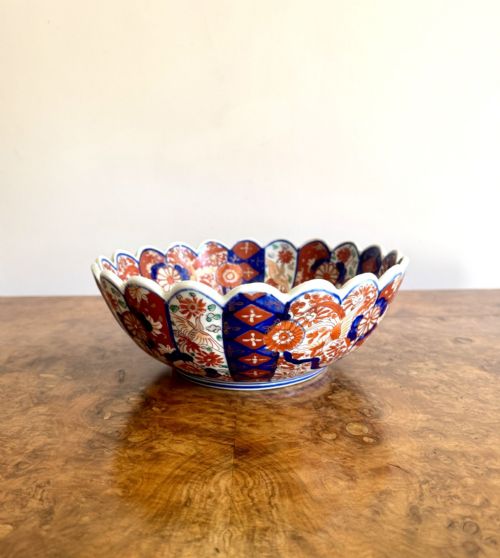


Vintage Fruit Bowl Painting
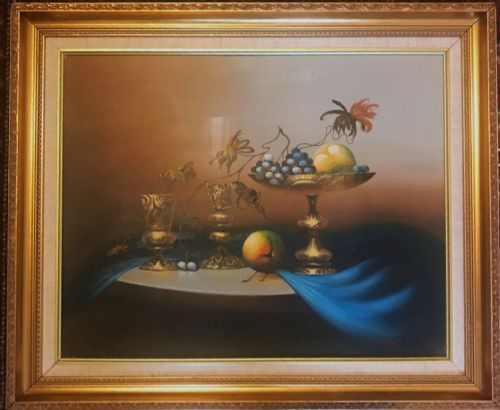
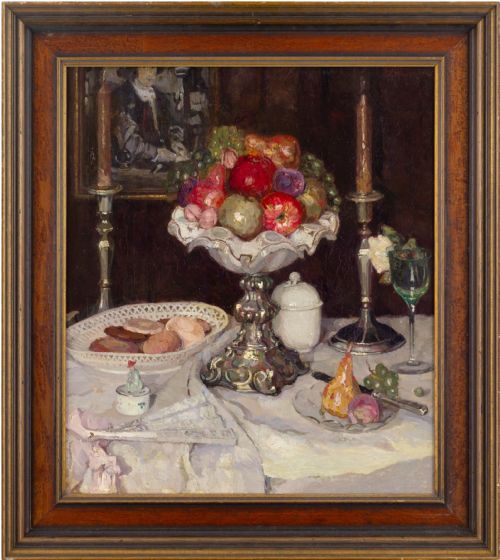
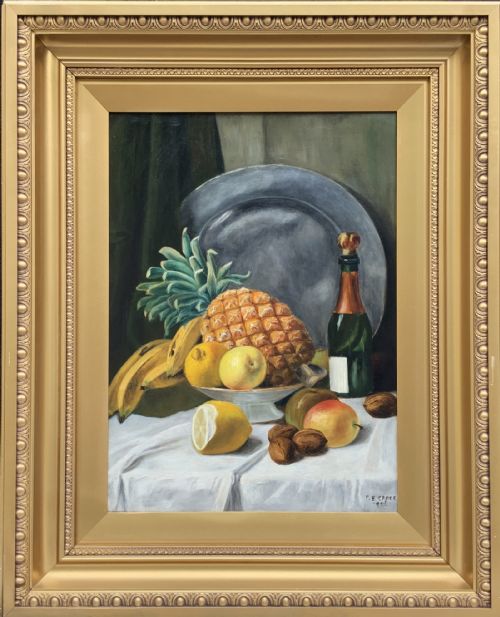
A vintage fruit bowl painting brings together the domestic warmth of a still life and the tactile weight of ceramics on canvas.
Vintage Fruit Bowl Painting
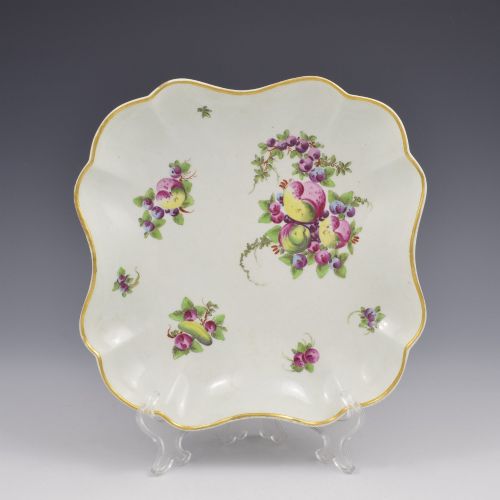
When people search for a vintage fruit bowl painting, they are looking at two distinct traditions brought into a single frame: oil paintings of fruit and vessels, and the actual decorative bowls made of porcelain, earthenware, and ironstone that populate these same centuries.
The oil paintings on canvas span the Edwardian era through the mid-twentieth century, capturing apples, grapes, and banquets in varied European hands.
Alongside these flat works, the physical vessels themselves - Japanese Imari, Chinese export, Maling, and Royal Worcester - appear repeatedly, forming a material echo of the painted subjects.
Materials and technique
The paintings are executed in oil on canvas, employing rich brushwork to render the lustre of fruit and the texture of glazed ceramics.
The physical bowls rely on porcelain, pottery, and ironstone, finished with hand-painted polychrome glazes, cobalt blue motifs, enamel, and occasional gold leaf accents.
Makers utilised traditional throwing and moulding techniques, followed by multiple firings to set the intricate patterns seen on Chinese Famille Rose and Japanese Imari pieces.
Listings span periods from the eighteenth century to the mid-twentieth century, uniting oil on canvas with porcelain and ironstone.
What separates the finest pieces
Quality in these works rests upon the sureness of the artist's hand in oil paintings, or the precision of the brushwork on hand-painted porcelain.
Pieces bearing signatures from known artists or established potteries demonstrate a higher grade of execution in their composition and glaze depth.
The balance of colour, the crispness of scalloped edges, and the preservation of the original surface determine whether a piece stands at the upper end of the range.
Jozsef Molnar·Else Preußner·James Tower·Bela Balogh·Royal Worcester·Charlotte Rhead·Meissen
The Vintage Fruit Bowl Painting Glossary
- Imari
- A style of Japanese porcelain featuring underglaze blue and overglaze red, green, and gold. These pieces were widely exported and prized for their bold patterning.
- Comport
- A decorative footed dish or bowl raised above the table. It is typically used for serving fruit or desserts.
- Famille Rose
- A palette of Chinese porcelain enamels dominated by opaque pink. The style emerged in the Qing dynasty and depicts floral and figural scenes.
- Ironstone
- A durable type of earthenware patented in the nineteenth century. It bridges the gap between heavy pottery and delicate porcelain.
- Still life
- An artwork depicting mostly inanimate subject matter, typically commonplace objects such as fruit, jugs, and tableware.
Vintage Fruit Bowl Painting: Frequently Asked Questions
What is a vintage fruit bowl painting?
It is an oil painting on canvas capturing fruit, often arranged with jugs, bowls, and tableware in a still life composition.
The phrase also encompasses the physical decorative bowls and porcelain comports recorded across the same decorative periods.
How do I date a porcelain bowl?
Dating relies on maker marks stamped or painted to the underside, alongside stylistic cues like glaze colours and potting techniques.
Evidence from nineteenth and twentieth-century potteries points to distinct eras of production, from Meiji period Imari to Art Deco Moorcroft.
Where were these paintings and bowls made?
The works originate from a wide geographic spread, including English potteries, continental European porcelain factories, and Japanese kilns.
The oil paintings reflect European artistic traditions from Hungary, Germany, and Britain during the nineteenth and twentieth centuries.
How should I display a bowl and painting together?
Pairing a painted canvas of fruit with a physical ceramic bowl creates a direct visual dialogue between the art and the object.
Placing them near natural light allows the oil glazes on the canvas and the enamel finishes on the porcelain to catch the room.