


Edwardian Fruit Still Life
These edwardian fruit still life works capture rich harvests on canvas and porcelain, prized for their vibrant palettes and traditional subjects.
Edwardian Fruit Still Life
When you search for edwardian fruit still life, you encounter a focused selection of oil paintings, watercolours, and decorative porcelain plates depicting bountiful harvests. These pieces originate primarily from the Edwardian and Victorian eras, bridging the nineteenth and early twentieth centuries through classic painterly traditions.
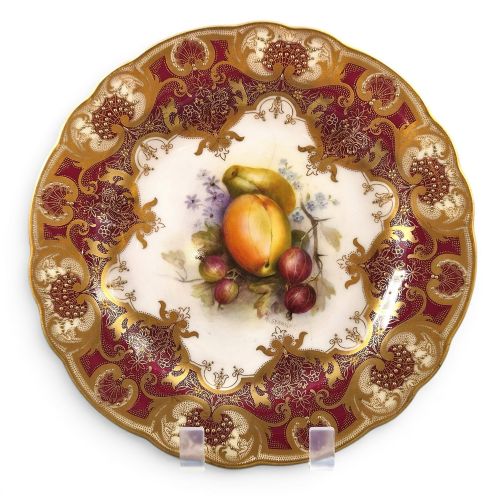
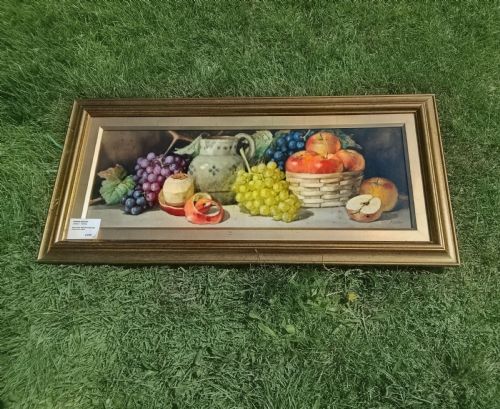
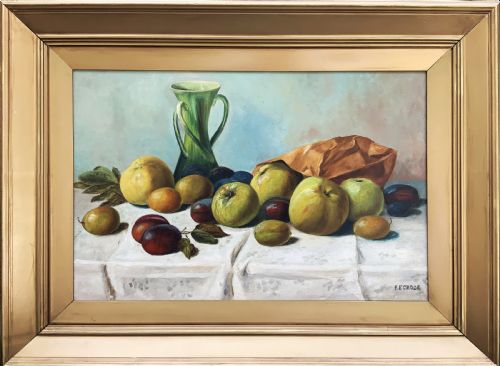
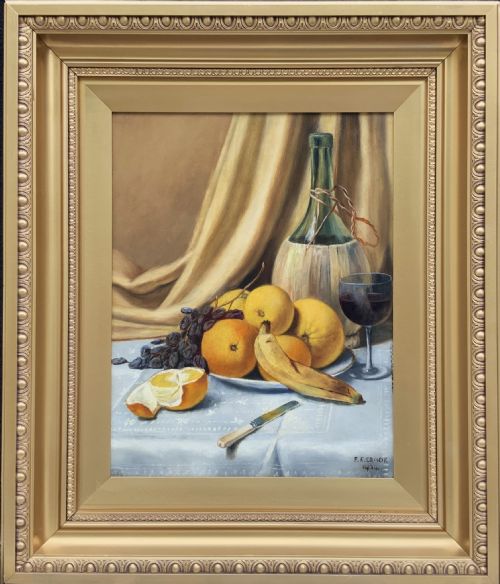
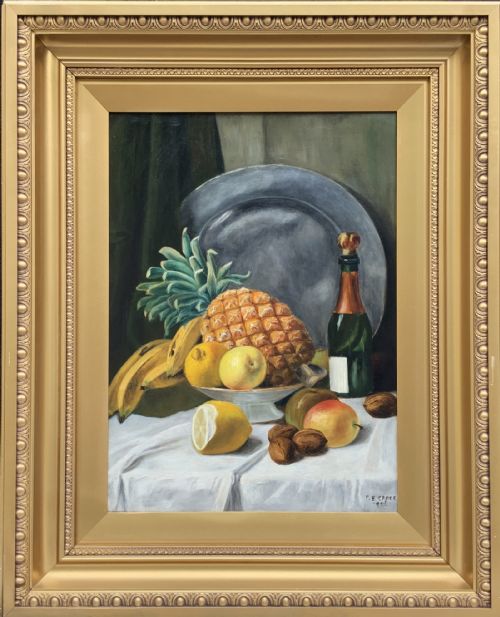
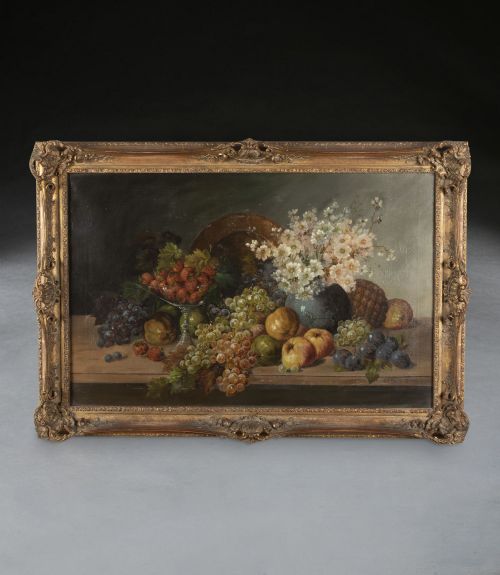
The most common formats on this page are oil on canvas paintings and painted porcelain plates. Artists of the period focused heavily on apples, grapes, and citrus arranged formally, often housed within original giltwood frames.
Most examples date between eighteen eighty and nineteen twenty, reflecting a period of refined domestic decoration. Makers and artists represented include figures like Richard Sebright, Arthur Dudley, and John Robertson Reid.
Materials and Techniques
Painters applied oil pigments onto stretched canvas or board, frequently capturing the varied textures of fruit skins against dark, moody backgrounds. Watercolours on paper also appear, offering a lighter treatment of similar natural subjects.
Porcelain items utilised fine ceramic bodies painted delicately by hand before being glazed and fired. These ceramic pieces often incorporated raised gilding to accentuate the decorative borders.
Frames play a vital structural and aesthetic role, constructed from wood finished with gesso and gold leaf or giltwood. Many oil paintings remain protected beneath glass within these ornate moulded frames.
Listings feature oil paintings on canvas, watercolours, and porcelain pieces spanning the Victorian and Edwardian periods.
Factors of Quality
Quality in these works rests upon the painter's brushwork and the naturalism achieved in rendering light across curved surfaces. Superior pieces show careful attention to shadow and reflection, making the fruit appear tangible.
The standard of the framing affects the overall integrity of the piece, with heavy giltwood and gesso frames showing detailed moulding. Original frames that complement the painting without replacement indicate better preservation.
On porcelain items, the fineness of the hand painting determines value, particularly when executed by named artists such as Richard Sebright. Crisp detail and rich colour saturation elevate porcelain plates and vases above standard factory output.
Richard Sebright·Arthur Dudley·Evelyn Chester·John Robertson Reid·J. M. Arundele
The Edwardian Fruit Still Life Glossary
- Giltwood
- Wood that has been coated with gold leaf or a gold-coloured finish. This technique was standard for traditional picture frames of the period.
- Gesso
- A plaster-like mixture applied to wood frames as a base for moulding and gilding. It allows for intricate relief ornamentation.
- Oil on Canvas
- A traditional painting medium using pigments bound with drying oils applied to woven fabric stretched over a wooden frame. This combination ensures long-term durability and rich colour depth.
- Cabinet Plate
- A decorative ceramic plate intended for display rather than dining use. These often feature elaborate hand-painted scenes by notable porcelain artists.
- Still Life
- A work of art depicting mostly inanimate subject matter, typically commonplace objects which may be either natural or man-made. In this context, the focus remains strictly on harvested fruit.
Edwardian Fruit Still Life: Frequently Asked Questions
What subjects appear in these still lifes?
The compositions typically focus on arrangements of harvested produce, including apples, grapes, plums, and peaches. These items are often placed upon wooden tables or draped fabric.
Artists arranged the fruit to study how light fell across different textures and rounded forms against dark backgrounds.
How were these porcelain pieces decorated?
Makers like Royal Worcester employed specialist artists to hand paint botanical and fruit subjects directly onto ceramic blanks. These items were then glazed and fired to lock in the pigment.
Gold leaf accents were frequently added to the rims and handles to enhance the formal appearance.
How should I display a gilt frame?
These frames require stable indoor environments away from direct sunlight and excessive humidity to protect the underlying gesso and gold leaf. Regular dusting with a soft, dry brush keeps the surface clean.
Avoid hanging heavy frames on weak plaster walls without proper fixings.
How do I distinguish Edwardian from Victorian works?
Victorian pieces often lean towards darker, heavier compositions with dense shadows and ornate, highly decorated frames. Edwardian examples can display slightly brighter palettes and a marginally looser brush technique.
However, stylistic crossover is common between eighteen eighty and nineteen ten.