

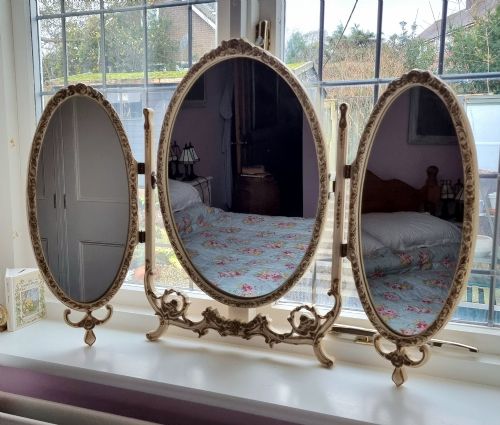
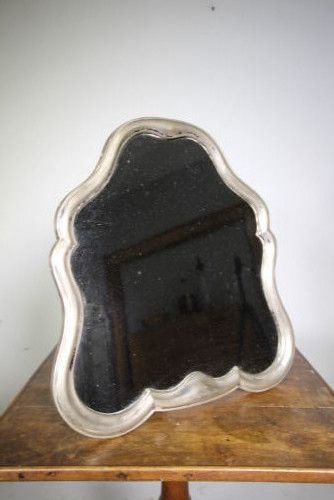
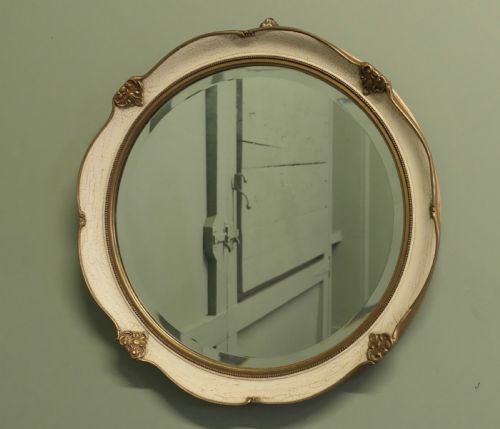
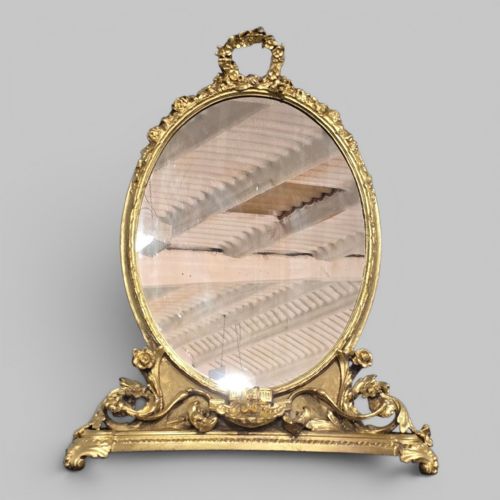
Vintage French Vanity Mirror
A vintage french vanity mirror brings reflective elegance and continental charm to a dressing space, combining decorative metal or carved frames with adjustable glass.
Vintage French Vanity Mirror
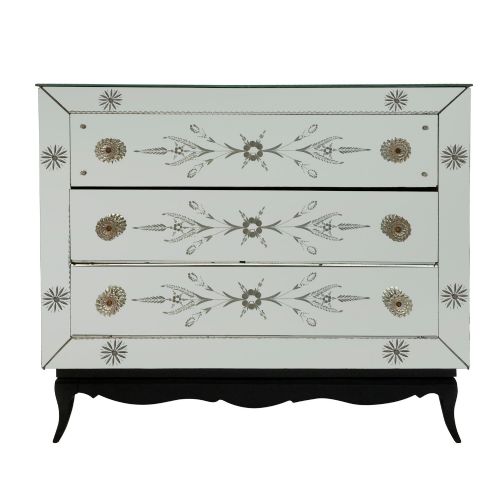
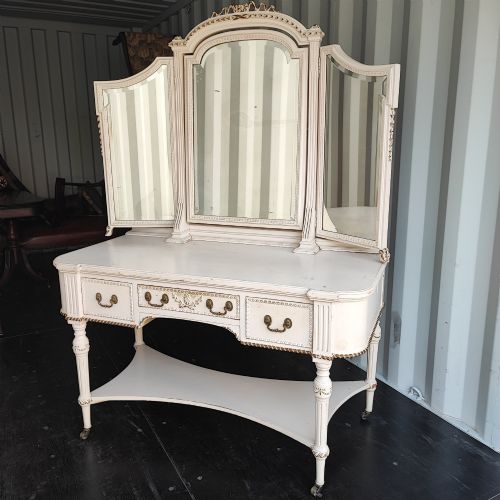
A vintage french vanity mirror comprises table mirrors, dressing table mirrors, and smaller wall-mounted or easel designs intended for personal grooming spaces.
The selections span the nineteenth century through the 1930s, encompassing styles from Victorian and Edwardian periods alongside French Rococo Revival and Art Deco.
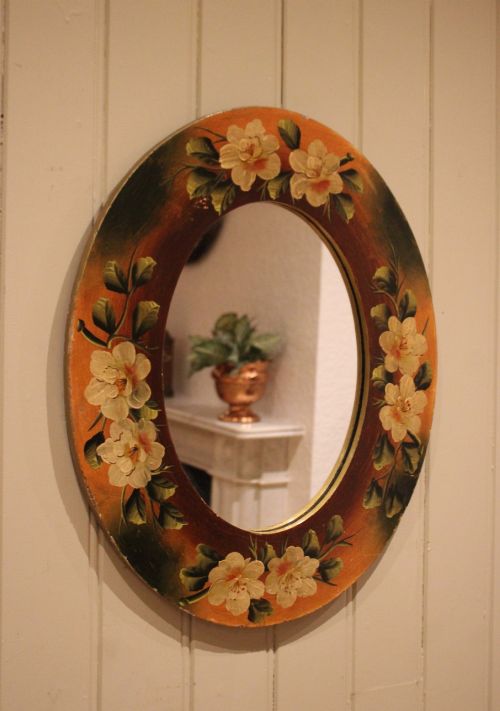
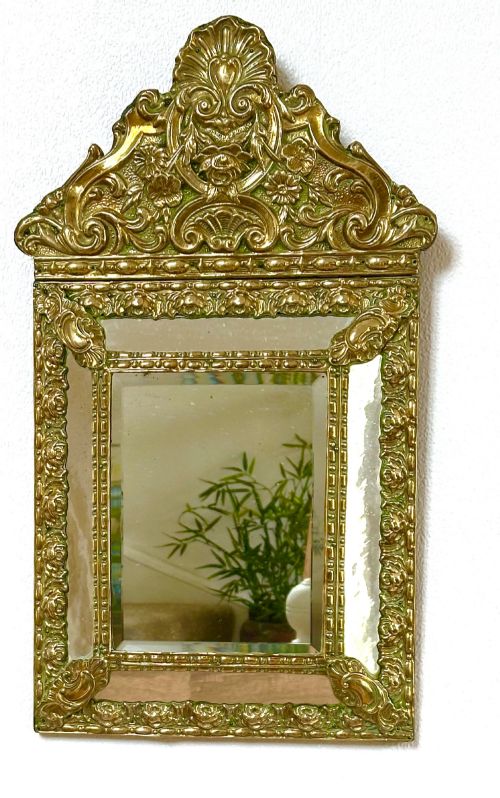
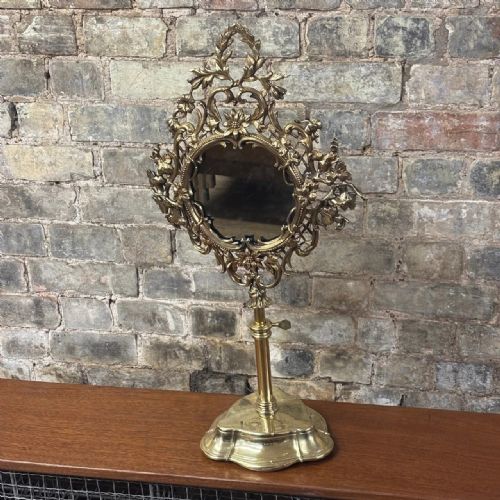
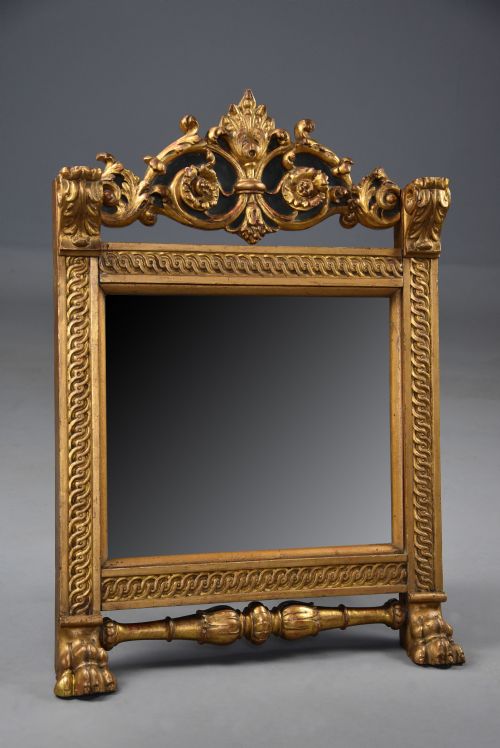
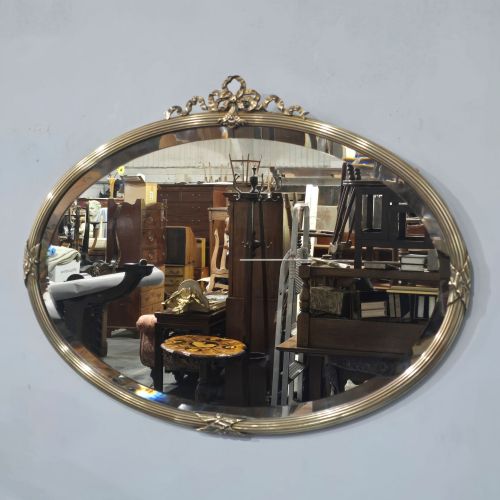
Pieces frequently appear in brass, giltwood, and painted wood, often incorporating adjustable stands or pivoting frames designed for dressing tables and washstands.
Materials and construction
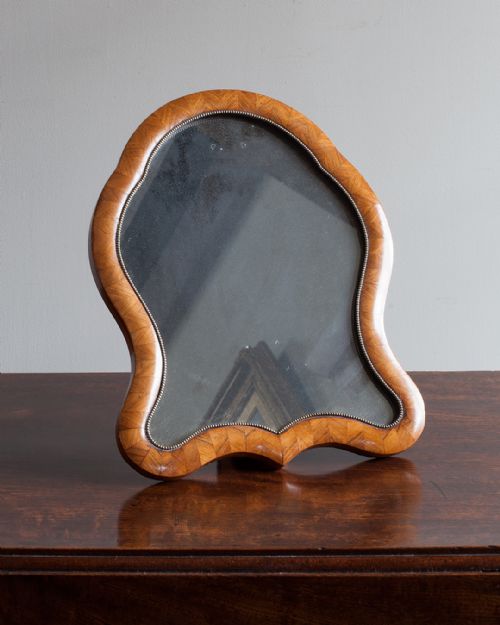
Frames utilise materials such as solid brass, carved oak, walnut, kingwood, gesso, and giltwood, sometimes enhanced with painted finishes or faux bamboo moulding.
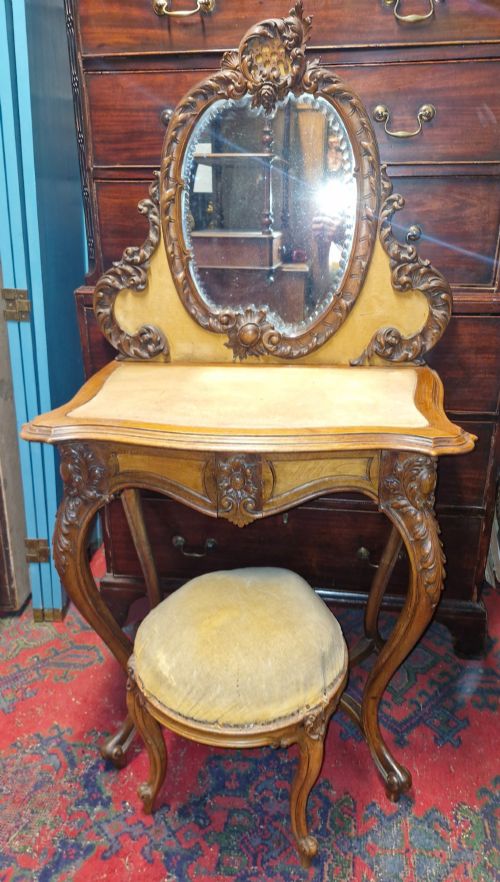
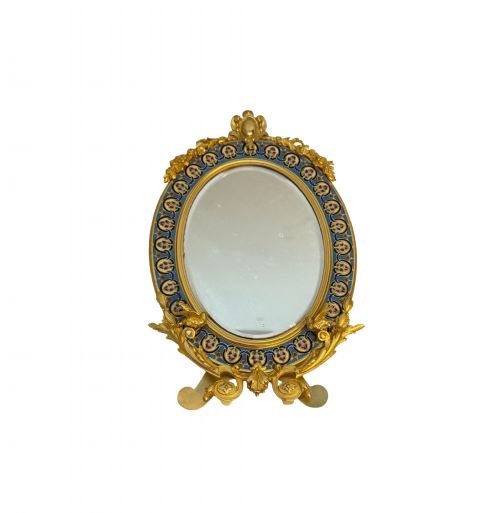
Glass plates are set into hinged or easel-supported mounts, utilising cast bronze, pressed brass, or intricately carved wood to achieve ornate rococo or architectural profiles.
Several examples incorporate faux bamboo woodwork, proving that nineteenth-century makers loved botanical mimicry just as much as we do.
Assessing quality and execution
Superior examples demonstrate crispness in hand-carved woodwork or finely chased metalwork, where floral scrolls and asymmetrical rococo motifs remain sharp and well-defined.
Heavier gauge brass, robust easel backs, and original silvered glass plates distinguish finer workshop output from simpler domestic production.
The Vintage French Vanity Mirror Glossary
- Easel mirror
- A freestanding mirror supported by a hinged leg at the back, allowing the angle of the glass to be adjusted on a tabletop or dressing surface.
- Rococo Revival
- A nineteenth-century design movement inspired by the ornate, asymmetrical scrollwork and naturalistic plant motifs of the eighteenth-century French rococo style.
- Champleve
- An enamelling technique where recessed areas are carved into metal and filled with vitreous enamel before firing, seen on select decorative frames.
- Giltwood
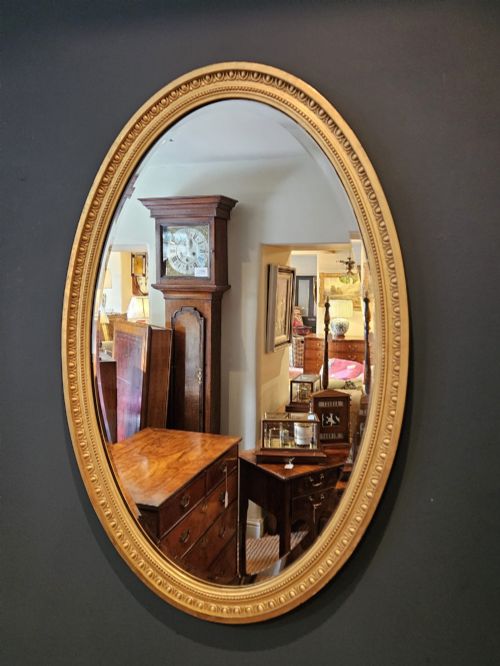
- Timber that has been coated with a thin layer of gold leaf or gilt paint, providing a luminous decorative surface to carved frames.
Vintage French Vanity Mirror: Frequently Asked Questions
How do I date a mirror?
Dating relies upon stylistic markers such as Art Deco geometric lines or nineteenth-century Rococo Revival curves, alongside construction methods visible in the frame joints and backing materials.
Examining the metal alloy, the presence of original paint or gilding, and the edge bevelling of the glass plate helps narrow the period of manufacture.
Are these mirrors adjustable?
Many table mirrors feature pivot screws or easel backs designed to tilt the glass plate to the desired angle for personal grooming.
Wall-hanging versions remain fixed, though dressing table sets often include adjustable side mirrors alongside a central plate.
Where should I place a vanity mirror?
These pieces sit naturally atop dressing tables, chest of drawers, or washstands where reflective glass enhances natural light in a bedroom or bathroom.
Smaller wall-mounted versions suit hallways or intimate boudoir spaces requiring decorative accent pieces.
What is giltwood?
Giltwood is wood decorated with fine gold leaf applied over a prepared gesso ground, creating a rich metallic sheen common on ornate frames.
This finish catches ambient light effectively, adding warmth and decorative depth to period interiors.