






Vintage French Table Centerpiece
These vintage french table centerpiece selections bring sculptural elegance to dining tables, combining fine metalwork, glass and porcelain from the nineteenth and early twentieth centuries.
Vintage French Table Centerpiece
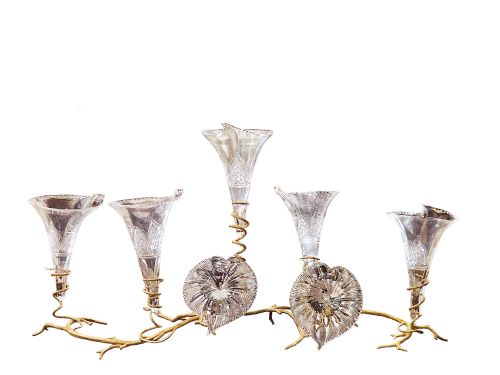
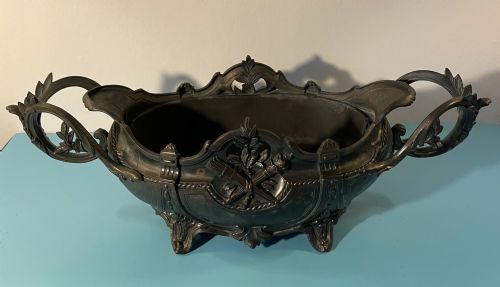
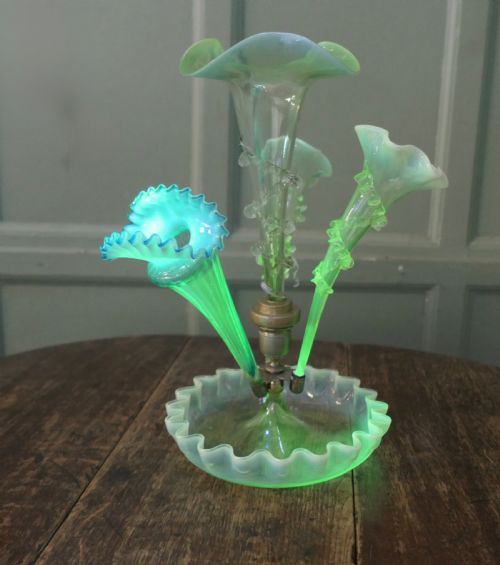
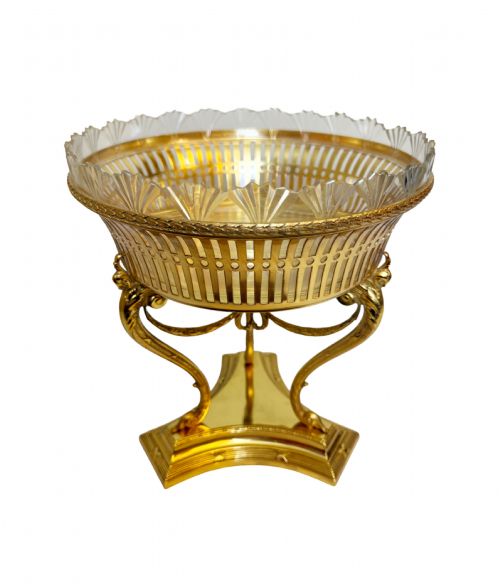
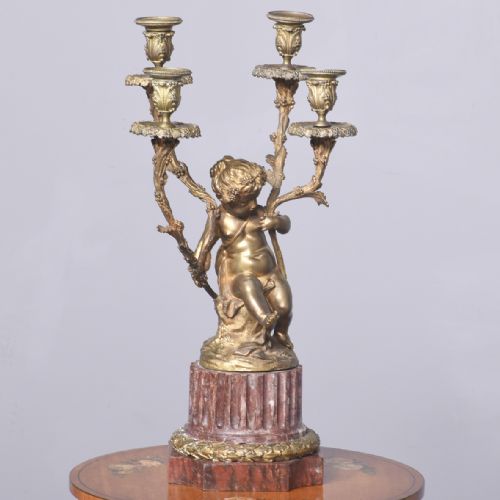
A vintage french table centerpiece serves as the focal point of a formal dining arrangement, taking forms such as epergnes, jardinieres, compotes and candelabra. The selection spans the nineteenth century through the Art Deco period, offering both ornamental vessels and illuminated stands.
Most examples found in this range incorporate classical revival styles alongside Art Nouveau and Art Deco designs. Buyers frequently encounter gilt bronze, ormolu and hand-blown glass utilised to create elaborate table displays.
Origins trace directly to French workshops and factories, utilising traditional materials like soft-paste porcelain, crystal and brass. These objects reflect the changing aesthetic tastes of the nineteenth century and the modernist shifts of the 1930s.
How they were made
Metalwork forms the structural core of many pieces, employing gilt bronze, ormolu, brass and silver plating shaped through casting and chasing techniques. Mounts are frequently fitted to glass inserts, porcelain bodies or marble bases with mechanical precision.
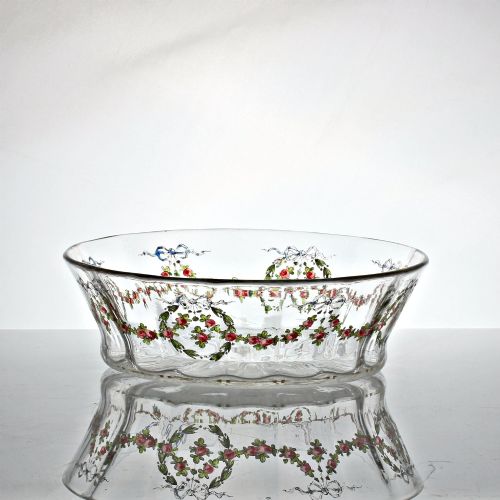
Glass production utilises hand-blown methods, uranium glass formulations and crystal cutting, often enhanced with enamel decoration or gilding. Porcelain pieces involve soft-paste bodies and hand-painted floral or figural motifs.
Woodworking techniques appear in select pieces through veneered structures involving kingwood and tulipwood, complemented by cast metal mounts.
Vintage French Table Centerpiece Retail Price Guide 2026
Typical asking prices for vintage french table centerpiece among the pieces listed under this phrase on Sellingantiques today, from the lower quarter to the upper quarter. They describe what is for sale here now, not the wider market.
Materials across these listings include gilt bronze, uranium glass, porcelain, brass, ormolu and toleware spanning the nineteenth and twentieth centuries.
What varies in quality
The refinement of the casting and chiselling on bronze, ormolu and brass mounts dictates the visual crispness of the object. Superior examples display sharp detail in floral motifs and figurative elements without smoothing from excessive cleaning.
The integration of materials reveals craftsmanship, particularly in how securely glass inserts fit within metal frames or how cleanly enamel is applied to crystal surfaces. Hand-painted porcelain details and the clarity of blown glass trumpets further differentiate standard production from finer work.
Louis-Antoine Damon·St Louis glassworks·Julien Glass France·Brille Paris·Sarreguemines
The Vintage French Table Centerpiece Glossary
- Epergne
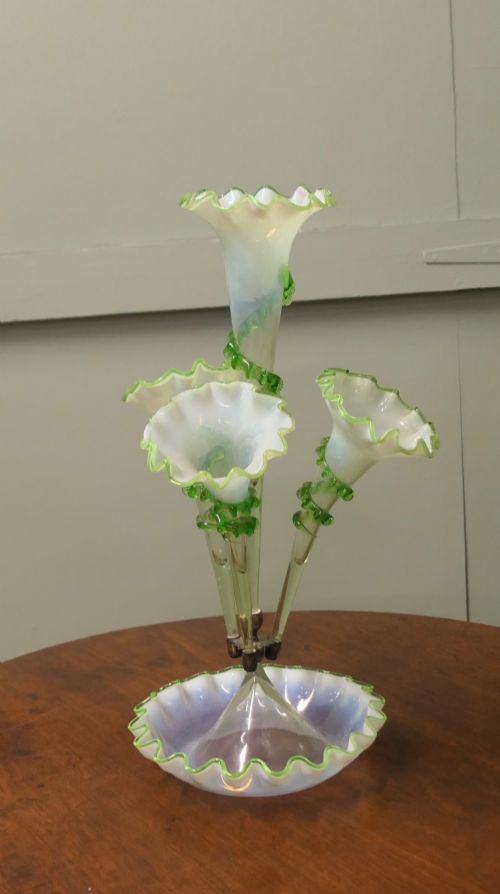
- A large table centrepiece featuring a central bowl with multiple branching trumpets or baskets used for fruit or flowers.
- Ormolu
- A metallic technique of applying finely ground high-carat gold to an object of bronze, producing a rich golden finish.
- Jardiniere
- An ornamental pot or stand designed to hold growing plants or floral arrangements.
- Comport
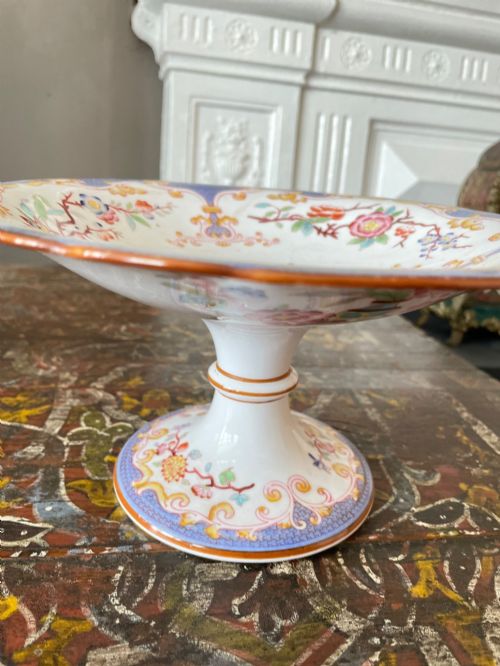
- A raised dish or bowl on a pedestal, traditionally used for serving fruit or sweets at the table.
- Toleware
- Painted or enamelled sheet metalware, often decorated with floral or pastoral scenes in imitation of lacquer.
Vintage French Table Centerpiece: Frequently Asked Questions
How do I clean a vintage metal centrepiece?
Dust surfaces gently with a soft dry cloth to protect patination and gilt layers.
Avoid abrasive polishes that might wear away fine ormolu or silver plating over time.
Were epergnes used only for flowers?
Trumpets and bowls accommodated fresh fruit, sweetmeats and floral arrangements during formal dining.
Their tiered structure allowed hosts to serve multiple items while maintaining table decoration.
How do I identify Art Deco pieces?
Art Deco centrepieces often feature geometric lines, chrome plating or modernist crystal forms dating around nineteen thirty.
They contrast with the ornate floral motifs and gilt bronze of nineteenth century Victorian styles.
Can glass inserts be replaced safely?
Replacement inserts require precise measurement of the original metal frame aperture to ensure a secure fit.
Hand-blown or uranium glass components should match the period style of the outer mount.