


Vintage French Marine Art
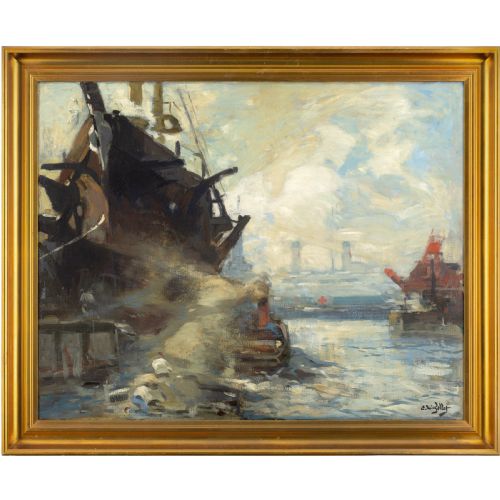
Vintage french marine art captures coastal life and naval scenes through expressive brushwork.
Vintage French Marine Art
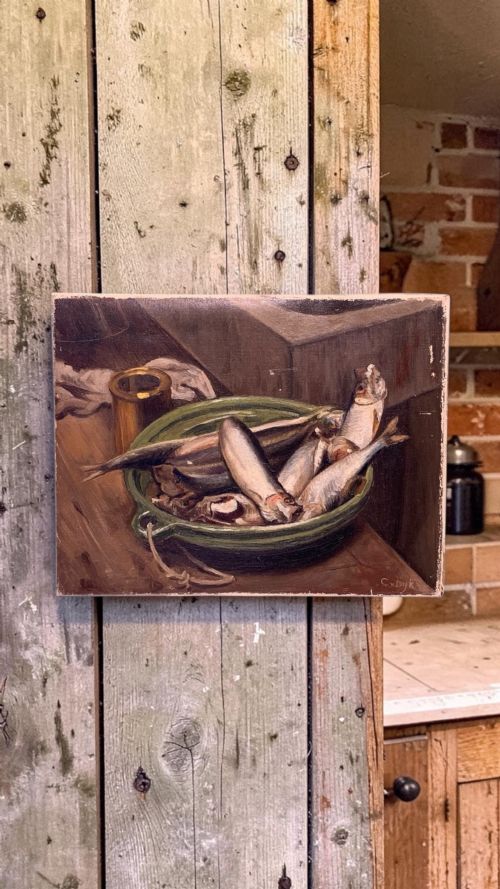
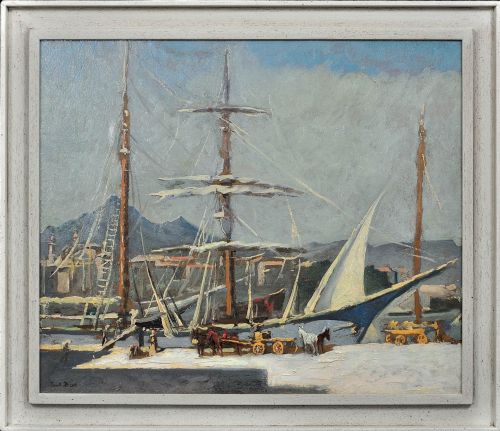
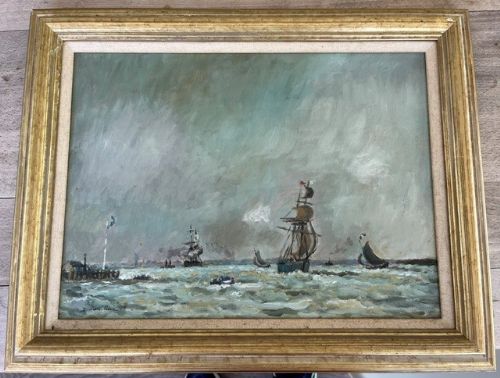
Vintage french marine art encompasses paintings and works on paper depicting harbours, seascapes, fishing ports, and coastal towns. Buyers look for these works to bring atmospheric coastal views and maritime history into interiors.
The selections available here lean towards oil paintings on canvas and board, alongside watercolours and gouache. These originate predominantly from the late nineteenth century through to the mid twentieth century.
Subjects range from bustling commercial harbours in Brittany and the Côte d'Azur to quiet stretches of the Alabaster Coast. Stylistic approaches cover post-impressionism, realism, and mid-century modern interpretations.
How they were made
Artists utilised oil paint on canvas, wood panels, and board to build texture and capture changing coastal light. Works on paper typically employ watercolour or gouache applied with rapid, descriptive washes.
Impasto techniques appear frequently in marine painting, where thick layers of oil paint create physical depth for crashing waves or textured cliffs. Frames are commonly constructed from wood, often finished with gilt details that complement the maritime subjects.
The listings span periods from the 1860s through to the 1960s, featuring oil, watercolour, and gouache on canvas, board, and paper.
What varies in quality
The strength of composition and the artist's ability to render light and movement distinguish individual works. Stronger pieces display confident brushwork and a coherent atmospheric perspective rather than rigid illustration.
Signatures, documented provenance, and exhibition histories elevate specific paintings within the broader market. The harmony between the original wood frame and the artwork also contributes to the integrity of the piece.
Eugène-Louis Gillot·Paul Bret·Elisabeth Bardon·Louis Suire·Gustave Vidal·Raymond Picque·William Lee Hankey·Fred Pailhes·Roger de la Corbiere·Marc Aldine·Marie-Edouard Adam·Edward Henry Holder·Charles Euphrasie Kuwasseg·Paul-Louis Barruel·Henri Cadiou
The Vintage French Marine Art Glossary
- Impasto
- Paint applied thickly to a canvas or board so that it stands out from the surface. This technique helps to convey the texture of sea foam or rugged rock faces.
- Gouache
- An opaque water-based paint that dries to a matte finish. It allows for vibrant colour blocking in works on paper.
- Post-Impressionism
- An art movement extending beyond impressionism that prioritised symbolic content and expressive use of paint. Artists working in this style emphasised distinct brush strokes and bold colour choices.
- Ironclad
- A steam-propelled warship protected by iron or steel armour plates. These vessels represent a significant era of naval engineering during the late nineteenth and early twentieth centuries.
Vintage French Marine Art: Frequently Asked Questions
What subjects do these paintings show?
The artworks depict a variety of maritime themes including busy fishing ports, rocky coastlines, moored boats, and naval vessels. Many capture specific locations along the French coast from Normandy to the Mediterranean.
Scenes range from tranquil beaches and lighthouses to dynamic depictions of ships navigating choppy waters. The focus remains consistently on the interaction between land, sea, and light.
How do I date these artworks?
Dating relies on stylistic clues, artist signatures, biographical dates, and framing materials. Pieces often reflect the shifting art movements of their decade, moving from nineteenth-century realism toward modernist abstraction.
Written inscriptions on the reverse of canvases or panels frequently record specific years, harbour locations, or historical events. Comparing brushwork techniques with known periods of an artist's output helps confirm the timeframe.
Where were these coastal scenes painted?
Many works originate from renowned maritime regions in France, such as the rugged shores of Brittany, the cliffs of Normandy, and the sunlit ports of the Côte d'Azur. Artists also painted foreign harbours during travels to destinations like Italy and Spain.
These locations served as active hubs for fishing fleets and commercial shipping, providing artists with diverse daily activity to record on canvas.
How should I frame and display them?
Displaying these paintings away from direct sunlight protects the oil pigments and watercolours from fading over time. Maintaining a stable indoor environment prevents wood panels and canvases from warping.
Original wooden frames often complement the age and character of the artwork, provided they remain structurally stable. Matching the piece with a sympathetic period frame enhances its visual presence on the wall.