




Mid Century Abstract Art
Mid century abstract art captures a transformative period of visual experimentation through bold compositions on canvas, board and paper.
Mid Century Abstract Art
Mid century abstract art encompasses paintings, drawings and wall art created primarily during the 1940s, 1950s and 1960s. These works embrace modernist styles ranging from strict geometric abstraction to expressive gestural forms.
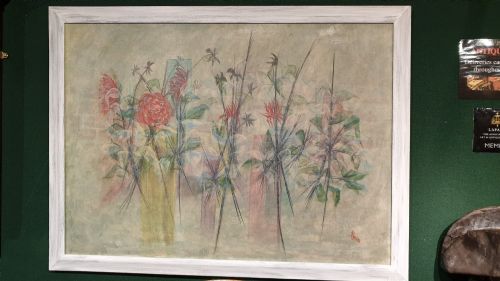
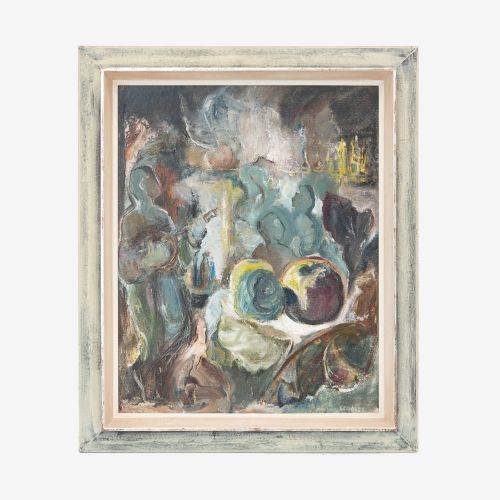
The pieces on this page frequently manifest as oil paintings on canvas or board, alongside gouache and mixed media works on paper. Common subjects span abstracted landscapes, still lifes and non-representational compositions.
Originating across Britain, France and wider Europe, the works reflect regional modernist movements such as the St Ives School. Collectors encounter both named artists from the period and accomplished pieces created in the manner of notable modernists.
Materials and methods
Artists of this era utilised oil paint and impasto techniques on canvas and board to build textured, tactile surfaces. The physical application of paint often forms a central part of the visual expression.
Gouache, ink and watercolours on paper allowed makers to execute fluid, direct compositions with vibrant colour relationships. Wood and polished yew feature in sculptural pieces from the period, demonstrating an engagement with organic forms.
Printmaking techniques such as woodcuts in colours provided another avenue for modernist experimentation. Supports were frequently framed to suit the domestic and institutional interiors of the mid-twentieth century.
Listings feature works spanning the 1930s to the 1960s, created in oil, gouache, canvas, board and paper.
Assessing quality and execution
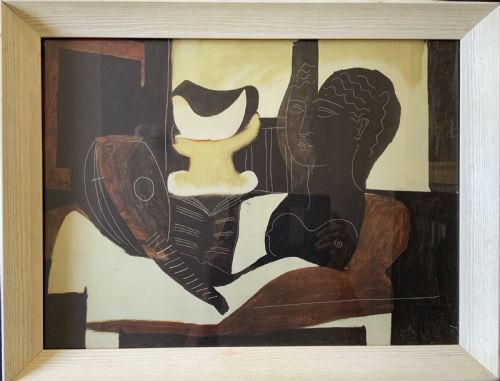
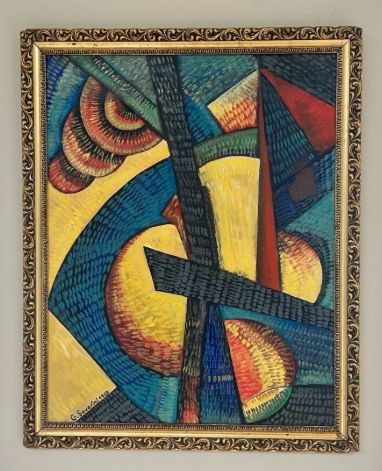
Quality in these works rests upon the confidence of the mark-making and the internal coherence of the composition. Strong examples demonstrate a deliberate control over colour harmony and spatial tension, whether the approach is cubist, expressionist or op art.
The handling of the medium dictates much of the visual success, from thick impasto builds to thin, translucent washes. Pieces that retain a clear provenance or direct attribution to established practitioners generally hold greater documentary and aesthetic weight.
Pablo Picasso·Lilian Colbourn·Denis Mitchell·Raymond Picque·William Littlejohn·Adrian Heath·Lester Epstein·Antonio Ferri
The Mid Century Abstract Art Glossary
- Impasto
- Paint applied thickly to a canvas or board, standing visibly above the surface and retaining the marks of the brush or palette knife. This technique adds tactile dimension to mid-century compositions.
- Gouache
- An opaque water-based paint that dries to a matte finish, frequently utilised on paper for vibrant modernist works. It allows for solid areas of flat colour and rapid execution.
- Cubism
- An early twentieth-century avant-garde art style that fragmented subjects into geometric planes and multiple viewpoints. Mid-century manifestations often abstracted landscapes and interiors using these structural principles.
- Op art
- A style of visual art that uses optical illusions, geometric patterns and contrasting colours. These dynamic compositions generate sensations of movement or swelling on a flat plane.
Mid Century Abstract Art: Frequently Asked Questions
What defines mid century abstract art?
These works reject strict realism in favour of expressive brushwork, non-naturalistic colour and simplified forms. They reflect the wider cultural shift towards modernism across the middle decades of the twentieth century.
Created across various European hubs, the pieces utilise canvas, board and paper to explore formal qualities like line, texture and spatial arrangement.
How should I care for a vintage oil painting?
Keep paintings away from direct sunlight and dramatic fluctuations in temperature or humidity to protect the canvas and paint layers. Displaying them in stable indoor environments prevents warping of wooden supports and cracking of the paint.
Dust surfaces gently with a soft, dry brush and avoid using liquid cleaners on exposed paint or unsealed board.
How do I identify a period frame?
Mid-century frames often feature simple wooden profiles, painted finishes or minimal mouldings designed not to distract from the artwork within. They complement the clean lines characteristic of modernist interior design.
Checking the fixings, backing boards and general wear can help confirm whether a frame dates from the same era as the painting it holds.
What is the difference between oil and gouache works?
Oil paint utilises a slow-drying binder that allows artists to build heavy impasto textures and blend colours directly on the canvas or board. Gouache is water-based and dries rapidly to a flat, opaque matte surface well-suited to paper supports.
Oils generally require rigid supports like stretched canvas or board, whereas gouache works are typically executed on heavy paper or card.