
Vintage French Artwork
Vintage french artwork brings character and history into a room through oil paintings, prints and drawings spanning the nineteenth and twentieth centuries.
Vintage French Artwork
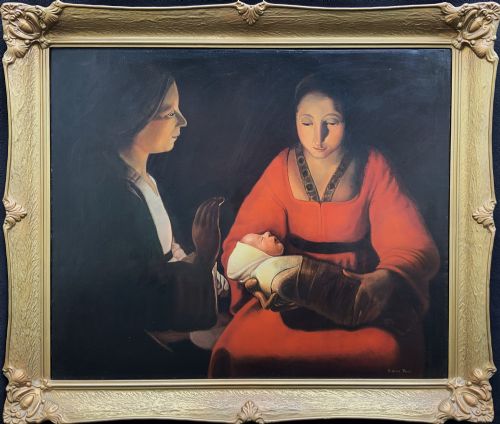
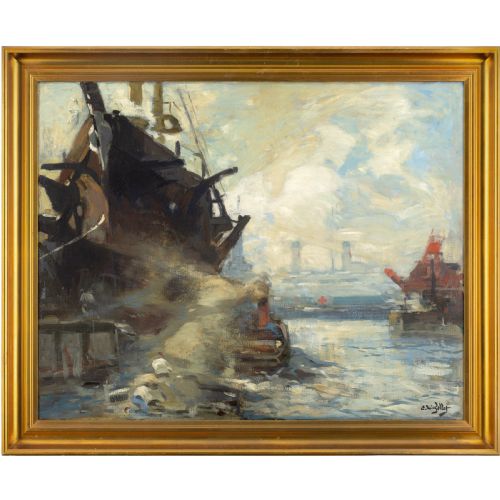
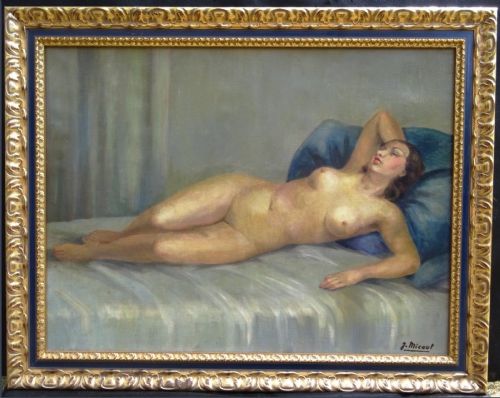
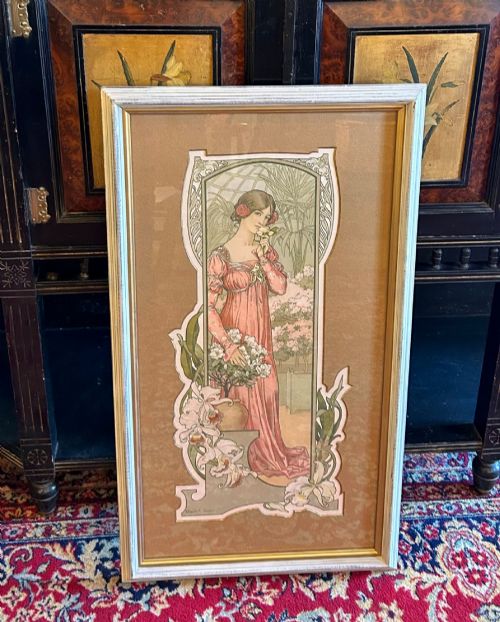
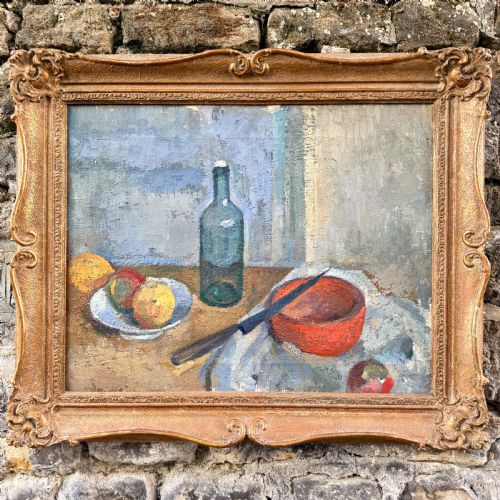
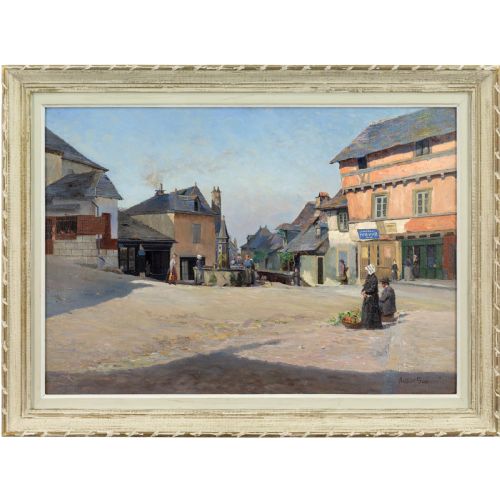
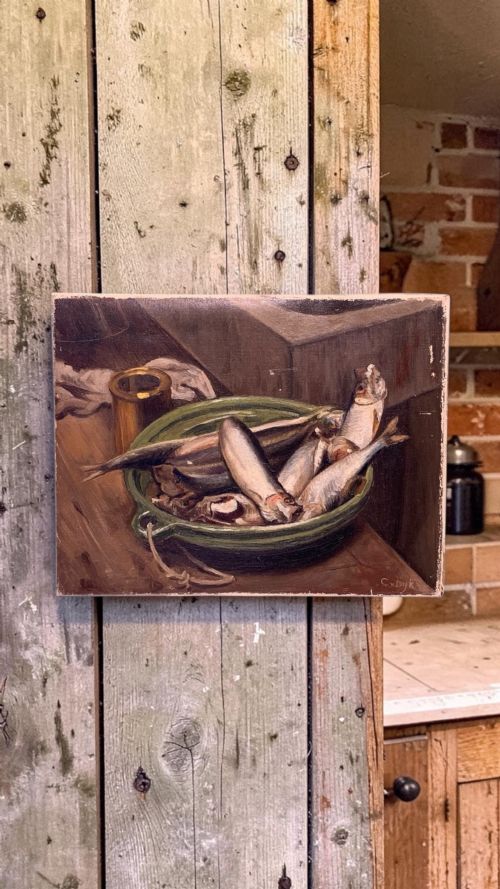
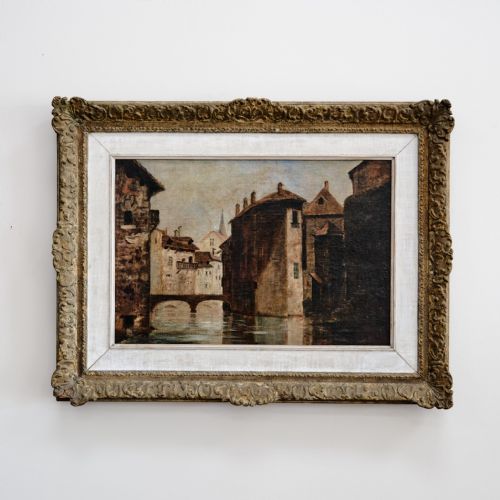
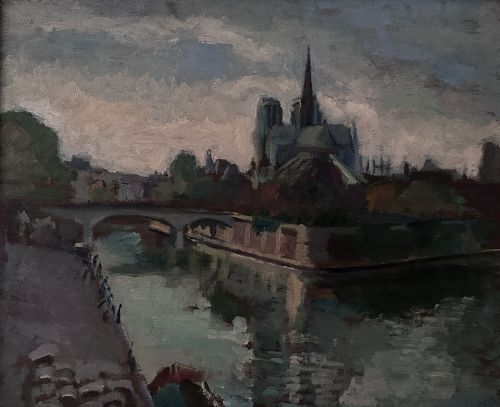
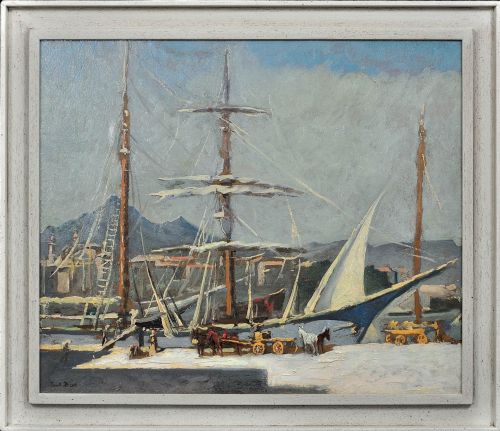
Most pieces met here date from the nineteenth century through the 1960s, reflecting periods such as Post Impressionism, Art Deco and the broader French School. Buyers will frequently find depictions of Parisian scenes, rural Normandy landscapes and intimate interior subjects.
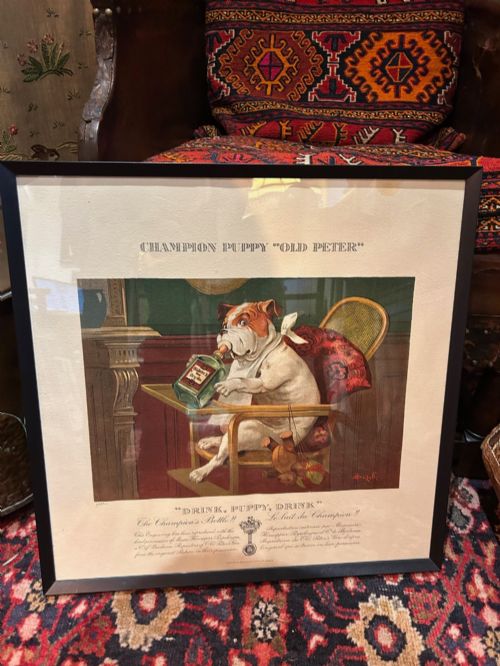
The assortment bridges formal salon traditions and lighter advertising prints or lithographs. This variety allows collectors to source everything from large gilt framed oils to delicate ink and watercolour drawings on paper.
How they were made
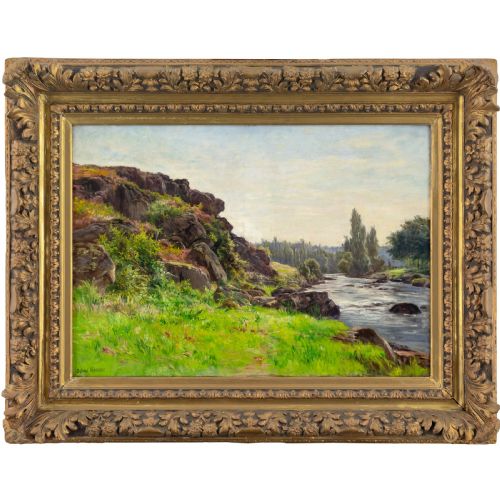
The physical construction of these pieces relies heavily on traditional supports such as canvas, wood panels and heavy paper. Artists applied oil paint, pastel, ink and watercolour, often finishing works with protective glass and ornate gilt wooden frames.
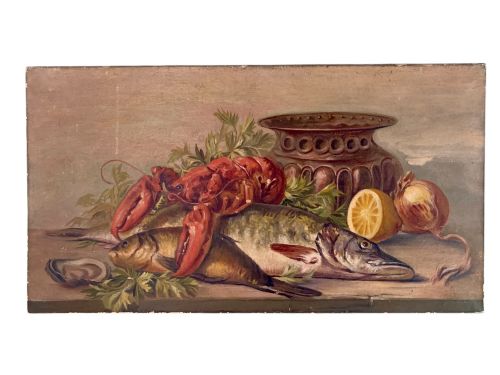
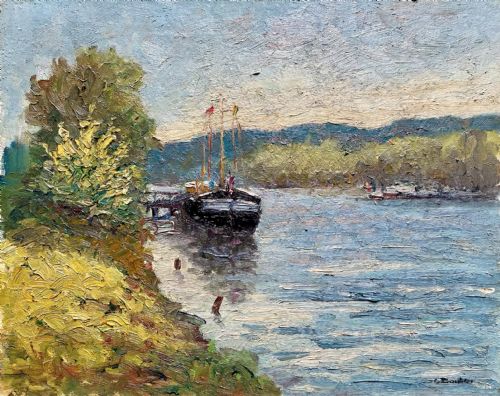
Techniques range from meticulous nineteenth century academic realism to looser post impressionist brushwork and graphic printmaking methods like lithography and etching. Many works demonstrate layered oil paint applications or precise pencil and ink line drawing.
Vintage French Artwork Retail Price Guide 2026
Typical asking prices for vintage french artwork among the pieces listed under this phrase on Sellingantiques today, from the lower quarter to the upper quarter. They describe what is for sale here now, not the wider market.
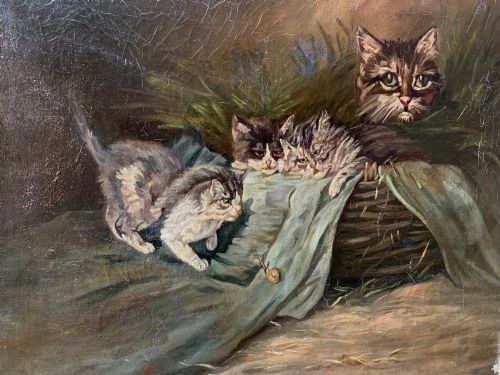
Cats and kittens frequently steal the artistic show, appearing playfully across multiple nineteenth century oil paintings.
What varies in quality
Quality in these works rests upon the surety of the draughtsmanship, the handling of the medium and the expressive depth of the composition. Stronger pieces display confident brushwork and balanced palettes that capture light and atmosphere effectively.
The integrity of the original support and the condition of the surface paint or ink dictate the desirability of a piece. Furthermore, period gilt frames that complement the artwork enhance the overall coherence and presence of the item.
Georges de La Tour·Elisabeth Sonrel·Marcellin Auzolle·Gabriel Mathieu·Arthur Gué·Paul Bret·Jean-Gabriel Domergue·Maurice Brianchon·Henry de Waroquier·Louis Icart·Alfred Arthur Brunel de Neuville·Paul Ehrenberg·Lilian Colbourn·Paul-Élie Gernez
The Vintage French Artwork Glossary
- Oil on Canvas
- A painting technique where pigments suspended in drying oil are applied to stretched fabric. This medium allows for rich textures and deep colour blending.
- Lithography
- A planographic printing process based on the repulsion of oil and water. Artists use this method to produce multiple graphic prints with fine tonal gradations.
- Post Impressionism
- An art movement extending roughly from the late nineteenth century to the early twentieth century. Practitioners rejected rigid naturalism in favour of expressive colours and symbolic forms.
- Etching
- A printmaking technique where lines are incised into a metal plate through acid corrosion. The resulting plate holds ink for transfer onto paper under pressure.
- Gilt Frame
- A wooden picture frame coated with a thin layer of gold leaf or metallic paint. These frames add decorative weight and historical context to paintings.
Vintage French Artwork: Frequently Asked Questions
How do I date a vintage french oil painting?
Dating relies on examining the canvas stretchers, framing methods, and stylistic conventions used by the artist. Signatures, inscriptions on the reverse, and historical clothing or architectural details also provide clear temporal clues.
Material analysis of the pigments and canvas weave can further confirm the era. Comparing the work to documented periods like the 1920s or 1950s helps narrow down the exact decade of creation.
What is the french school style?
The French School term groups artists who trained or worked within the distinct academic and avant-garde traditions of France. It encompasses shifting approaches from nineteenth century realism to twentieth century abstraction.
Works under this banner share an emphasis on light, structure, and technical proficiency. They reflect the evolving educational standards of Parisian art institutions across generations.
Where were these artworks displayed?
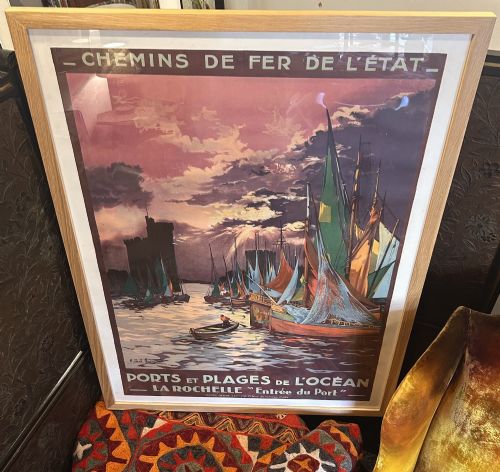
Many of these paintings and drawings originated in Parisian salons, artist studios, and provincial homes across France. Some pieces, such as railway posters and advertising prints, served public commercial functions.
Over time, these objects transitioned into private collections and galleries. Their subjects often record the domestic interiors, landscapes and streetscapes of their contemporary society.