


Vintage Folding Card Table
A vintage folding card table brings practical ingenuity and period character to a room, offering a versatile surface for evening play.
Vintage Folding Card Table
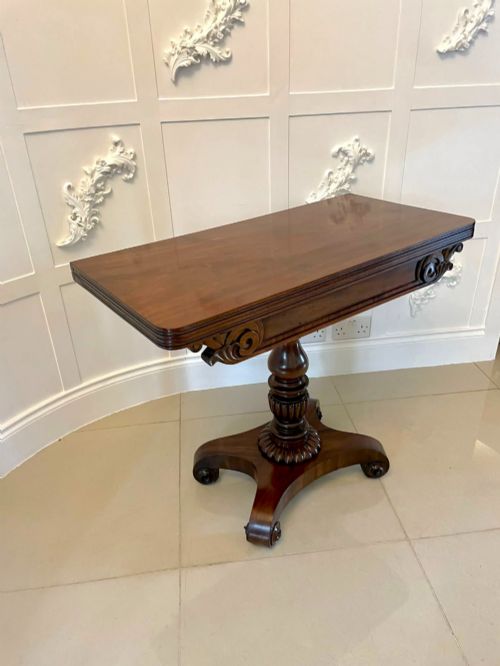
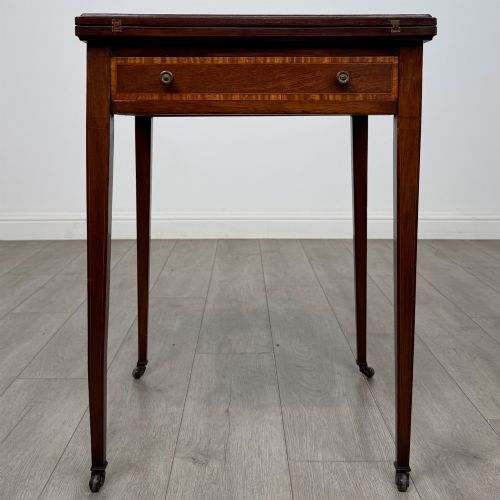
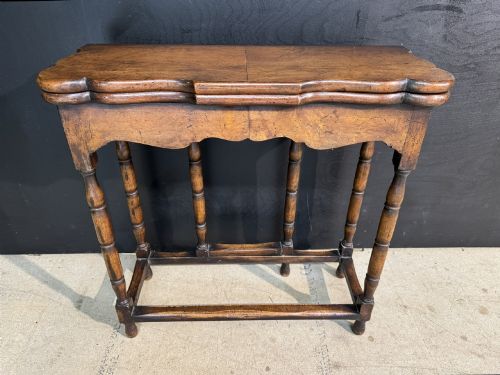
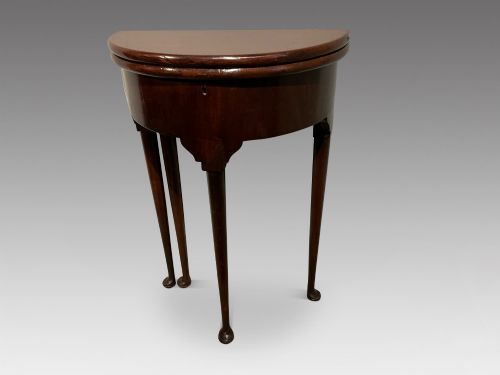
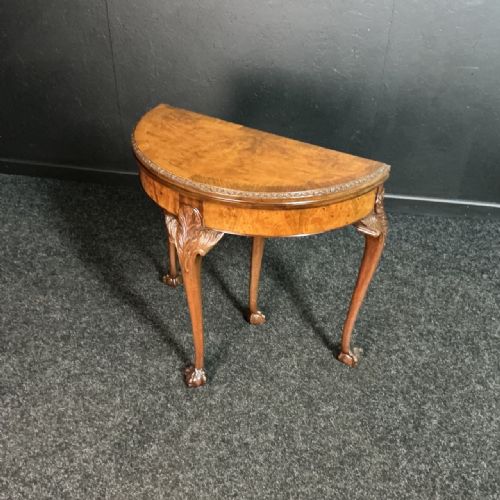
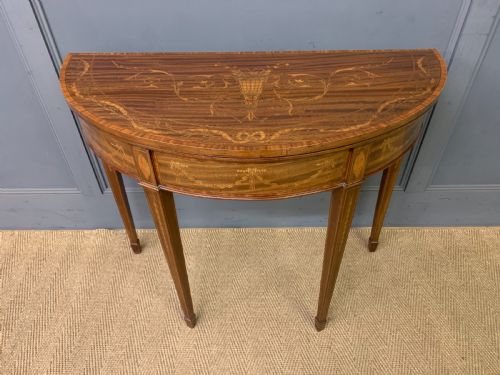
A vintage folding card table is designed for domestic entertainment, appearing in forms such as envelope tops, demi-lune shapes, and standard fold-over surfaces. These pieces emerge across several periods, including the Georgian era, the Victorian decades, and the Edwardian epoch.
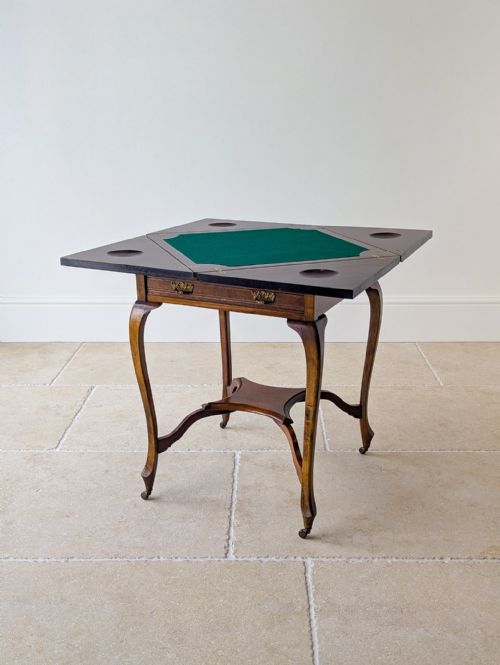
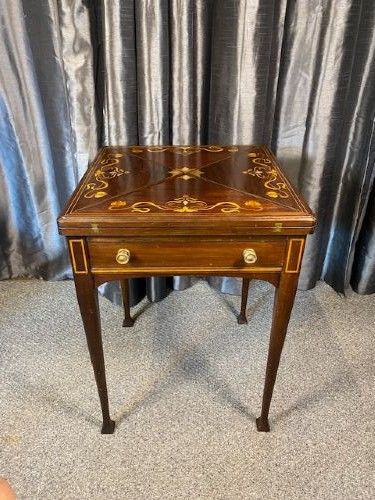
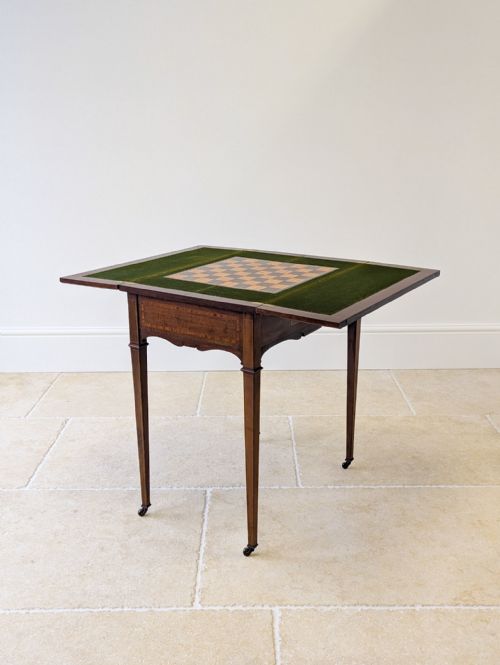
Edwardian envelope tables and early twentieth-century examples appear frequently among these listings, often utilising clever pivoting mechanisms to reveal baize-lined playing surfaces. Buyers encounter both simple timber constructions and elaborately inlaid revival styles tailored for social gatherings.
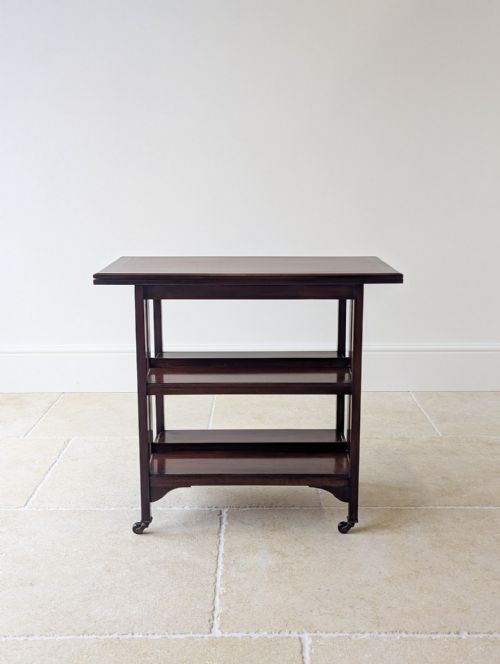
The category extends to dual-action tea tables and metamorphic designs that transition seamlessly from console tables to dedicated gaming surfaces. Such pieces reflect changing domestic habits across the eighteenth, nineteenth, and early twentieth centuries.
Materials and construction methods
Cabinetmakers relied on sturdy timbers such as mahogany, walnut, and burr walnut for the primary structures, occasionally applying satinwood or boxwood for decorative contrast. These hardwoods provided the necessary stability for folding leaves and rotating mechanisms.
Baize served as the traditional lining for the playing surfaces, offering a tactile textile contrast to the polished wooden frames. Brass fittings and hinges frequently facilitated the ingenious folding and pivoting actions seen in envelope and campaign styles.
Mahogany and walnut dominate the listed timbers, spanning the eighteenth, nineteenth, and early twentieth centuries.
Distinctions in craftsmanship
The refinement of the pivoting mechanism and the precision of the joinery mark the division between standard utility pieces and finer cabinetwork. Superior examples maintain rigidity and alignment when fully opened, whereas lesser pieces exhibit play in the hinges.
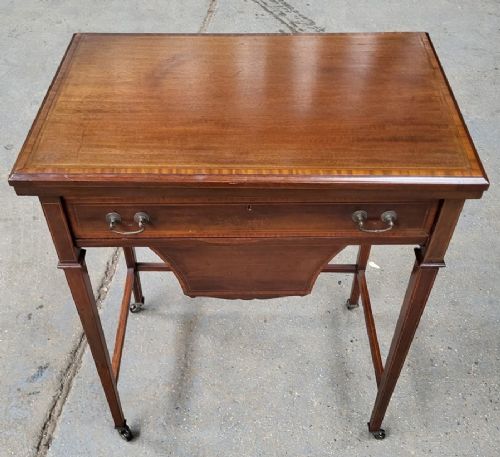
Decorative ambition separates workshop output, demonstrated through subtle cross-banding, precise stringing, and well-executed brass inlay rather than mere surface pattern. The choice of figured veneers, particularly burr walnut or select mahogany, elevates the visual presence of the furniture.
Howard and Son·Epstein and Co
The Vintage Folding Card Table Glossary
- Envelope table
- A square card table featuring four triangular leaves that swivel open diagonally to reveal a baize-lined interior. This clever mechanism became particularly popular during the Edwardian period.
- Demi-lune
- A half-moon shape utilised for tables designed to stand flat against a wall when closed. When the hinged top unfolds, it forms a full circular or semicircular surface.
- Baize
- A coarse woollen material resembling felt, traditionally fitted to the interior playing area of gaming tables. It provides a soft, durable surface for dealing cards.
- Cross-banding
- A decorative border of veneer laid across the grain of the primary wood panel. It creates a neat framing effect along the edges of tabletops.
- Metamorphic
- Describing furniture that transforms from one functional form into another, such as a console table converting into a games surface.
Vintage Folding Card Table: Frequently Asked Questions
How do envelope card tables work?
Envelope card tables rely on a central pivoting mechanism connected to four triangular wooden flaps. As one flap is lifted and rotated, the remaining three unfold simultaneously to create a square playing surface.
This clever design hides the baize lining completely when closed, allowing the piece to function as a regular small table.
What is a tea and card table?
A tea and card table is a dual-purpose piece of furniture featuring a fold-over top designed for multiple domestic uses. One side typically offers a polished wooden surface for serving tea or displaying objects.
Opening the hinged top reveals a baize or leather-lined interior intended for card games and social pastimes.
How do I date a folding card table?
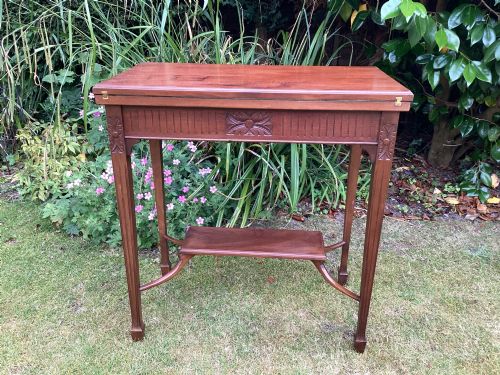
Dating relies on identifying stylistic markers, timber choices, and construction techniques associated with specific design periods. Georgian tables often show crisp mahogany carving, while Edwardian examples frequently feature inlaid satinwood and envelope mechanisms.
Hardware styles and secondary timbers inside the frame also provide clear clues regarding the decade of manufacture.
Where should I place a card table?
These tables adapt well to living rooms, studies, or hallways when placed flat against a wall in their closed position. Their compact footprint makes them ideal for filling awkward corners or acting as occasional side surfaces.
Opening the table requires surrounding clearance for chairs, making them suitable for central placement during social gatherings.