


Antique Games Side Table
An antique games side table offers dual utility, functioning as a sleek console by day and transforming for play by night.
Antique Games Side Table
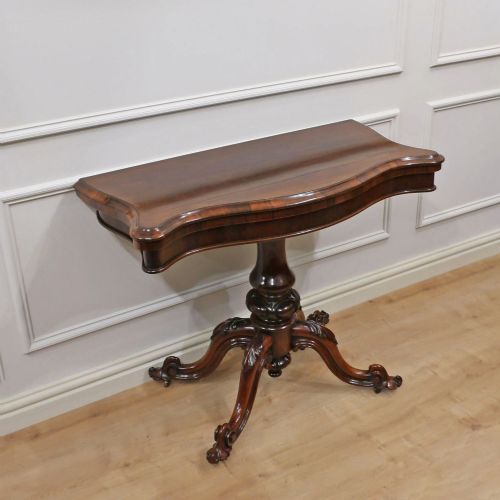
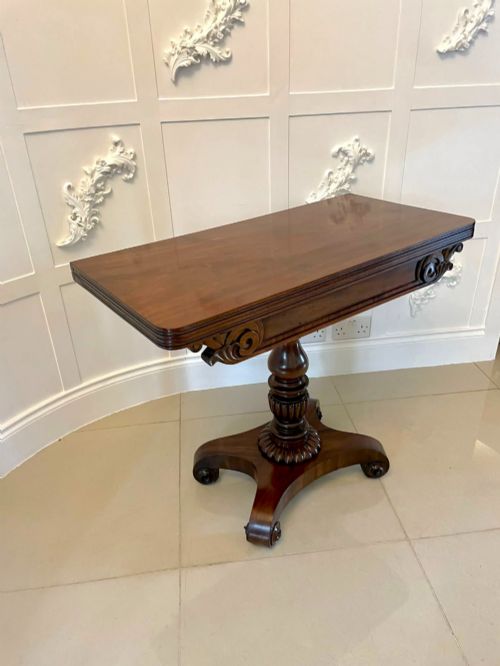
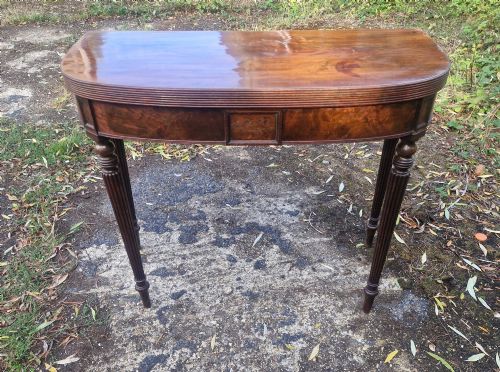
An antique games side table bridges the gap between everyday domestic furniture and dedicated entertainment pieces, frequently appearing as fold-over card tables, tea tables, or occasional furniture designed with adaptability in mind.
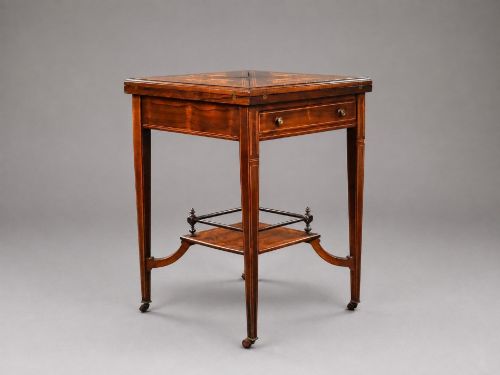
The pieces catalogued across eighteenth-century Georgian eras, Regency periods, and Victorian centuries show a clear preference for clever mechanisms that allow tops to pivot, extend, or conceal storage compartments beneath the surface.
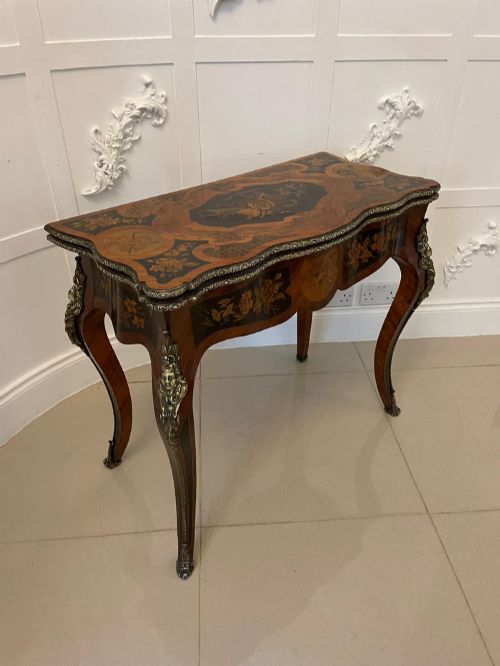
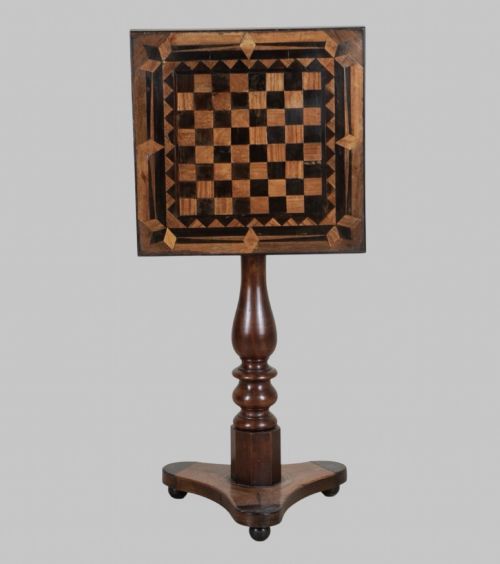
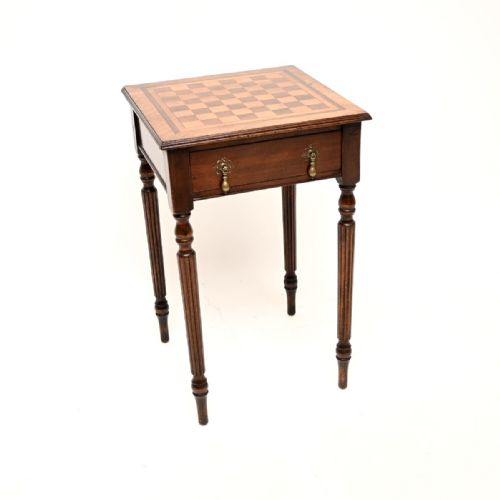
Buyers seeking this phrase most commonly encounter mahogany and walnut constructions featuring hinged leaves, demi-lune shapes, or dedicated chess and backgammon boards built directly into the timber frame.
Materials and construction methods
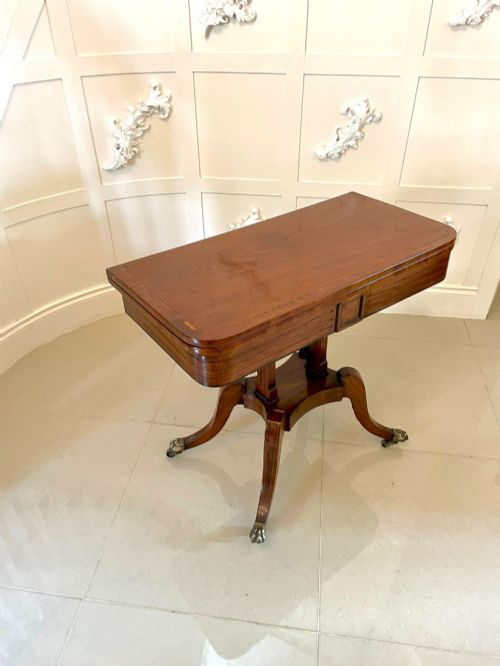
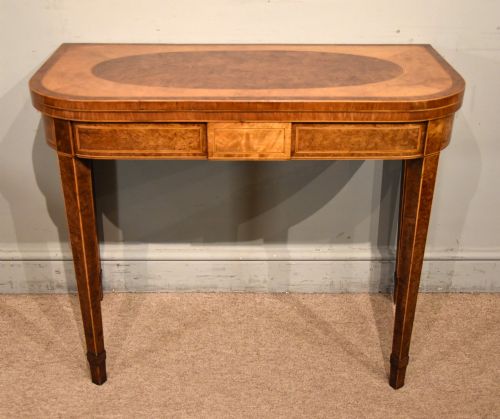
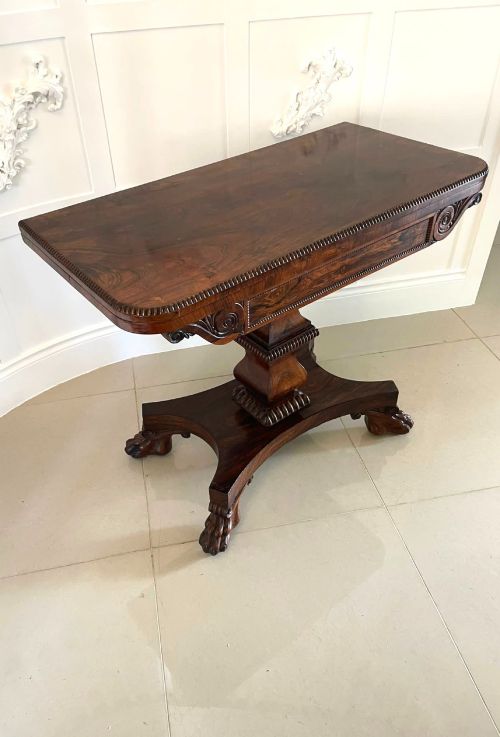
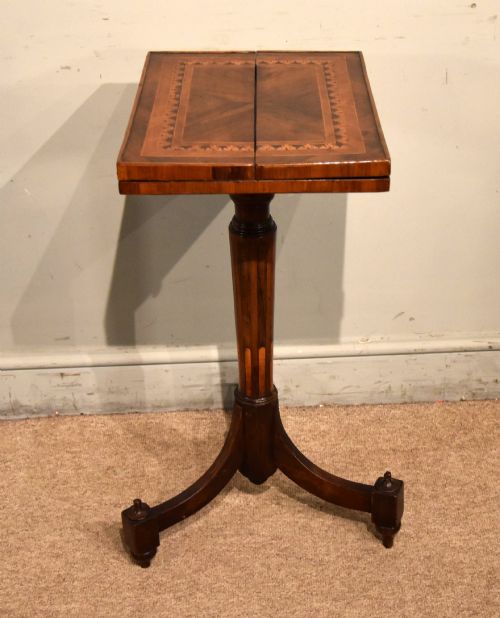
Cabinet makers relied heavily on solid mahogany, rosewood, and burr walnut, frequently applying fine veneers and wood inlay such as boxwood or satinwood to create decorative geometric or floral motifs on the tops.
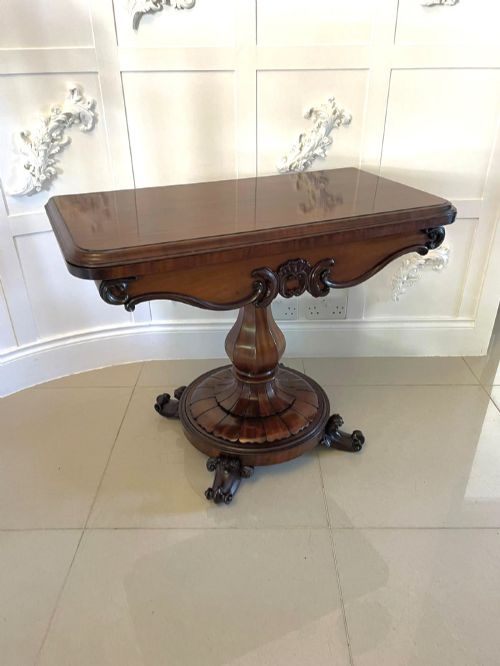
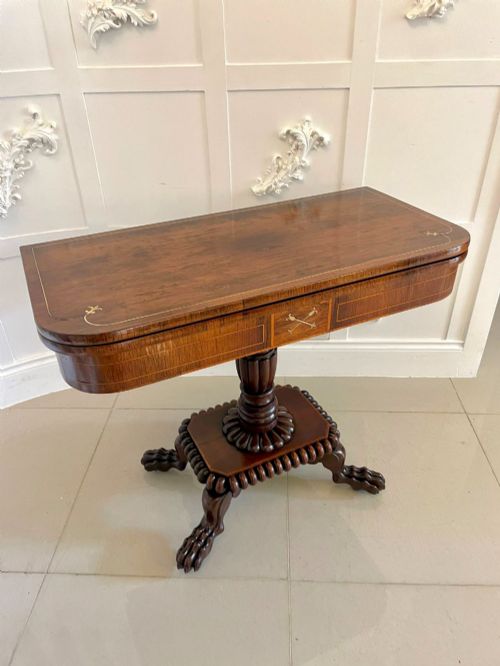
Structural ingenuity defined the period, utilising concertina actions, rotating swivel tops, and folding D-end designs supported by tapered legs, reeded sabre legs, or central pillars with tripod bases.
Listings feature mahogany, rosewood, and burr walnut across Georgian, Regency, and Victorian periods.
Evaluating craftsmanship and condition
Quality rests primarily in the selection of figured timbers, where symmetrical grain patterns on walnut or rich patination on mahogany distinguish superior workshops from standard output.
The precision of the joinery and the smoothness of the folding or concertina mechanism determine functional longevity, ensuring the leaves align flush when open without placing undue strain on the hinges.
Shapland & Petter·Gillows Lancaster
The Antique Games Side Table Glossary
- Demi-lune
- A half-moon shape commonly utilised for side and card tables that sit flat against a wall when closed.
- Concertina action
- An expanding frame mechanism that pulls outward to support a fold-over table top evenly.
- Marquetry
- Decorative veneer work arranged in pictorial or abstract patterns using various coloured woods.
- Crossbanding
- A narrow strip of veneer applied perpendicularly to the main grain around the border of a table top.
- Patina
- The surface sheen and deep colour developed by aged wood through decades of handling and polishing.
Antique Games Side Table: Frequently Asked Questions
How do fold-over games tables work?
The top surface is hinged along the centre, allowing the leaves to open out to double the available surface area for card playing or dining.
A pivoting or concertina frame underneath swings out to support the newly exposed leaf securely.
What is the difference between a tea table and a games table?
Tea tables typically feature plain folding wooden tops intended for serving afternoon beverages and social gatherings.
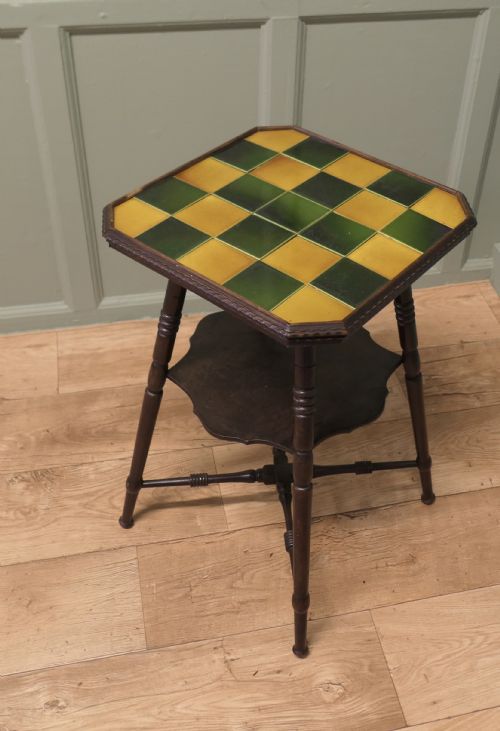
Games tables often incorporate integrated baize or leather playing surfaces, counter wells, or inlaid chess boards.
Can these tables be used as normal desks?
Many examples provide adequate surface area and stability for light writing tasks when kept in the closed position against a wall.
However, the presence of internal folding mechanisms or shallow storage compartments means legroom can occasionally be restricted.
How do I identify a Regency period table?
Regency pieces frequently display classical influences, featuring brass inlay, rosewood veneers, and reeded sabre legs.
Proportions tend to be sharp and architectural, reflecting design trends from the early nineteenth century.