


Vintage Folding Cake Stand
These vintage folding cake stands offer a practical way to serve afternoon tea while collapsing flat when not in use.
Vintage Folding Cake Stand
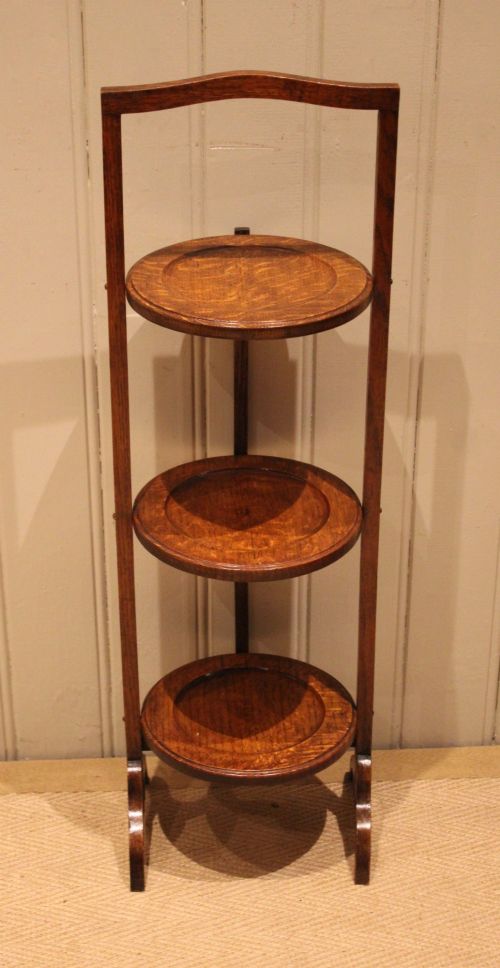
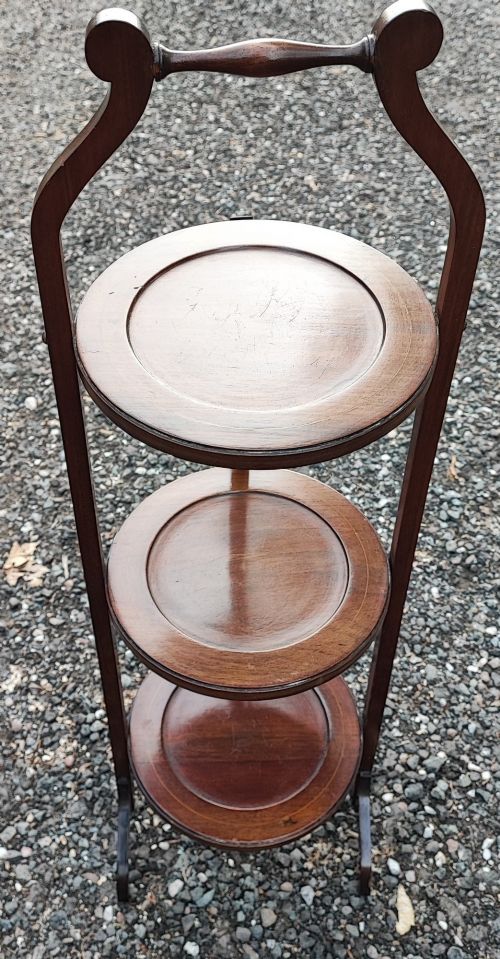
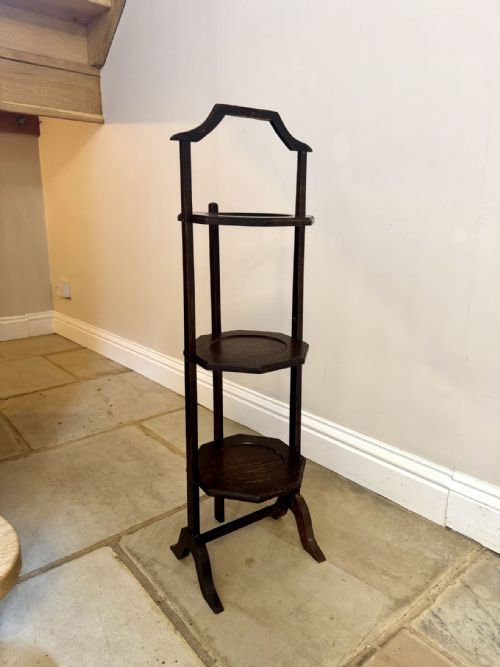
A vintage folding cake stand serves as a collapsible tiered surface designed for displaying baked goods and serving tea. When exploring this selection, buyers frequently encounter Edwardian examples alongside pieces dating from the nineteenth and eighteenth centuries.
How they were made
Cabinetmakers utilised hardwoods like mahogany, oak, and rosewood to construct the frames and tiers of these stands. Satinwood and boxwood frequently appear as inlay materials, adding decorative contrast to the primary timber surfaces.
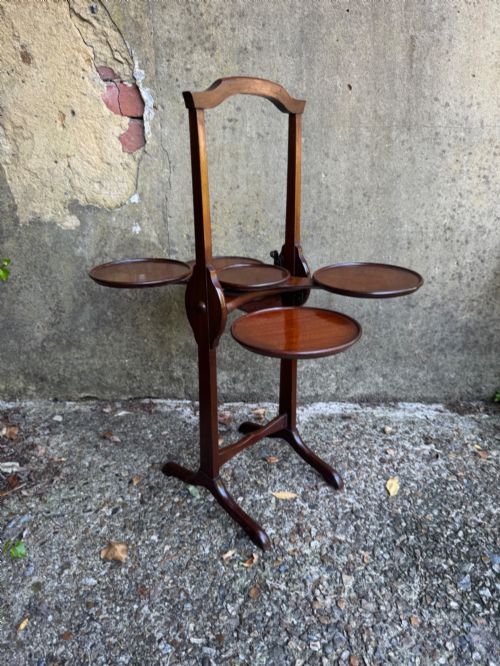
Hinges and pivoting mechanisms allow the tiered shelves to collapse inwards for compact storage. Brass hardware is common, and some iterations incorporate iron elements to support the folding framework.
Mahogany and oak are the most common woods across the listings, with Edwardian examples frequently featuring Sheraton Revival inlay.
What varies in quality
The refinement of the timber and the precision of the joinery set the higher tier of these stands apart. Finely figured mahogany and detailed Sheraton Revival inlay work indicate greater workshop skill than plain utilitarian examples.
The smoothness of the folding mechanism and the stability of the tiers when fully open demonstrate the original standard of manufacture. Well-balanced proportions and crisp execution of inlaid borders distinguish the most accomplished pieces.
The Vintage Folding Cake Stand Glossary
- Tiered stand
- A piece of furniture featuring multiple horizontal surfaces arranged vertically to hold items. These stands maximise vertical space on tables or floors.
- Inlay
- A technique where pieces of contrasting wood, such as boxwood or satinwood, are inserted into recessed areas of the primary wood to form a pattern.
- Sheraton Revival
- A late nineteenth and early twentieth-century style drawing inspiration from late eighteenth-century neoclassical furniture designs. It often incorporates delicate legs and classical motifs.
- Tazza
- A small shallow cup or bowl mounted on a pedestal, traditionally used for serving small food items. Eighteenth-century examples appear alongside wooden cake stands in the broader record.
Vintage Folding Cake Stand: Frequently Asked Questions
How do folding cake stands work?
These stands utilise pivoting hinges and collapsible uprights that allow the circular or shaped tiers to fold flat against each other. This mechanism enables easy storage when the stand is not in use for serving.
Opening the stand requires gently pulling the tiers apart until the supporting braces lock or settle into their display position. The design ensures stability while maintaining portability.
What periods do these stands date from?
The selection is heavily weighted towards the Edwardian era and the year nineteen hundred, reflecting popular entertaining habits of those decades. Earlier nineteenth-century and Georgian examples also appear alongside eighteenth-century glass items.
Constructed primarily from mahogany and oak, these pieces show the prevailing furniture styles of their respective manufacturing periods. Edwardian interpretations frequently feature delicate inlay work.
Are all these stands three tiers?
While three-tier configurations dominate the current selection, other variations including two-tier structures and occasional tables do exist. The tiered design allows multiple plates of cakes or sandwiches to be presented simultaneously.
Buyers will find that the number of tiers directly influences the height and visual presence of the stand in a room. Each tier generally diminishes slightly in size from bottom to top.
What woods were used for making them?
Mahogany and oak are the most prevalent timbers found across the inventory, providing a sturdy framework for the folding tiers. Rosewood and walnut also feature in select pieces from the nineteenth century.
Decorative elements often include contrasting woods like satinwood and boxwood for geometric or floral inlay. These timber choices reflect the standard cabinet-making materials of the Edwardian period and earlier.