
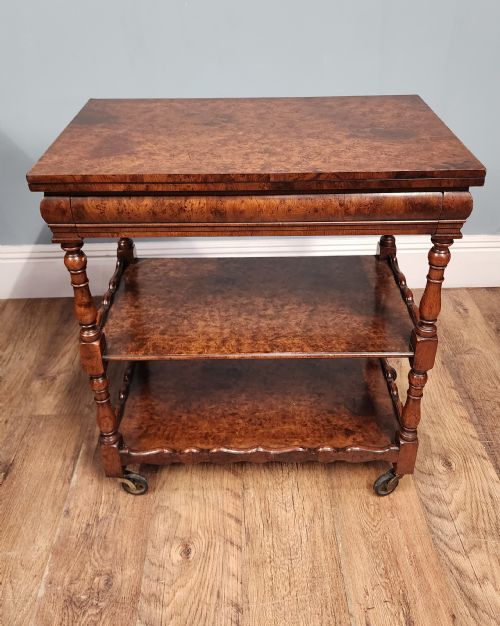


Wooden Three Tier Stand
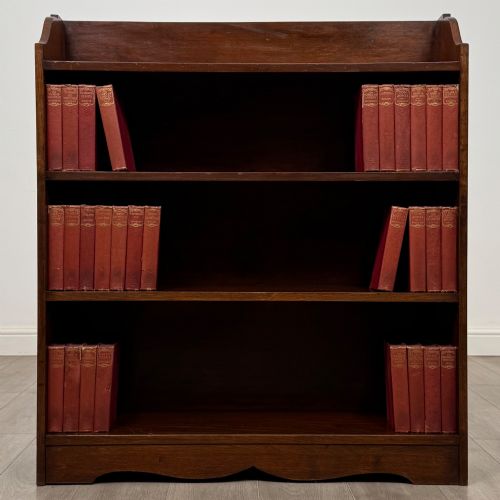
A wooden three tier stand brings practical tiered shelving into a room, taking up minimal floor space while offering multiple levels for display or service.
Wooden Three Tier Stand
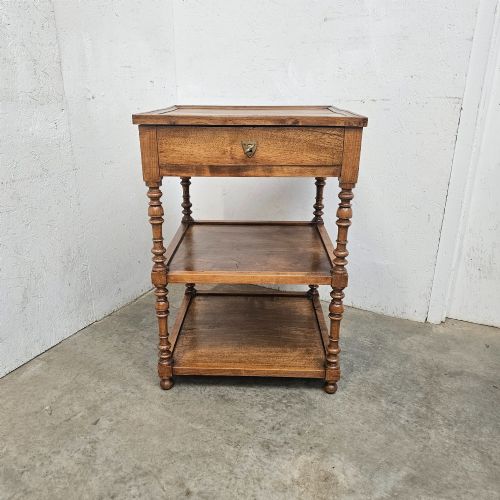
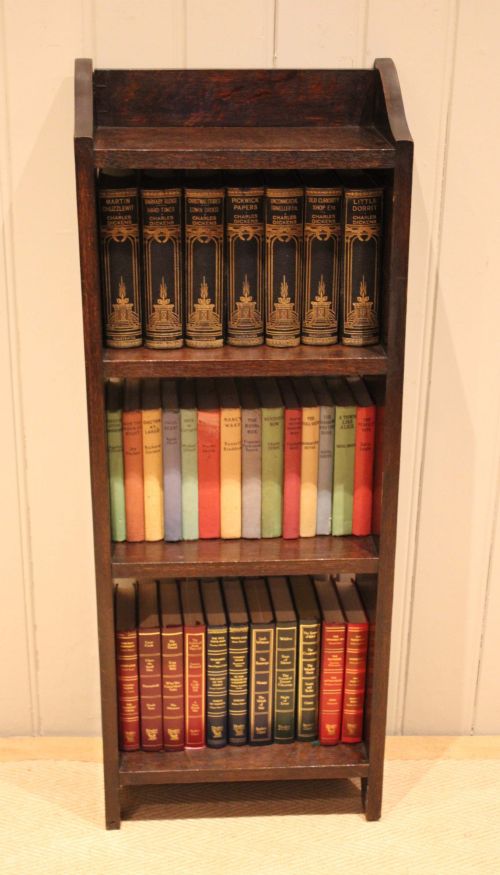
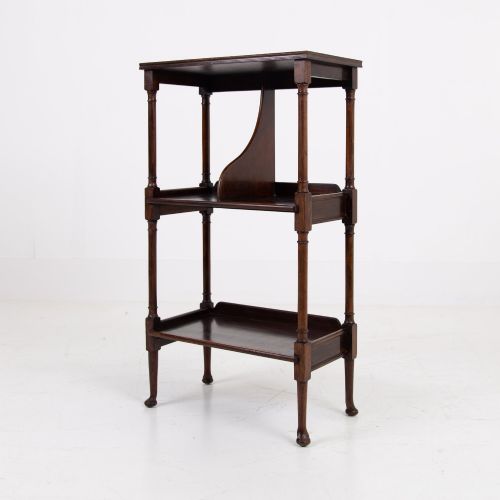
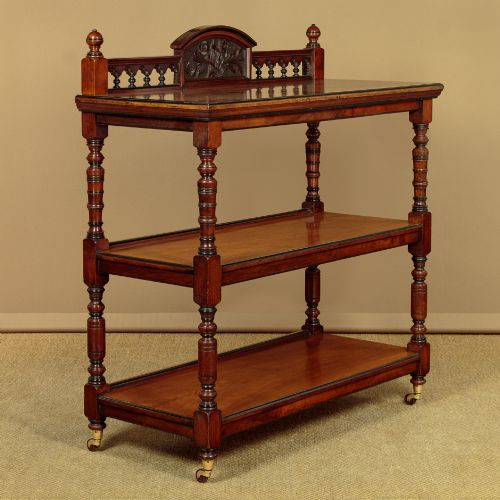
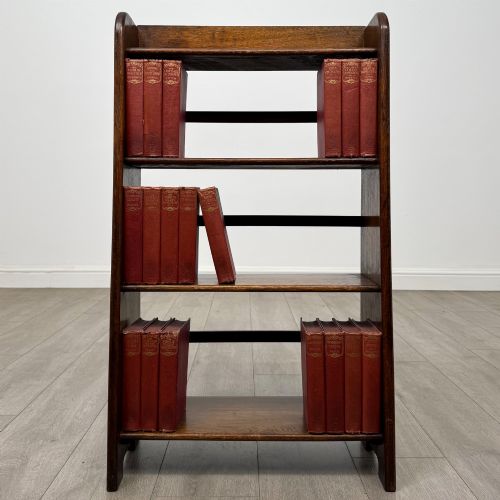
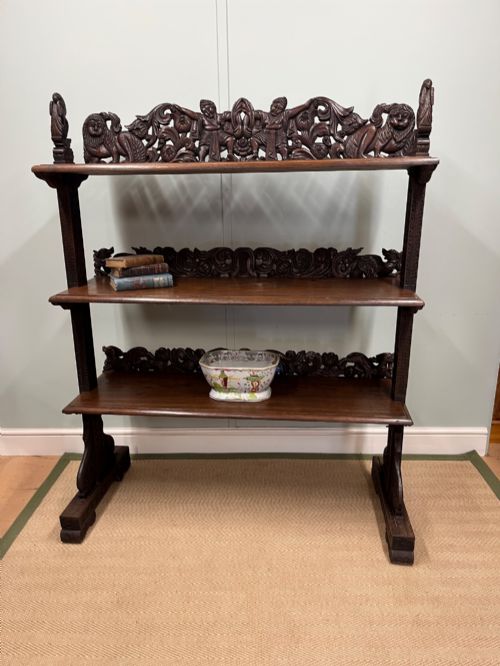
A wooden three tier stand encompasses forms such as cake stands, whatnots, etageres, and dumb waiters originating across the Georgian, Victorian, and Edwardian periods. These multi-tiered pieces served various domestic functions, from holding afternoon tea to displaying ornaments and books in principal rooms.
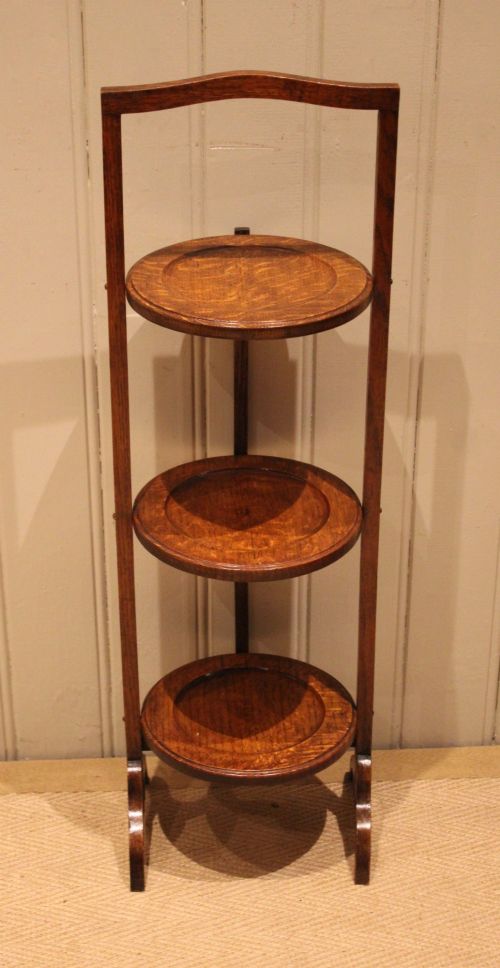
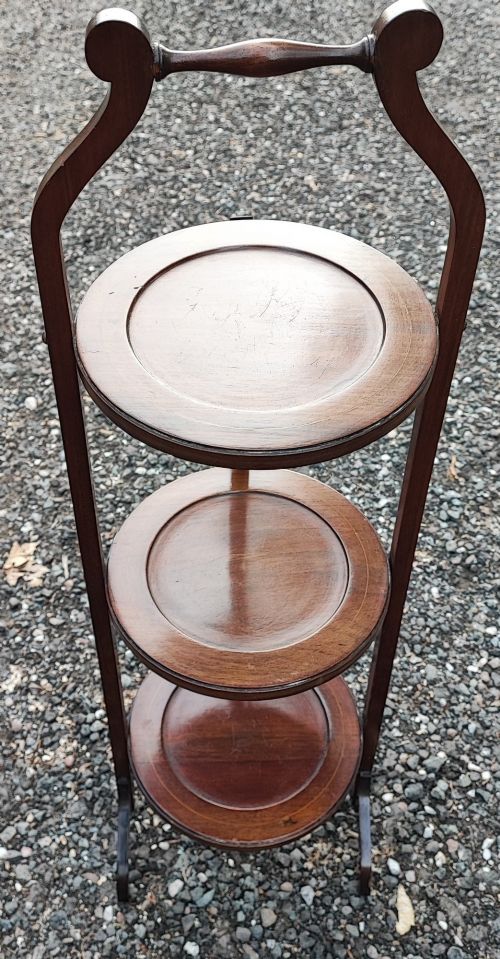
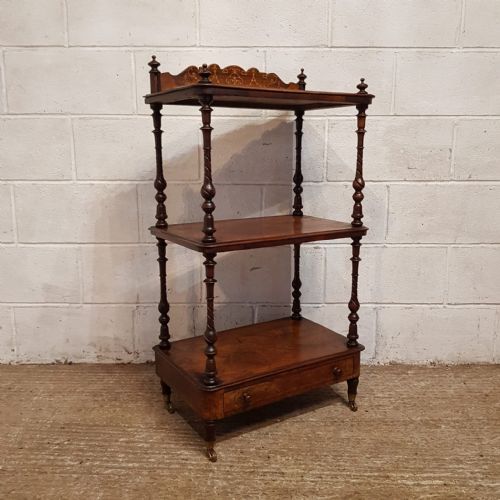
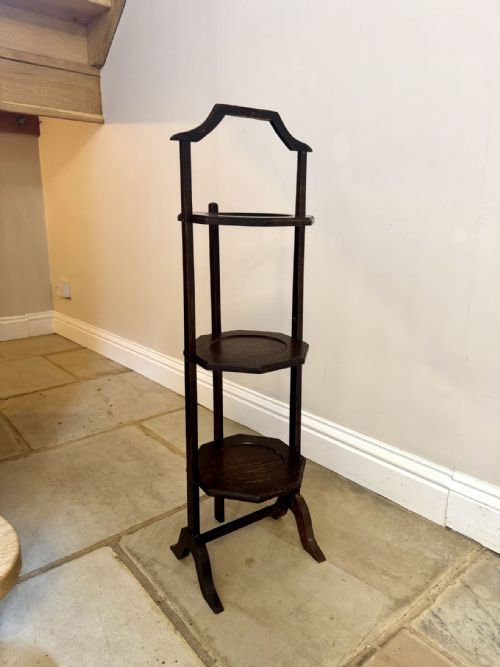
Edwardian folding cake stands in oak and mahogany appear most frequently on this page, alongside Victorian burr walnut whatnots and etageres. Makers produced these tiers in both solid timbers and veneered surfaces, reflecting the changing interior fashions of the nineteenth and early twentieth centuries.
Materials and Technique
Cabinet makers utilised dense hardwoods like mahogany, walnut, oak, and rosewood, often applying burr walnut or pollard oak veneers to prominent surfaces. Brass hardware, iron mechanisms, and turned wooden supports provide structural integrity and articulation for folding designs.
Joinery techniques ranged from simple folding hinges on portable cake stands to intricate marquetry inlay and carved details on exhibition pieces. Wood was turned, polished, and sometimes ebonised to achieve the desired finish for domestic display.
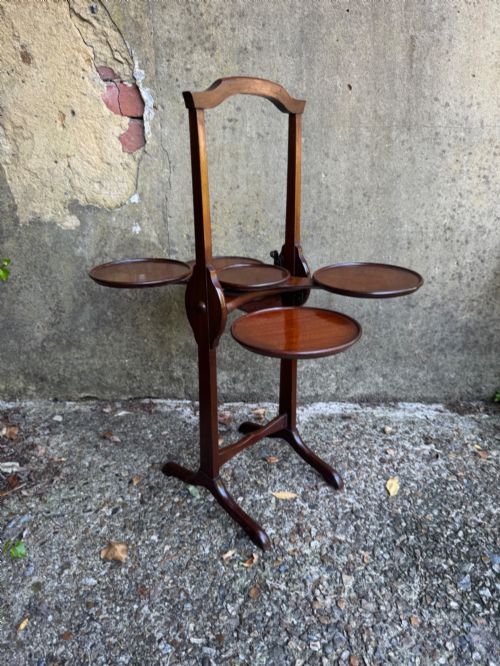
Some Edwardian cake stands arrived with ingenious folding mechanisms labelled as monoplane designs, bringing aviation-era naming conventions straight to the tea table.
Judging Quality
The choice of timber and veneer figure largely determines the distinction between standard domestic items and exhibition pieces, with burr walnut and pollard oak representing the finer end of the scale. Carved decoration, inlaid marquetry, and the crispness of turned supports demonstrate the skill invested in the construction.
The robustness of the tiered framework and the smooth operation of folding mechanisms separate practical utility from mere decorative survival. Well-designed joints ensure that multiple shelves remain stable and level under weight.
The Wooden Three Tier Stand Glossary
- Whatnot
- A freestanding piece of furniture with multiple shelves for displaying ornaments, books, or small objects. These tiered units became popular in the nineteenth century.
- Dumb waiter
- A tiered piece of freestanding furniture used in dining rooms for holding dishes or serving items without the aid of servants. They often feature revolving or stationary circular tiers.
- Inlay
- A decorative technique where contrasting materials such as lighter woods or brass are inserted into recesses within the base wood. This ornamentation appears on Edwardian and Victorian pieces.
- Burr walnut
- Timber taken from a tree growth featuring intricate, swirling grain patterns. Cabinet makers prized this wood for high-status Victorian etageres and whatnots.
Wooden Three Tier Stand: Frequently Asked Questions
What is a wooden three tier stand used for?
These tiered pieces functioned historically as portable cake stands for afternoon tea, dumb waiters for dining service, or whatnots for displaying ornaments and books in reception rooms.
In modern interiors, they serve equally well for holding plants, books, or decorative objects while occupying a remarkably small floor footprint.
How do I identify an Edwardian cake stand?
Edwardian cake stands frequently appear in oak or mahogany, often featuring folding frames that allow the three tiers to collapse flat when not in use.
Simpler models sit alongside inlaid examples bearing the stylistic hallmarks of the early twentieth century.
What is the difference between a whatnot and an etagere?
A whatnot is typically an English tiered shelving unit designed for books, ornaments, or general display, often associated with Victorian and Georgian interiors.
An etagere is the French equivalent, frequently lighter in construction and incorporating marquetry inlay or refined turned supports.
How do I care for antique tiered wooden furniture?
Keep these pieces away from direct heat sources and strong sunlight to prevent the timber from drying out and the veneers from lifting.
Regular dusting with a dry, soft cloth preserves the polished surface without the need for heavy chemical polishes.