

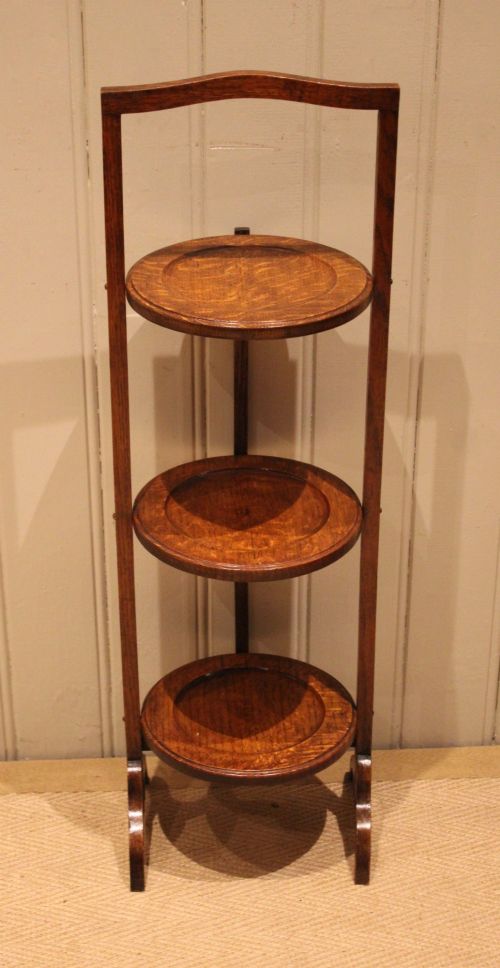
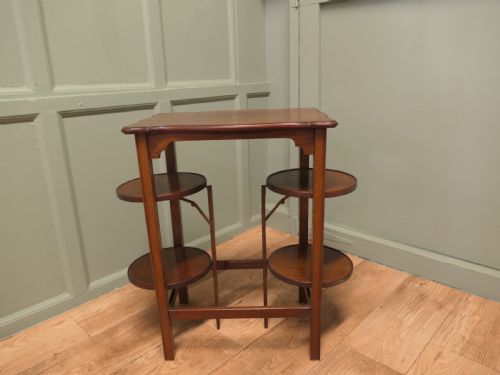
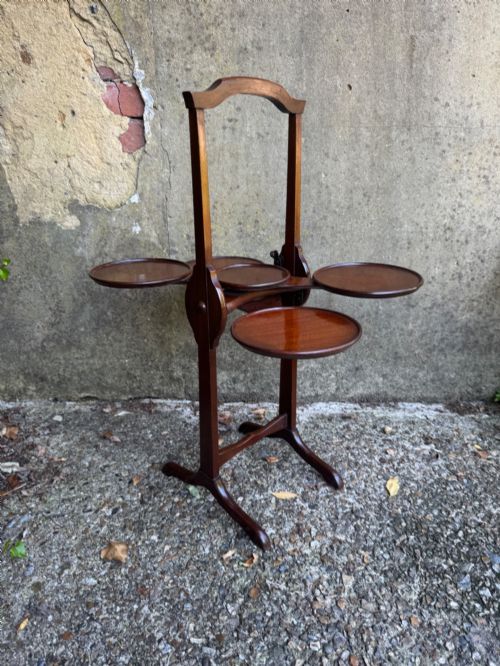


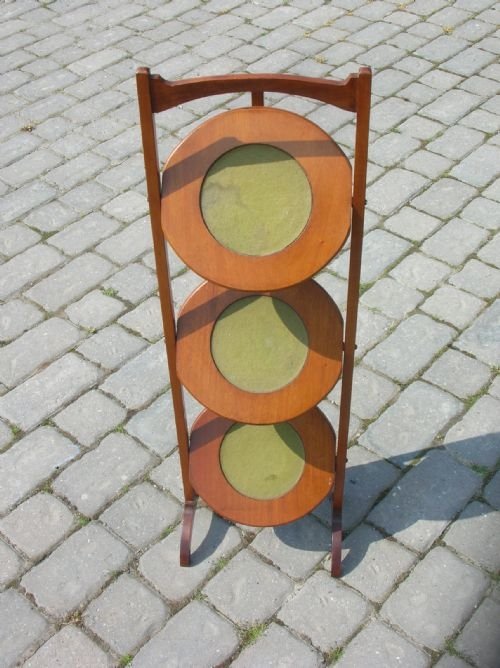
Edwardian Muffin Stand
These edwardian muffin stand pieces offer tiered hospitality in rich mahogany or oak, bringing practical charm to afternoon tea.
Edwardian Muffin Stand
When you search for an edwardian muffin stand, you are looking at practical tiered furniture designed for serving baked goods and afternoon tea. The pieces on this page span the Edwardian period, 1900, 1910, 1920, and the nineteenth century.
You are most likely to meet mahogany or oak examples featuring folding frames and multiple tiers. These items function as cake stands, tiered stands, and folding tea tables.
The forms range from simple single-tier designs to taller three-tier and four-tier standing structures. Makers of the era constructed these stands to fold flat for convenient storage when not in use.
Materials and Construction
Cabinetmakers utilised solid timbers like mahogany, oak, and walnut, frequently enhancing the surfaces with satinwood inlay or brass fittings. Wood formed the structural core of every tier and folding support frame.
Metal hinges and brackets allowed the tiered stands to collapse smoothly. Felt pads occasionally protected the wood joints and surfaces during folding operations.
Edwardian Muffin Stand Retail Price Guide 2026
Typical asking prices for edwardian muffin stand among the pieces listed under this phrase on Sellingantiques today, from the lower quarter to the upper quarter. They describe what is for sale here now, not the wider market.
Some folding tea stands include hidden felt elements to keep the mahogany joints from squeaking during high tea.
Judging Quality
The distinction between standard utility items and finer examples rests in timber selection and joinery precision. Superior stands display carefully figured mahogany or oak grain paired with tight, reliable folding mechanisms.
Richer visual appeal emerges in pieces incorporating satinwood details or polished brass hardware rather than plain metal joints. The stability of the tiers when fully open demonstrates the original maker's skill.
The Edwardian Muffin Stand Glossary
- Edwardian
- Pertaining to the reign of King Edward VII, spanning from 1901 to 1910, characterised by lighter furniture forms. This era favoured elegant hospitality accessories.
- Tiered Stand
- A piece of furniture featuring multiple horizontal surfaces arranged vertically. These levels provided ample space for cakes and pastries.
- Folding Table
- A movable surface designed with hinged legs or frames to collapse flat. This mechanism saved space in domestic drawing rooms.
- Satinwood
- A durable hardwood with a lustrous golden yellow sheen used for decorative stringing and inlay. Cabinetmakers employed it to create subtle contrast against dark mahogany.
Edwardian Muffin Stand: Frequently Asked Questions
What is a muffin stand?
A muffin stand is a small tiered piece of furniture designed to hold plates of small cakes and breads during afternoon tea. The vertical arrangement kept the table clear for cups and saucers.
These stands became popular in domestic parlours for serving guests without crowding the main tea table. Their compact footprint suited smaller Victorian and Edwardian drawing rooms.
How do I fold the stand?
Most antique stands use hinged wooden or brass mechanisms that allow the vertical supports to pivot inward. Lifting the central tier slightly usually releases the locking action.
Take care to support the tiers with your hands while folding to avoid straining the original wood joints. Older brass hinges may require gentle handling if they have stiffened over time.
What wood are they made from?
The listings show stands primarily constructed from mahogany, oak, and walnut. Some examples also incorporate satinwood for decorative inlay.
Mahogany and oak provided the structural strength needed for folding tiers while remaining relatively lightweight. Walnut offered an alternative dark grain favoured in nineteenth-century workshops.
How many tiers do they have?
Stands on this page feature varying configurations from single tiers up to four tiers. Three-tier and four-tier folding versions appear most frequently in the current selection.
Taller stands provided additional serving capacity while maintaining a narrow base. Single-tier versions functioned more like traditional low cake stands or small occasional tables.