






Vintage Flintlock Pistol
These vintage flintlock pistol examples offer tangible connections to eighteenth and nineteenth century history, prized for their mechanical ingenuity and period craftsmanship.
Vintage Flintlock Pistol
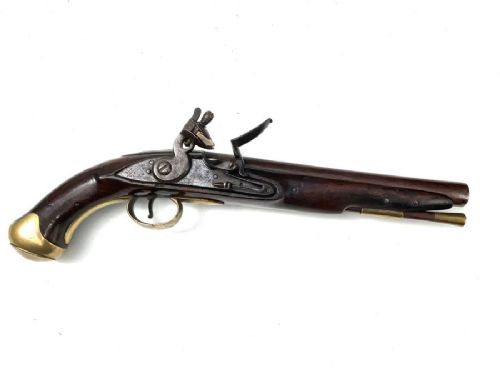
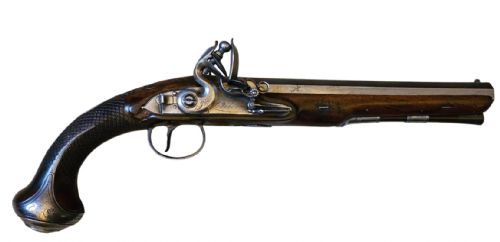
A vintage flintlock pistol represents a firearm ignition system developed in the seventeenth century and utilised extensively through the eighteenth and nineteenth centuries. Collectors encountering these arms find specimens originating from British, French, Irish, and Ottoman workshops.
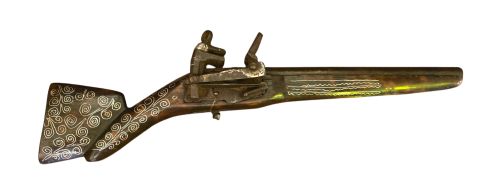
The selections span distinct functional forms, ranging from heavy holster and military service models to compact overcoat and pocket pistols designed for personal defence. Regional variations include Ottoman Balkan pieces with silver inlay and brass-clad stocks alongside London-made officer arms.
Dated examples frequently anchor the middle of the eighteenth century up to the nineteenth century, encompassing Georgian, Regency, and Victorian stylistic influences. Buyers encounter both smooth-bore flintlock mechanisms and subsequent conversion types.
Materials and construction
Makers constructed stocks primarily from figured walnut or general hardwoods, shaping them to house the lock mechanism and barrel securely. Stocks often featured intricate brass mounts, carved details, or elaborate silver inlay.
Barrels and lock plates utilised steel, iron, or cast brass, with certain variants employing distinctive cannon-shaped brass barrels. Lock mechanisms relied on hardened steel frizzens and flint assemblies to generate the sparks required for black powder ignition.
Mail coach inspectors required specialised overcoat pistols to safeguard the post against highwaymen.
Distinctions in craftsmanship
The standard of engraving upon the lock plates and trigger guards distinguishes workshop output, with master gunsmiths executing crisp scrollwork and maker signatures. Plain military service arms contrast with civilian pieces displaying silver wire inlay and detailed brass cast work.
The integrity of the lock mechanism and the original matching of components dictate the grade of a piece. Retaining the original stock finish without extensive timber replacement marks superior examples.
Harrison of London·Timothy Hughes·Thomas Anelli·Meyer And Mortimer·Barber of Newark·Dutton·A.W Spires·Wilson
The Vintage Flintlock Pistol Glossary
- Frizzen
- The vertical steel plate struck by the flint to create sparks. It sits above the flash pan containing the priming powder.
- Bore
- The interior diameter of the barrel. Measurements are expressed in gauge or bore numbers indicating lead ball sizes.
- Overcoat pistol
- A short-barrelled pocket or muff firearm intended for concealed carry under heavy winter garments. These items suited travellers and inspectors.
- Snaphaunce
- An early type of flintlock mechanism preceding the standard French lock. It incorporates a manually operated pan cover.
Vintage Flintlock Pistol: Frequently Asked Questions
How do I identify the period of a flintlock pistol?
Makers integrated proof marks, barrel signatures, and distinct stylistic traits associated with the Georgian or Regency eras. Examining the brass mountings and stock architecture provides further chronological context.
Form changes from heavy military holster designs to smaller pocket variants also help narrow the decades of production.
Were these pistols used primarily for military service?
Military contracts required robust steel and brass-barrelled arms for light dragoons and infantry officers. Other pieces served civilian purposes for travellers and officials requiring personal protection.
Overcoat and pocket models catered specifically to civilian concealment needs during travel.
What maintenance do these pistols require?
Preservation involves storing pieces in stable environments away from excessive moisture to protect the walnut stocks and iron components. Light application of appropriate oil prevents corrosion on steel surfaces.
Handling should remain mindful of delicate silver inlay and aged timber.
How do Ottoman pistols differ from British examples?
Ottoman and Balkan pieces frequently display extensive silver wire inlay, embossed brass cladding, and distinctive rat-tailed or ball trigger formations. British and Irish arms favour formal London proof marks and restrained walnut stocks.
Mechanisms also vary, with regional Ottoman variations utilising Miquelet locks alongside standard flint systems.