




Dark Wood Flintlock
Dark wood flintlock firearms are historic ignition arms built from rich timber stocks, sought by collectors for their tangible link to early modern military and civilian combat.
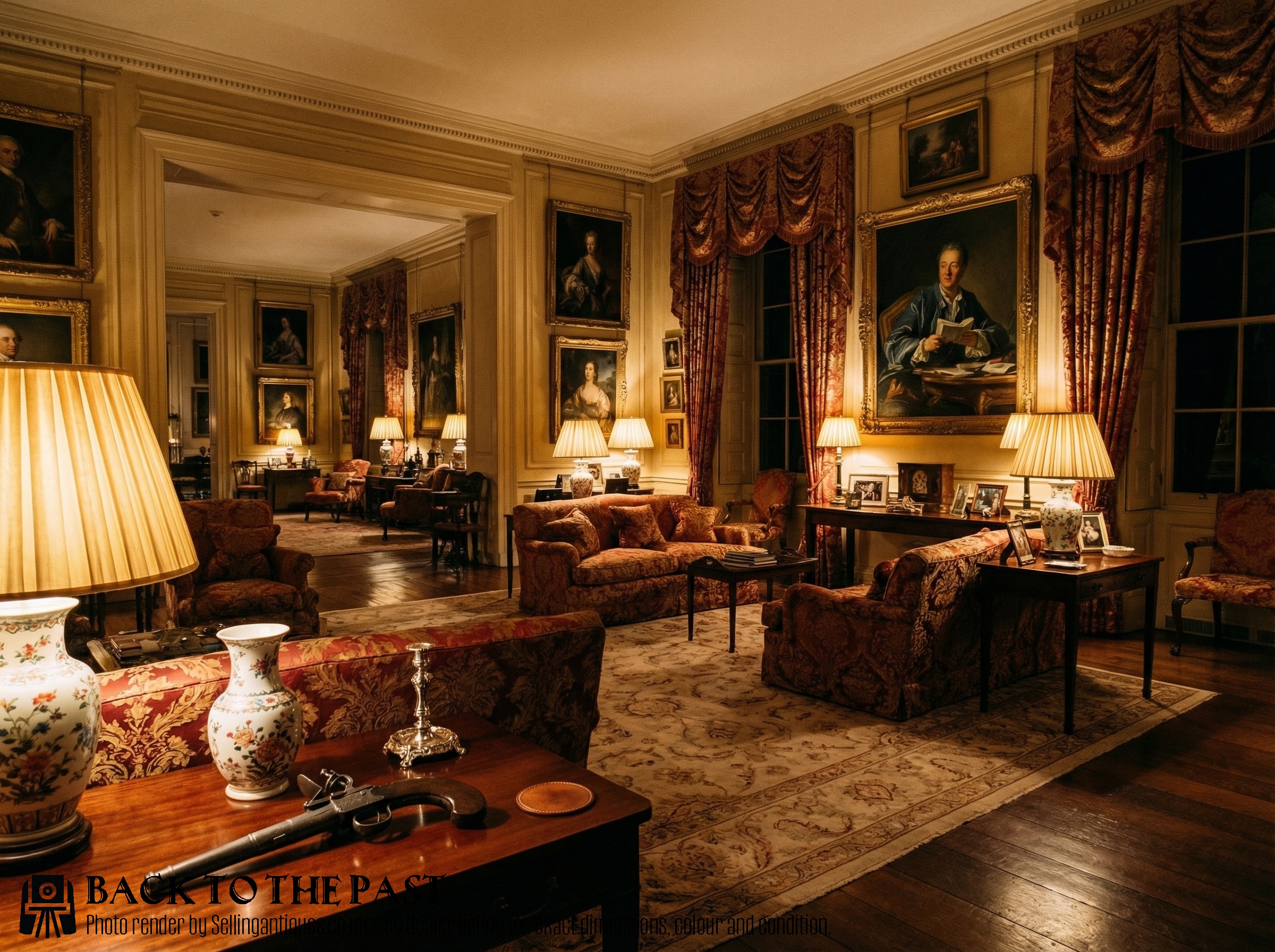
Dark Wood Flintlock
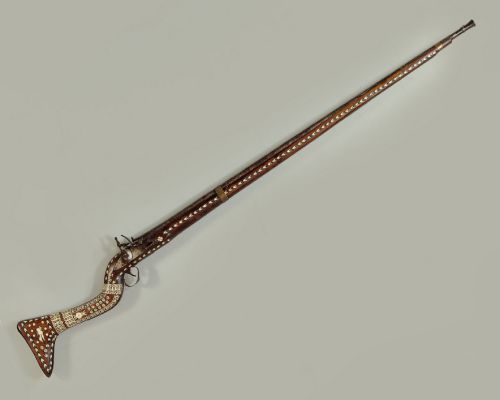
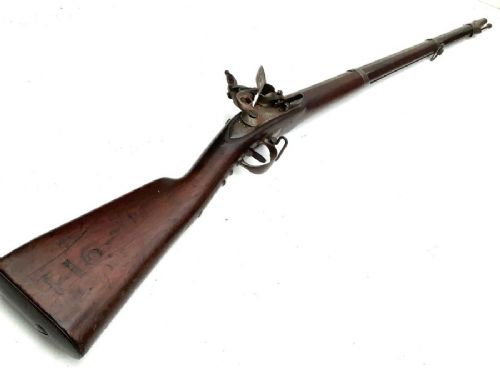
When buyers search for dark wood flintlock pieces, they encounter a range of historic firearms spanning military service arms, cavalry pistols, and tribal rifles. These examples predominantly date from the eighteenth century, the Napoleonic era, and the nineteenth century, reflecting global conflicts and craftsmanship from Britain, Europe, and Asia.
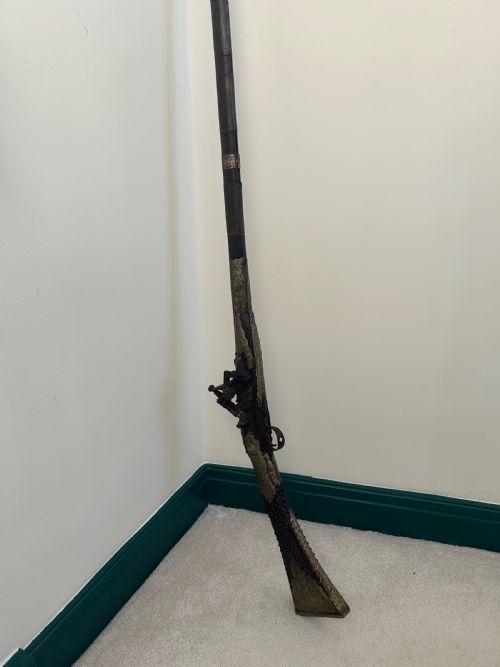
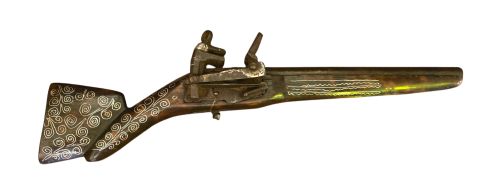
The most common forms on this page include long muskets, blunderbusses, and holster pistols housed in timber stocks. Regional variants such as Afghan jezails, Italian Brescia-type pistols, and British Brown Bess muskets demonstrate the wide geographic distribution of the flintlock mechanism during this period.
Militaria and antique arms categories encompass both regulation military equipment and decorative wall pieces. Collectors find objects ranging from sea service pistols used by naval forces to elaborately inlaid Indo-Persian and Ottoman long arms.
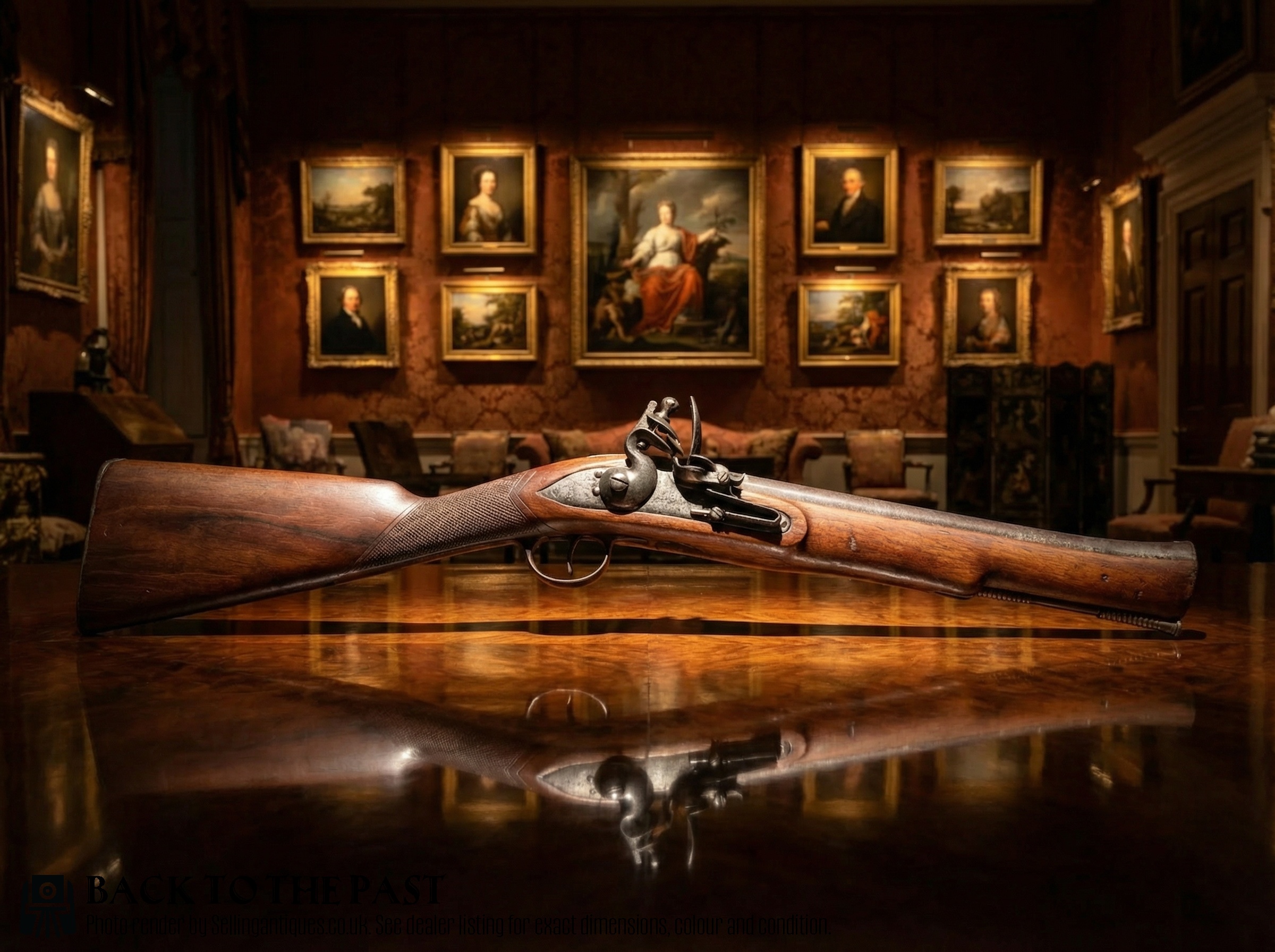
Materials and construction
Makers shaped the stocks of these firearms from dense woods, predominantly walnut, providing a sturdy foundation for the mechanical lockwork. Iron and steel formed the barrels, locks, and furniture, while brass mounts added both reinforcement and decorative contrast.
Master gunsmiths integrated intricate detailing through bone, mother-of-pearl, and silver inlay, particularly on regional pieces from the Near East and Central Asia. Proof marks stamped into the metal components record the testing of barrels by official authorities in centres such as London and Birmingham.
Dark Wood Flintlock Retail Price Guide 2026
Typical asking prices for dark wood flintlock among the pieces listed under this phrase on Sellingantiques today, from the lower quarter to the upper quarter. They describe what is for sale here now, not the wider market.
Listings feature walnut stocks combined with steel, brass, and bone across eighteenth-century and nineteenth-century periods.
Factors of distinction
Quality in these firearms rests upon the crispness of the lock mechanism, the integrity of the timber stock, and the survival of original decorative mounts. Pieces bearing legible maker signatures or official proof marks command greater interest from serious collectors.
The precision of metal engraving and the complexity of bone or silver inlay differentiate standard military issue arms from bespoke civilian or high-status regional variants. Preservation of surface detail across both the dark wood stock and the steel components dictates the overall standing of an individual piece.
T. Potts·Sargant & Son
The Dark Wood Flintlock Glossary
- Flintlock
- A firearm ignition mechanism that uses a flint struck against a steel frizzen to generate sparks for firing gunpowder.
- Musket
- A muzzle-loading long gun used by infantry forces throughout the eighteenth and nineteenth centuries.
- Jezail
- A long-barrelled flintlock or matchlock rifle originating in the Middle East and Central Asia, frequently featuring distinct curved stocks.
- Frizzen
- The vertical steel plate struck by the flint in a flintlock mechanism to create sparks and expose the priming powder.
- Blunderbuss
- A short-range firearm with a flared muzzle designed to scatter lead shot effectively.
- Proof mark
- An official stamp applied to a firearm barrel indicating it has successfully undergone pressure testing.
Dark Wood Flintlock: Frequently Asked Questions
What is a dark wood flintlock?
A dark wood flintlock is a muzzle-loading firearm utilising a flint ignition system mounted in a timber stock, typically walnut.
These pieces date primarily from the eighteenth and nineteenth centuries and include pistols, muskets, and rifles.
Were these used in combat?
Many examples served active military roles on land and at sea, while others were produced for civilian defence or regional tribal warfare.
Service arms show standardised construction, whereas regional variants often incorporate decorative bone and silver inlay.
How should I display a wall piece?
Wall pieces and non-firing arms require secure mounting brackets that support the weight of the timber stock and metal barrel evenly.
Placement should avoid direct sunlight and extreme fluctuations in humidity to preserve the walnut and inlaid materials.