


Silver Inlaid Pistol
These silver inlaid pistol examples combine functional eighteenth-century mechanics with ornate wire and sheet decoration across varied global traditions.
Silver Inlaid Pistol
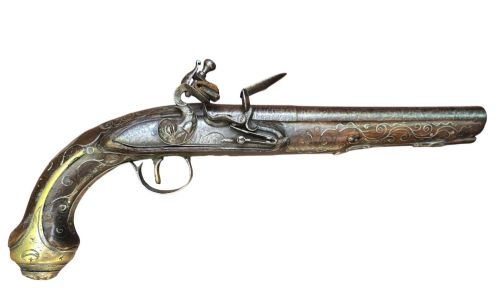
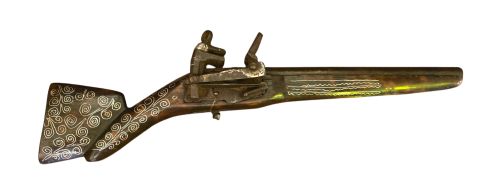
A silver inlaid pistol represents a convergence of utilitarian antique firearms and intricate metal craftsmanship across the eighteenth and nineteenth centuries. Buyers searching for a silver inlaid pistol encounter diverse regional forms, ranging from Scottish scroll-butt pocket arms to Ottoman holster and miquelet pieces.
The domestic English and French market pieces often follow Queen Anne or travelling formats with canon barrels and walnut grips. Meanwhile, Ottoman Balkan and Scottish Highland examples display distinct regional stock shapes and extensive metalwork.
Most entries span the eighteenth century, featuring flintlock mechanisms alongside occasional snaphaunce variants. These objects function simultaneously as historical weaponry and decorative art.
Materials and construction
The foundational structure relies on forged steel, iron, and brass components paired with dense hardwoods such as walnut or general wood stocks. Flint and gold accents occasionally supplement the core metal assembly.
Decoration involves precise silver wire inlay or cast silver mounts embedded into the wooden stocks and barrels. Some Ottoman and European pieces additionally incorporate gilt inlay or brass mounts alongside the silver elements.
Silver Inlaid Pistol Retail Price Guide 2026
Typical asking prices for silver inlaid pistol among the pieces listed under this phrase on Sellingantiques today, from the lower quarter to the upper quarter. They describe what is for sale here now, not the wider market.
Travellers kept muff pistols hidden in small fur hand-warmers, proving that eighteenth-century fashion could comfortably conceal a lethal argument.
Assessing quality in execution
Superior examples demonstrate meticulous precision in the silver wire or sheet inlay, where metal sits flush and tightly secured within the wooden stock. Lesser pieces show irregular spacing or fragmented wire patterns.
The refinement of the lock mechanism and the crispness of cast barrel decoration separate standard utilitarian arms from master-maker commissions. Maker attribution and well-preserved mechanical functionality further elevate the standing of an individual piece.
John Campbell of Doune·James Barber·R. Willoughby·Bunney London
The Silver Inlaid Pistol Glossary
- Flintlock
- An ignition mechanism utilising a flint held in a cock to strike a steel frizzen, creating sparks to ignite the priming powder. This system dominated firearm production throughout the eighteenth century.
- Scroll-butt
- A distinct stock shape terminating in a tight, downward-curving scroll often associated with Scottish Highland pistols. This form provides a secure grip for the shooter.
- Canon barrel
- A barrel shaped like a bronze cannon, featuring a stepped profile that tapers outward towards the muzzle. It appears frequently on Queen Anne style pocket pistols.
- Snaphaunce
- An early flintlock precursor mechanism utilising a sliding pan cover linked to the frizzen. It represents an intermediate evolutionary step in firearm ignition systems.
Silver Inlaid Pistol: Frequently Asked Questions
How do I date a silver inlaid pistol?
Dating relies primarily on stylistic indicators such as lock mechanisms, stock shapes, and the complexity of the silver wire patterns. Eighteenth-century models typically exhibit transitional characteristics between early snaphaunce and refined flintlock systems.
Maker signatures or London and Birmingham proof marks found on the metal components provide more specific chronological anchors when present.
Were these pistols used in combat?
Many examples served as military holster or travelling arms intended for personal defence by officers and travellers. Their construction prioritized reliable pocket or belt utility alongside status display.
Over time, the inclusion of elaborate silver inlay shifted their role toward presentation pieces, particularly within Ottoman and Balkan regions.
How should I display a pistol safely?
Displaying antique firearms requires stable environmental conditions away from direct sunlight and excessive humidity to protect the wood and metal components. Wall mounting brackets or secure glass display cabinets allow full visibility of the silver inlay without placing strain on the lock mechanism.
Consulting a specialist ensures the mounting method supports the weight of the steel and brass barrels safely.
What is the difference between English and Ottoman styles?
English pieces often feature restrained silver wire inlay on walnut stocks with curved canon barrels, following Queen Anne or pocket pistol conventions. Ottoman and Balkan variants tend toward more profuse decoration across longer stocks with distinct miquelet or French-derived locks.
Regional differences extend to the mount shapes, with Ottoman styles favouring cast brass or extensive silver parcel techniques.