
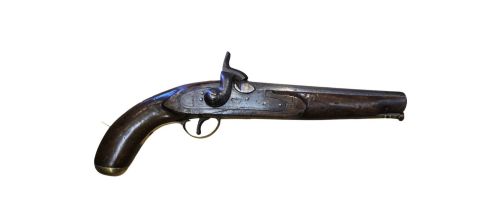
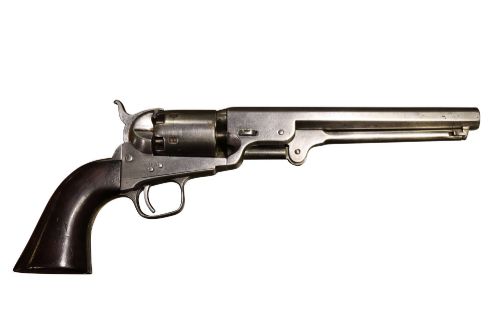
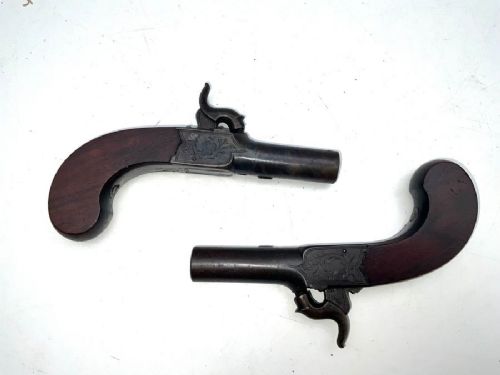
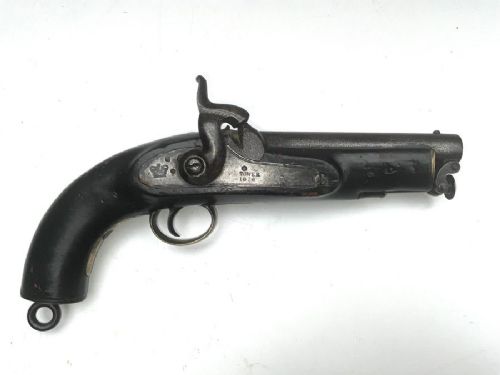



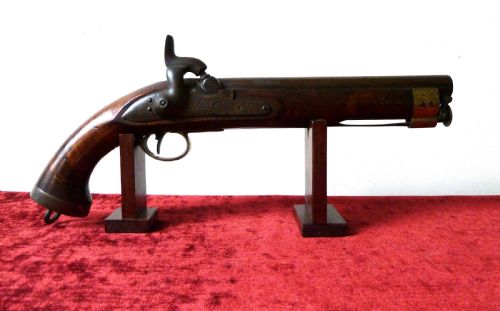
19th Century Pistol
A 19th century pistol brings tangible military history and mechanical ingenuity into a collection through surviving flintlock, percussion, and revolver specimens.
19th Century Pistol
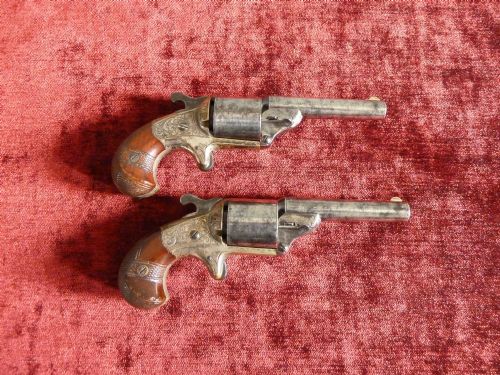
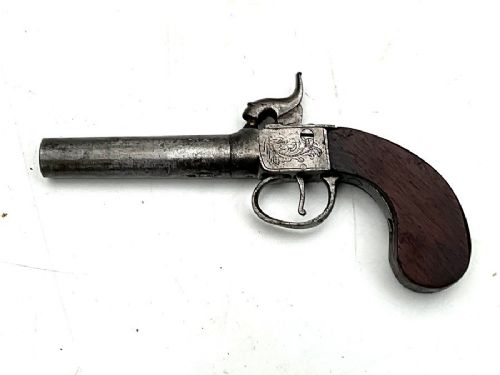
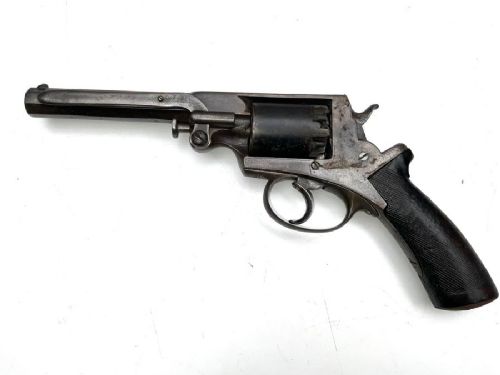
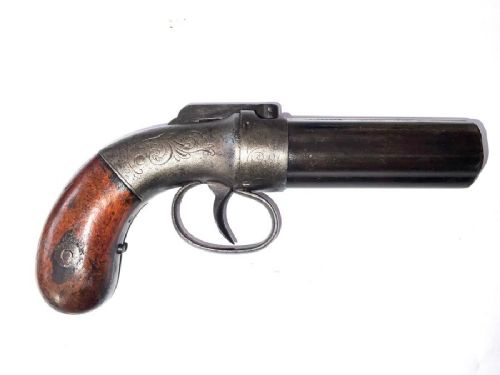
A 19th century pistol encompasses a broad range of personal firearms from the Georgian, Regency, and Victorian eras, spanning military service arms, duelling pieces, and concealed pocket protectors. Buyers encounter everything from government-issued martial percussion revolvers and Tower-stamped belt pistols to civilian boxlock pocket models and multi-barrel pepperpots.
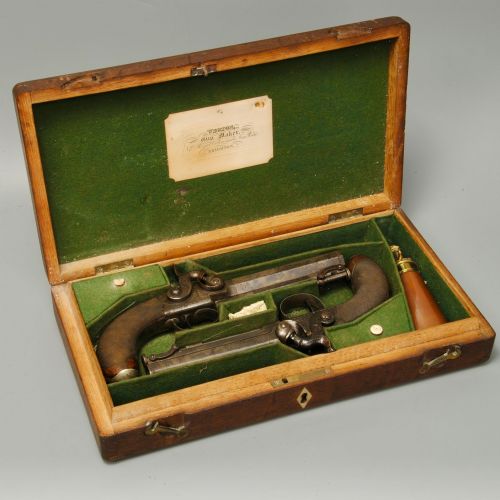
Geographic origin shapes the form significantly, with English makers producing precise officers' pieces while Ottoman, Balkan, and Russian workshops turn out elaborately decorated flintlock and miquelet mechanisms. Matched pairs, cased sets with accessories, and specialised designs like dog scarers or coat pistols frequently appear in the inventory.
Materials and Construction
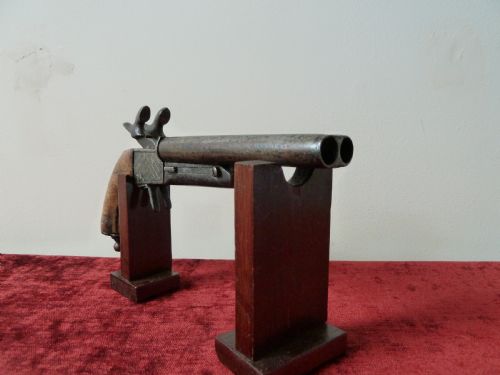
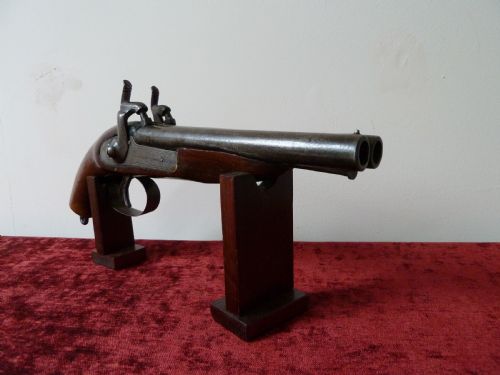
Makers built these arms using forged steel and iron for barrels and lock mechanisms, paired with stocks carved from dense timber such as walnut and mahogany. Brass and iron furniture reinforcement occurs frequently, while more decorative regional examples utilise silver inlay and embossed brass cladding.
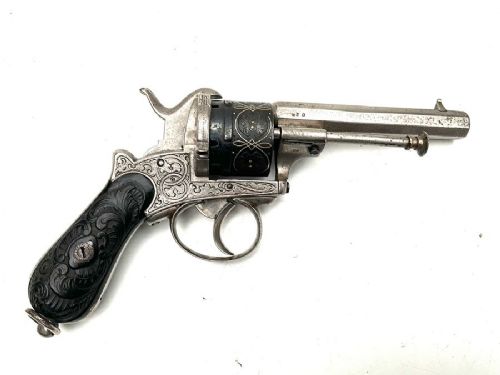
Action mechanisms evolved rapidly over the period from traditional flintlock systems to percussion caps and multi-shot rimfire or pinfire revolvers. Specialised iterations incorporate folding bayonets, intricate engraving on metal surfaces, or mother-of-pearl grips.
Specialised postmans dog scarer pistols ensured postal workers could deter aggressive hounds on Victorian rounds.
Assessing Standard and Execution
The distinction between standard service arms and top-tier workshop output lies in the crispness of the lock mechanism, the depth and execution of hand engraving, and the integration of matching serial numbers. Cased sets complete with original accessories and fitted compartments command greater interest than solitary pieces.
Condition of the metal components, legibility of maker signatures or military stamps, and the integrity of the wooden stock dictate the standing of an individual firearm. Finer specimens retain original finishes and unpolished surfaces that document their period of use accurately.
Colt·Allen & Thurber·Deane Adams & Deane·Auguste Francotte·George Sherwood
The 19th Century Pistol Glossary
- Percussion cap
- An ignition system introduced in the early 19th century that used a small metal percussion cap struck by the hammer to detonate gunpowder. This method largely replaced flintlocks due to its reliability in wet weather.
- Flintlock
- An ignition mechanism utilising a piece of flint held in a cock to strike a steel frizzen, creating sparks to ignite the priming powder. It represents the dominant technology of the late 18th and early 19th centuries.
- Pepperpot
- A multi-barrel firearm where the entire cylinder cluster revolves around a central axis to fire multiple shots without a separate barrel. Allen & Thurber produced notable examples during this era.
- Boxlock
- A pistol design where the lock mechanism is contained within the frame beneath or behind the breech, creating a compact profile popular for pocket and coat firearms.
- Miquelet
- A form of snaplock ignition common in Ottoman, Spanish, and Mediterranean regions during the 18th and 19th centuries, featuring an external mainspring and distinctive jaw screw.
19th Century Pistol: Frequently Asked Questions
How do I identify a flintlock versus percussion pistol?
Flintlocks rely on a cock holding a piece of flint that strikes a steel frizzen to generate sparks for ignition. Percussion models feature a small hammer that falls onto a hollow nipple holding a priming cap.
This fundamental shift in ignition technology occurred during the early decades of the 19th century, making the lock type the primary indicator of developmental period.
Were these firearms used in combat?
Many examples saw active service with British, American, and foreign military forces, ranging from cavalry troopers to naval officers and infantry detachments. Government inspection marks and unit stamps often confirm martial issue.
Other specimens served civilian roles for personal defence, carriage travel, or duelling among gentlemen.
What is a pocket pistol?
Pocket pistols are compact firearms manufactured with shorter barrels and concealed triggers for discreet carry in pockets or coat linings during the Georgian and Victorian eras. Boxlock actions and folding triggers helped reduce snagging when drawn quickly.
Civilian variants included specialised iterations like gambler models and night watchmen defensive arms.
Why do some revolvers have matching numbers?
Makers stamped identical serial numbers across major component parts, including the frame, barrel, and cylinder, to ensure precise factory fitting. Matching numbers confirm that the firearm retains its original factory configuration without replacement parts.
Collectors prize matched sets and numbered components for historical integrity.