


18th Century Musket
An 18th century musket carries the weight of global conflict and trade, offering collectors tangible history in walnut, steel and brass.
18th Century Musket
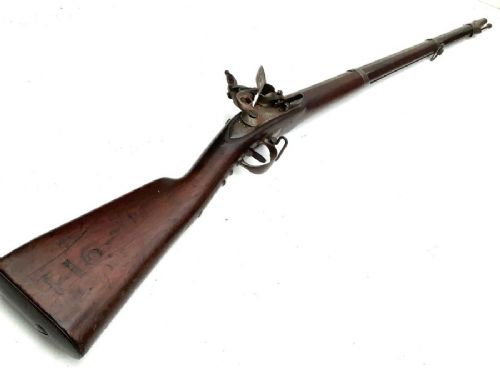
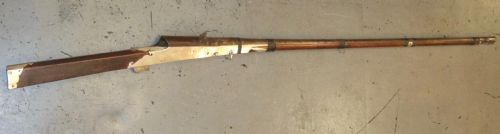
An 18th century musket spans military arms from European battlefields to ornate matchlocks from the Indian subcontinent and Ottoman territories. You will find pieces originating from British, French, American, and regional traditions sharing the defining engineering of the era.
The selections here range from standard military issues like the Brown Bess and Charleville to distinctive regional variants such as North Indian Toradar matchlocks and Balkan flintlock carbines. These firearms served infantry, cavalry, and frontier guards across distinct geopolitical conflicts.
Most examples date firmly within the seventeen-fifties to eighteen-hundred period, capturing the transition of mechanical ignition systems and stock designs. Collectors encounter everything from plain service pieces to highly decorated diplomatic gifts mounted in silver and bone.
Materials and Construction
Makers shaped stocks from dense timbers including walnut and seasoned hardwood, providing the structural backbone to absorb heavy propellant charges. These wooden foundations often accommodated complex locking mechanisms via precise hand-carving.
Forged iron and steel form the barrels and internal ignition assemblies, paired with contrasting mounts cast in brass. Many regional arms feature extensive decorative inlay work utilising bone and mother-of-pearl.
Ignition technology relied on distinct mechanical principles, encompassing early matchlocks, traditional flintlocks, miquelet locks, and toe-lock mechanisms. Each system demanded precise metalwork from armourers to ensure reliable spark generation or slow-match progression.
Certain frontier muskets feature inlaid bone decorations intricate enough to distract an opponent during peace negotiations.
Defining Quality in Firearms
The standard of execution in decorative mountings and metal engraving marks the division between standard military issue and bespoke workshop production. Fine examples display intricate silver or bone inlay and crisp barrel markings.
Originality of components dictates desirability, with matching locks and barrels holding greater historical integrity than assembled pieces. The retention of functional lock geometry and clear proof marks elevates a piece significantly.
Regional craftsmanship manifests in the complexity of the stock architecture and the standard of smithing in the barrel. Superior items maintain their structural rigidity and integrity across both timber and ferrous elements.
The 18th Century Musket Glossary
- Flintlock
- A firearm ignition mechanism that uses a flint struck against a steel frizzen to generate sparks. This system dominated military and civilian arms throughout the period.
- Matchlock
- An early ignition system where a slow-burning match is lowered into a flash pan by a lever. It represents one of the earliest mechanical methods of discharging handheld firearms.
- Blunderbuss
- A muzzle-loading firearm with a flared barrel designed to scatter lead shot at close range. These weapons saw extensive use by coach guards and naval boarding parties.
- Miquelet
- A distinct form of snaplock ignition featuring an external mainspring and combined steel and frizzen. It found widespread favour across the Mediterranean, Spain, and North Africa.
- Toradar
- A traditional South Indian matchlock gun characterised by a long, slender barrel and a full-length wooden stock. These pieces frequently incorporate ornate metal bands and bone decoration.
18th Century Musket: Frequently Asked Questions
How do I clean an 18th century musket?
Maintenance requires minimal intervention, focusing primarily on gentle removal of surface dust from wood and metal surfaces using soft cloths.
Applying light microcrystalline wax or specialist oil helps preserve ferrous components and seasoned timber without altering the historical patina.
Are these old muskets still legally considered firearms?
Legal status depends entirely on the specific jurisdiction and the ignition system employed by the antique in question.
Many antique muzzle-loaders held as decorative display items or historical artefacts fall outside standard modern licensing controls.
What is the difference between a musket and a rifle?
Muskets feature smoothbore barrels designed primarily for rapid loading and firing of spherical lead balls over moderate distances.
Rifles incorporate spiral grooves inside the barrel to spin the projectile, significantly improving accuracy and effective range.
How can I tell a military musket from a civilian one?
Military pieces typically display standardised government acceptance stamps, regimental markings, and uniform furniture without excessive ornamentation.
Civilian and regional frontier arms often exhibit personalised decoration, non-standard calibre bores, and elaborate inlay work.