



Antique Brass Musket
An antique brass musket carries the heavy weight of centuries of global conflict, prized for its gleaming furniture and intricate regional ornamentation.
Antique Brass Musket
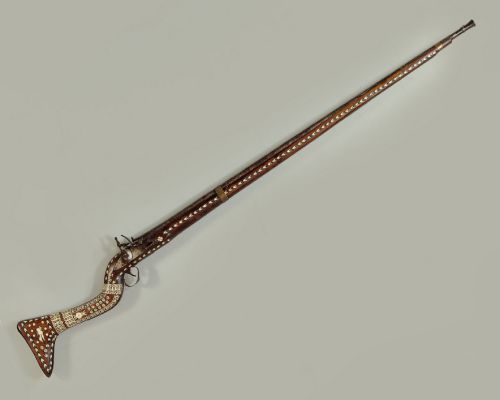
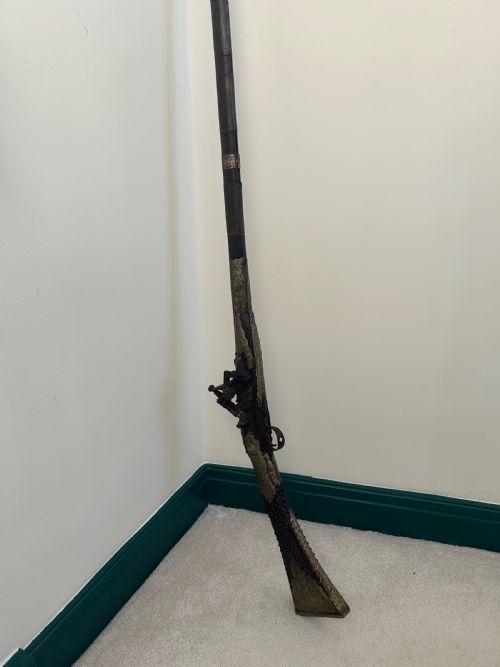
An antique brass musket encompasses standard military smoothbores, heavy fortress jezails, and short cavalry carbines spanning the eighteenth and nineteenth centuries. You encounter British Brown Bess arms alongside French flintlocks, North African toe-lock long guns, and bone-inlaid Afghan wall pieces.
The selection ranges from early matchlock and flintlock ignition systems to later percussion conversions and Enfield rifles. Most pieces originate from European military arsenals or tribal workshops across the Ottoman Empire, India, and the Northwest Frontier.
Regional variations dictate the overall silhouette, with some examples built for standard infantry drill and others fashioned as highly decorated frontier arms. Collectors focus on these distinct geographical patterns when assembling a cohesive display.
Materials and Construction
The construction pairs heavy iron and steel barrels with robust hardwood stocks, typically fashioned from walnut or domestic timber. Gunsmiths secured these components using brass trigger guards, butt plates, and multiple barrel bands.
Many regional arms feature elaborate surface decoration, incorporating extensive bone inlay, mother-of-pearl plaques, and engraved brass sheet work. Ignition mechanisms rely on hand-forged steel flints, matchlocks, or percussion hammers fitted to shaped lockplates.
Some nineteenth-century Afghan fighters carried jezails so heavy they required a built-in folding rest just to take a steady shot.
Evaluating the Build
Quality rests upon the crispness of the lock mechanism and the original integrity of the timber stock. Superior examples retain matching maker stamps, clean barrel proofs, and undisturbed brass furniture without excessive replacement parts.
The precision of decorative inlay and the complexity of the ignition system separate standard utility arms from high-status tribal or military presentation pieces. Original matching components across the barrel, lock, and stock elevate the standard of preservation.
Sargant and Son·Tower
The Antique Brass Musket Glossary
- Flintlock
- An ignition mechanism that uses a piece of flint held in a cock to strike a steel frizzen, creating sparks to ignite the priming powder. This system dominated military and civilian firearms throughout the eighteenth and early nineteenth centuries.
- Jezail
- A type of long gun used across the Middle East, Central Asia, and the Indian subcontinent, recognised by its distinctive curved stock and often decorated with bone or brass. These firearms were frequently utilised in rugged terrain from fortified positions.
- Matchlock
- An early firearm mechanism where a burning slow match is lowered into a pan of gunpowder by pulling a lever. It represents one of the earliest mechanical methods for discharging a hand firearm.
- Blunderbuss
- A short-barrelled firearm with a flared muzzle designed to scatter lead shot at close quarters. They saw extensive service on coaches, ships, and naval vessels during the Georgian period.
- Musketoon
- A shorter, lighter version of the standard military musket intended primarily for cavalry troopers and artillerymen. The reduced length made it easier to handle while mounted on horseback.
Antique Brass Musket: Frequently Asked Questions
How do I clean an antique brass musket?
Dust the timber and metal surfaces regularly with a dry, soft cloth to prevent moisture accumulation. Apply a microcrystalline wax to the brass furniture if preservation is necessary.
Avoid using abrasive metal polishes that remove historic patina and original surface age. Keep the firearm in a stable environment away from direct heat sources and dampness.
How do I identify the period?
Examine the lockplate for maker marks, crown ciphers, and arsenals stamps that correlate with known military contracts. The shape of the stock and the ignition system also provide clear chronological markers.
Flintlocks generally point to the eighteenth and early nineteenth centuries, while percussion caps and specific Enfield configurations indicate the mid-nineteenth century.
Where were jezail muskets used?
Jezail muskets saw widespread service across Afghanistan, the Northwest Frontier, and parts of India during the nineteenth century. Tribal marksmen used them effectively in mountainous terrain.
Their long barrels provided exceptional accuracy for distance shooting during regional conflicts. Many survive today with elaborate bone and brass decoration.