

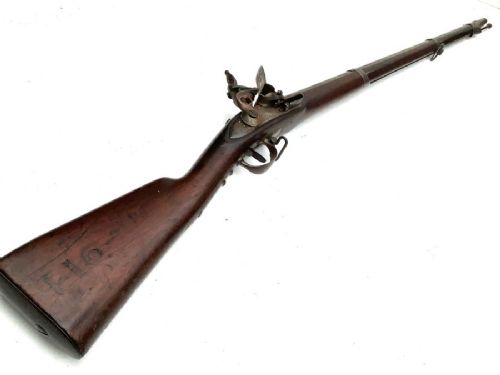
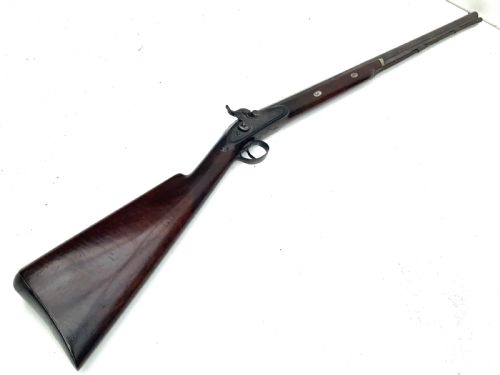


Walnut Stock Musket
A walnut stock musket is a historic shoulder arm that appeals to collectors of military hardware through its timber grain and mechanical development.
Walnut Stock Musket
A walnut stock musket represents centuries of military and sporting firearms history, spanning the Georgian, Napoleonic, and Victorian eras. These arms range from flintlock blunderbusses with sprung bayonets to percussion sporting rifles and military Enfield models.
The walnut stock musket appears on this page in forms originating from British, French, and Ottoman workshops. Buyers encounter military muskets alongside sporting pieces and distinct regional variants like North African toe-lock long guns.
Examples date from the late eighteenth century through the late nineteenth century, capturing the transition from smoothbore flintlock mechanisms to percussion ignition systems. Each specimen records the mechanical and stylistic shifts of its period of manufacture.
How they were made
Makers shaped the defining stocks from walnut, selected for its grain and resilience under field conditions, while mounting them with steel, iron, and brass components. Lock mechanisms and barrels utilised forged steel and iron, requiring precise metalworking to ensure reliable ignition.
Furniture such as trigger guards, butt plates, and ramrod pipes frequently incorporated brass or iron, fastened securely to the wooden stock. Leather slings and bone details appear on select pieces, adding further complexity to the assembly of these firearms.
Walnut Stock Musket Retail Price Guide 2026
Typical asking prices for walnut stock musket among the pieces listed under this phrase on Sellingantiques today, from the lower quarter to the upper quarter. They describe what is for sale here now, not the wider market.
Some muskets even packed a spring-loaded bayonet, ready to surprise an opponent without needing a separate blade fitted.
What varies in quality
Quality in a walnut stock musket rests on the integrity of the timber grain and the crispness of the mechanical lock. Maker attribution, such as the work associated with John Manton, separates standard military arms from bespoke sporting pieces.
The preservation of original metal finish and stock contours determines the standing of an individual piece. Retaining distinct touchmarks, clear maker stamps, and original furniture elevates a musket within its period.
John Manton & Son·Tower
The Walnut Stock Musket Glossary
- Flintlock
- An ignition mechanism that uses a piece of flint held in a cock to strike a steel frizzen, creating sparks to ignite the priming powder. This system dominated military and civilian firearms from the seventeenth through the early nineteenth century.
- Percussion
- A later ignition system utilising a hammer striking a percussion cap containing fulminate of mercury to fire the main charge. This innovation replaced the flintlock and offered superior reliability in wet weather.
- Blunderbuss
- A muzzle-loading firearm with a flared barrel designed to scatter lead shot at close range. These arms were widely utilised for coach defence and shipboard protection.
- Toe-lock
- A distinctive mechanism found on certain North African firearms where the trigger resembles a toe or engages via a downward-pressing sear. This regional action is characteristic of traditional Ottoman arms from Algeria.
- Sneider
- A breech-loading conversion system adopted by the British military in the nineteenth century to update muzzle-loading Enfield rifles. The hinged breech block allowed soldiers to use self-contained metallic cartridges.
Walnut Stock Musket: Frequently Asked Questions
How do I identify the ignition system?
Examine the lockplate situated on the side of the stock near the breech. Flintlock arms feature a frizzen and cock that hold a piece of flint, while percussion arms display a hammer that falls upon a small nipple holding a cap.
Understanding this mechanism helps determine whether the piece dates to the earlier flint era or the mid-nineteenth century percussion period.
Were these muskets used in combat?
Many listings represent standard military issues from periods such as the Napoleonic Era and Victorian military campaigns. Models like the Charleville or the Enfield saw active service with infantry units across various theatres.
Other examples, including sporting rifles and fowlers, served civilian purposes for hunting or estate protection rather than warfare.
How should I care for the walnut stock?
Keep the timber in a stable environment away from direct heat sources and drastic humidity shifts to prevent the wood from drying or splitting. Periodic application of suitable conservative oils helps maintain the finish of the walnut.
Avoid harsh chemical cleaners on both the wood and the metal components to preserve the historical surface.