

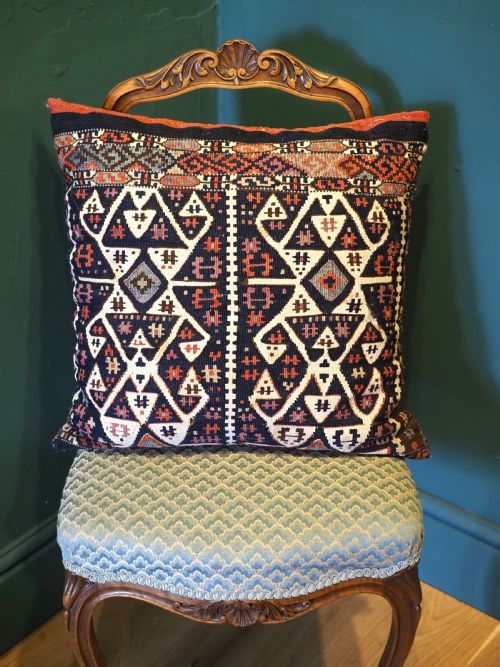


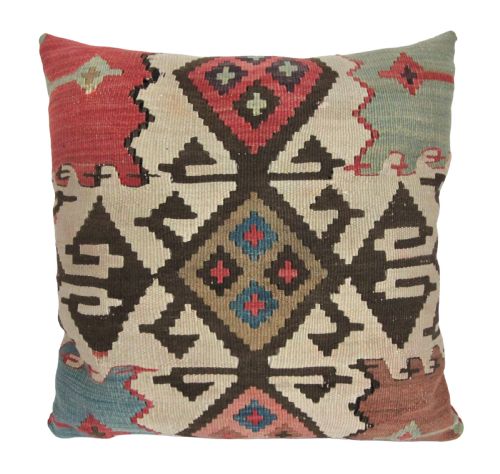

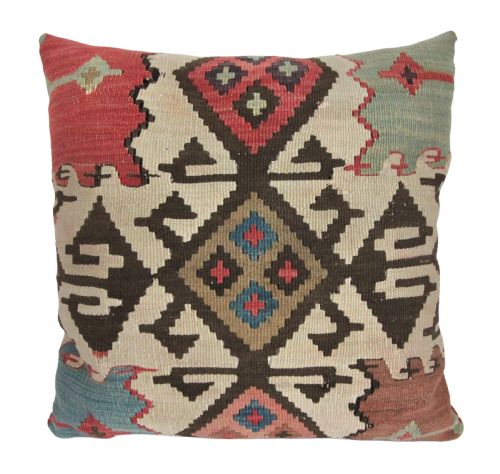


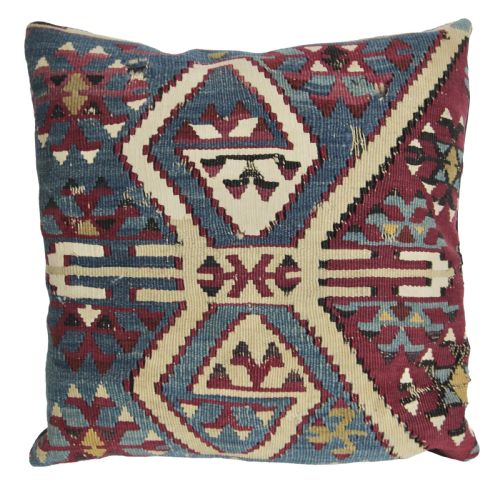


Vintage Flatweave Pillow
These vintage flatweave pillow options bring tactile tribal history into modern rooms through repurposed antique textiles.
Vintage Flatweave Pillow
When you search for a vintage flatweave pillow, you are looking at soft furnishings fashioned from older woven objects, most frequently encountered here as antique kilim cushions or carpet cushions. These pieces draw their origins from traditional Anatolian and Central Asian tribal weaving traditions, utilising older saddle bags, mafrash, torba, and bag faces.
The forms span throw cushions, cushions and pillows, and larger tribal textile soft furnishings. You will frequently find pieces dating across the late nineteenth and early twentieth centuries, specifically from the 1850s, 1870s, 1900, 1910, and 1920 periods.
Anatolian tribal and Yomut Turkmen styles dominate the aesthetic, bringing banded flatweave designs and Malatya saddle bag fragments directly into interior spaces. Each cushion repurposes durable nomadic weaving into functional home decor.
How they were made
These pieces rely on wool and cotton as their primary materials, hand woven into dense flatweave structures. Artisans constructed the original utilitarian saddle bags, torba, and mafrash using durable hand-spun wool yarns that withstood nomadic daily life.
The construction method avoids pile entirely, relying instead on the interlocking weft technique characteristic of kilim flatweaves. Makers subsequently transformed these historic hand woven fragments into cushions, preserving the original tribal artistry within a new domestic format.
Vintage Flatweave Pillow Retail Price Guide 2026
Typical asking prices for vintage flatweave pillow among the pieces listed under this phrase on Sellingantiques today, from the lower quarter to the upper quarter. They describe what is for sale here now, not the wider market.
Current listings exclusively feature wool and cotton materials across periods spanning from 1850 to 1920.
What varies in quality
The distinction between tiers rests upon the integrity of the original textile and the fidelity of its conversion. Pieces derived from complete saddle bag faces or Yomut Turkmen banded flatweaves display superior graphic impact compared to plainer field fragments.
Material density and the preservation of the hand woven wool structure dictate the tactile depth of the cushion. The expertise involved in selecting and repurposing historic Anatolian tribal fragments determines the overall success of the finished piece.
The Vintage Flatweave Pillow Glossary
- Kilim
- A flatwoven textile produced by tightly interleaving warp and weft strands without creating a pile. This technique produces a smooth, tapestry-like surface found on traditional Anatolian pieces.
- Flatweave
- A textile construction method where design patterns emerge directly from the weaving process rather than knotted tufts. These weaves form the structural base of the cushions listed on this page.
- Mafrash
- A traditional nomadic storage container or chest panel, often featuring banded flatweave designs. Surviving fragments of these pieces are frequently repurposed into cushions.
- Torba
- A small storage bag produced by Central Asian tribes, typically wider than it is tall. These antique bags provide the patterned face for Yomut Turkmen cushions.
Vintage Flatweave Pillow: Frequently Asked Questions
What is a flatweave pillow?
A vintage flatweave pillow is a cushion created by repurposing antique nomadic textiles, such as kilims and saddle bags. These textiles are hand woven from wool and cotton.
They translate traditional Anatolian tribal and Central Asian designs into functional home furnishings.
How old are these cushions?
The pieces listed span from the mid-nineteenth century through the early twentieth century. Specific dates recorded include the 1850s, 1870s, 1900, 1910, and 1920.
This age reflects the vintage and antique textiles used to construct the cushions.
What materials are used?
The cushions are constructed primarily from wool and cotton. These natural fibres formed the original hand woven structures of tribal bags and carpets.
The durability of these materials has allowed the vintage textiles to survive for over a century before conversion.
Where do the designs originate?
The styles originate from Anatolian tribal, Traditional Anatolian, and Central Asian weaving traditions. Specific regional designs include Yomut Turkmen and Malatya saddle bag patterns.
These motifs reflect the cultural heritage of nomadic and village weavers.
How should I live with them?
These cushions suit seating areas and beds where their texture and historic patterns can be appreciated. They bring warmth and pattern through traditional tribal aesthetics.
Pairing them with neutral furnishings allows the antique flatweave designs to stand out.