


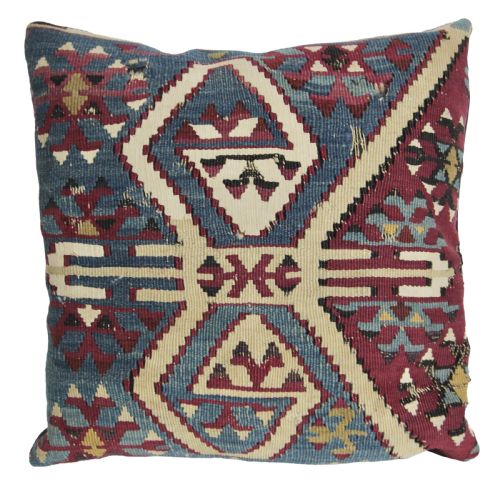
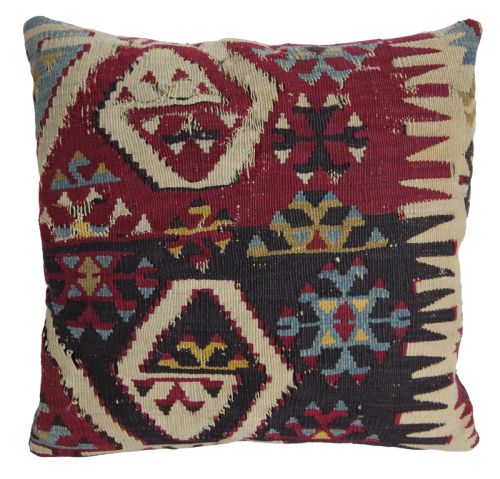


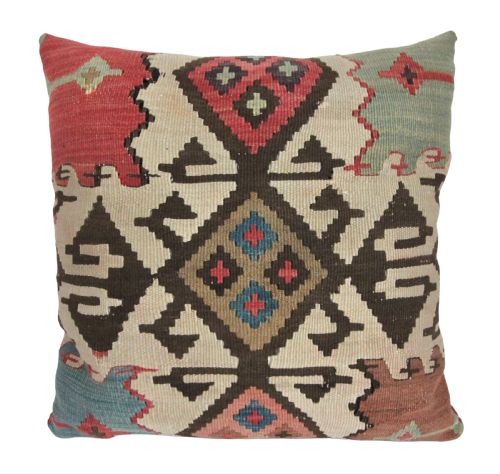
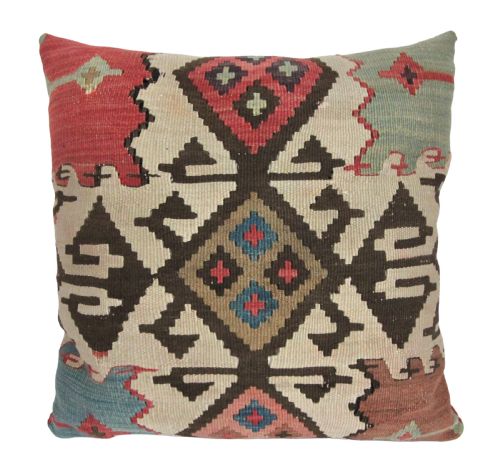
Vintage Oriental Cushion Cover
These vintage oriental cushion cover examples bring authentic tribal textile heritage into a room, offering tactile warmth and historic pattern.

Vintage Oriental Cushion Cover
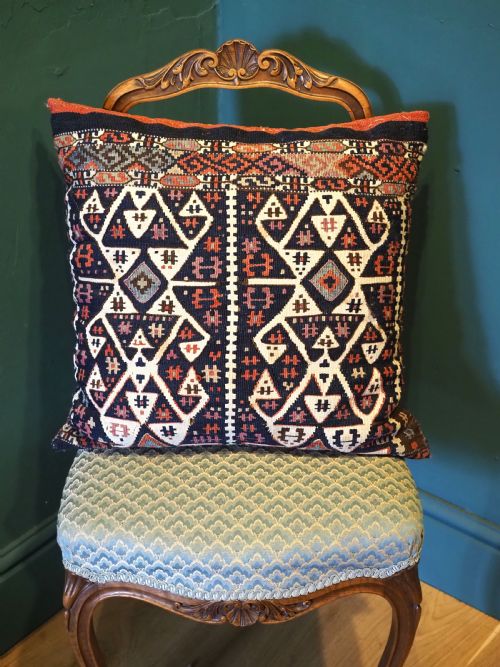
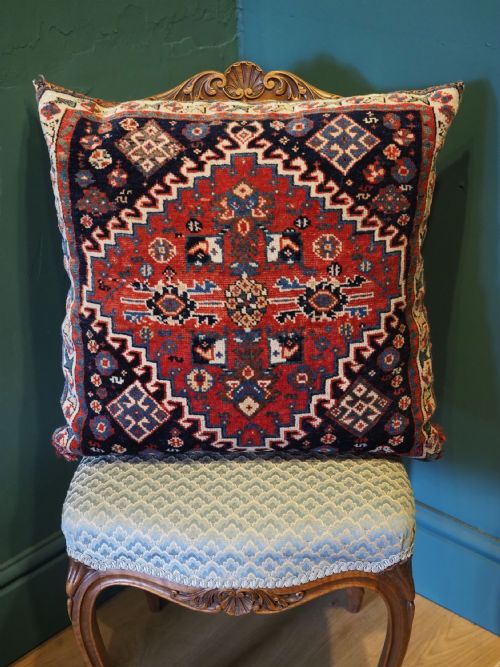
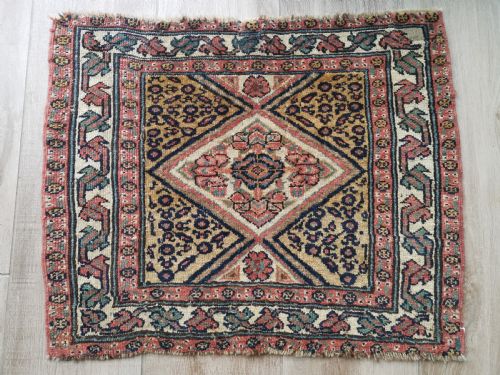
A vintage oriental cushion cover repurposed from nomadic and tribal weaving traditions transforms utilitarian items into decorative furnishings. When exploring this selection, buyers encounter pieces fashioned from older storage bags, saddle bags, and rug fragments rather than items originally made as domestic cushions.
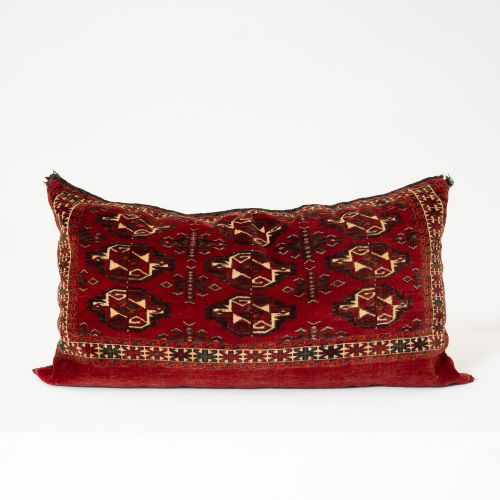
The material origins trace directly to tribal groups including Turkmen, Qashqai, Afshar, Shahsavan, and Kurdish weavers. Most examples on this page utilise repurposed bag faces, Torba faces, Chuval pieces, or Malatya kilims, retaining their original character within a square format.
Dated pieces span from the mid-nineteenth century through the early twentieth century, encompassing the 1850s, 1870s, 1880s, 1890s, and 1920s. These formats bring authentic nomadic artistry into modern interiors through time-worn textiles.
Materials and construction methods
Weavers relied on wool, hand-spun wool, and cotton foundations to construct these durable utilitarian objects. The textiles employ vegetable dyes that yield deep, enduring hues across geometric and pictorial motifs.
Listings feature textiles from the 1850s to the 1920s, constructed using wool, cotton, and vegetable dyes.
Assessing quality in tribal textile cushions
Quality rests upon the fineness of the hand-spinning, the complexity of the tribal design, and the vibrancy derived from natural vegetable dyes. Superior examples exhibit tightly packed weaves and distinct iconography, such as classic gul motifs or large boteh designs.
The integrity of the original bag face or fragment dictates the visual impact of the finished cushion. Pieces preserving complete medallions or crisp tribal patterns command greater attention from collectors than heavily truncated fragments.
The Vintage Oriental Cushion Cover Glossary
- Kilim
- A flat-woven carpet or textile lacking a pile, produced by tightly interweaving warp and weft strands. This technique creates a lightweight yet durable fabric frequently adapted into cushions.
- Torba
- A small storage bag produced by Turkmen nomads, often featuring distinctive guls. These utilitarian pieces are frequently converted into decorative cushion covers.
- Chuval
- A large tent storage bag made by Turkmen tribes for household goods. Surviving faces provide substantial material for distinctive throw cushions.
- Soumak
- A flat-weave technique utilising a wrapping stitch over the warp threads to create a textured, durable surface. This method allows for intricate geometric and animal motifs.
- Boteh
- An almond-shaped or pine-cone motif with a curved upper end, originating in Persian art. It appears frequently on Afshar and tribal bag faces.
Vintage Oriental Cushion Cover: Frequently Asked Questions
What are vintage oriental cushion covers made from?
These items utilise hand-spun wool and cotton, often sourced from nineteenth-century nomadic storage bags, saddle bags, and rug fragments.
Weavers decorated these textiles using traditional vegetable dyes to create lasting geometric and tribal patterns.
How were these tribal textiles originally used?
Nomadic communities used bags like Torbas, Chuvals, and saddle bags to store bedding, clothing, and household goods inside tents.
Over time, surviving fragments and complete bag faces are adapted into cushions for modern domestic interiors.
How do I care for a vintage wool cushion?
Protect the hand-spun wool and vegetable dyes by keeping the cushion out of direct sunlight to prevent colour fading.
Gentle surface cleaning or professional textile maintenance preserves the integrity of the flat-weave and pile surfaces.
How can I tell different tribal designs apart?
Different tribal groups employed distinct structural methods and motifs, such as Turkmen guls, Qashqai patterns, and Afshar boteh designs.
Examining the weave type, including soumak work or kilim flats, helps identify the specific regional origin.