


Vintage Fireplace Clock
A vintage fireplace clock anchors the room with weight and presence, bringing mechanical life to the mantelpiece through striking movements and architectural stone.
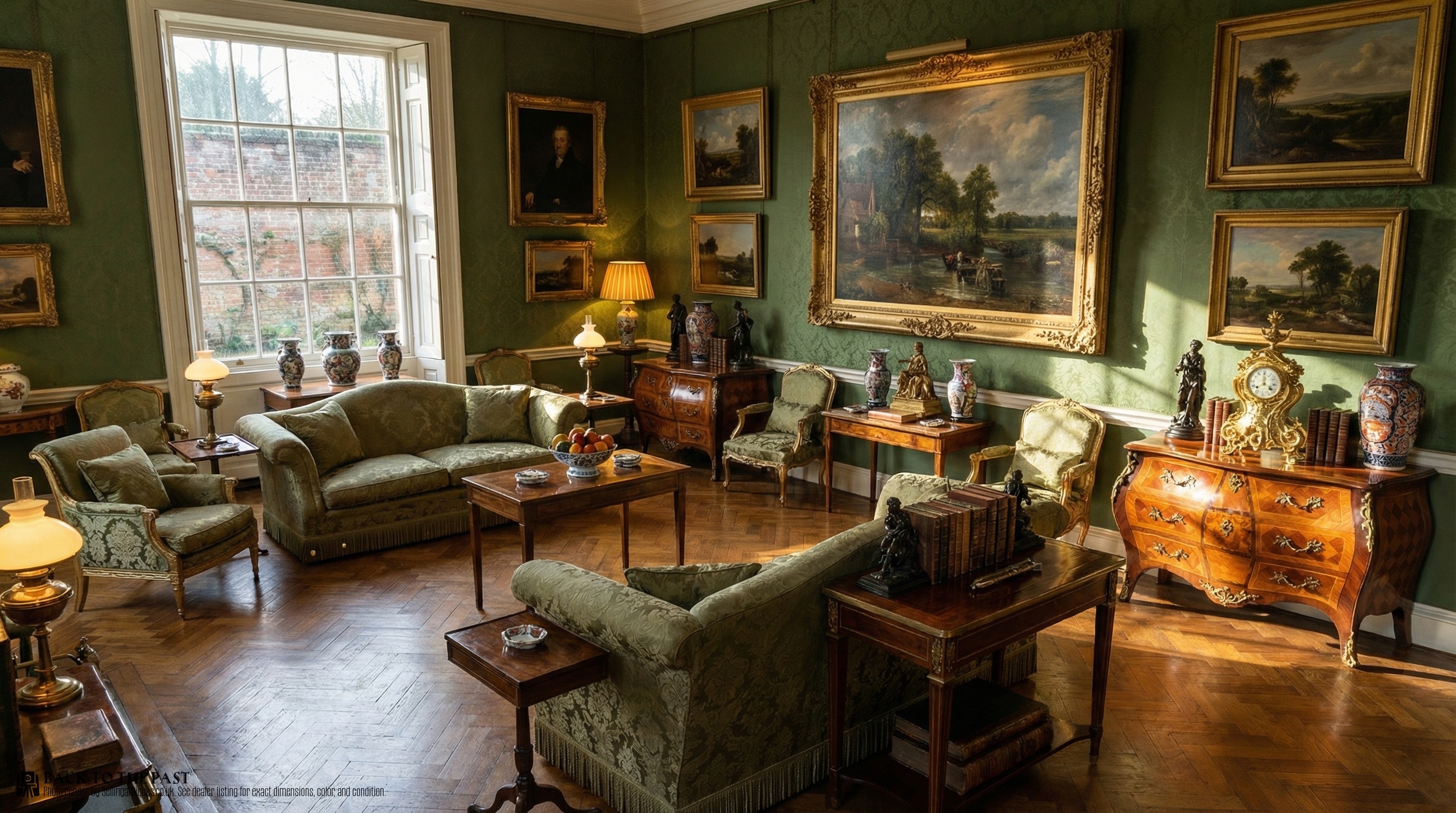
Vintage Fireplace Clock
A vintage fireplace clock brings heavy architectural presence to a mantelpiece, serving as both timekeeper and sculptural centrepiece. These domestic timepieces range from imposing stone cases to matched garniture sets completeside ornaments.
The selections available here lean heavily toward nineteenth-century production, spanning Victorian iterations and continental French workshops. Buyers will encounter robust marble and slate housings alongside refined gilt bronze and mahogany designs.
Forms vary from simple architectural blocks to elaborate rococo curves and classical empire styles. Many examples arrive accompanied by matching side pieces, creating a balanced display across the hearth.
How they were made
Makers utilised dense natural materials like black slate and white marble to build heavy, durable clock housings capable of withstanding the heat and soot of a working hearth. Brass and gilt bronze provided contrasting metallic detail through bezel rings, dial surrounds, and cast feet.
Mechanical movements relied on complex brass gear trains, often featuring eight-day spring drives and striking mechanisms that rang out on bells or gongs. Enamel dials with delicate painted numerals were protected behind bevelled glass panes fitted into cast brass bezels.
Listings feature pieces spanning the nineteenth and early twentieth centuries, constructed from black slate, white marble, brass, and ebonised wood.
What varies in quality
Superior examples separate themselves through the crispness of the bronze casting and the depth of polish on the stone case. Better movements feature signed backplates, fine hand-engraving on the brass components, and robust double fusee or striking gear trains.
The harmony of a matched garniture set influences desirability, where the side pieces share the exact materials and decorative motifs of the central clock. Inferior pieces rely on simpler wooden carcasses finished to imitate stone or lack the secondary decorative ornaments entirely.
Budgen Croydon·Wm. Gilbert U.S.A.
The Vintage Fireplace Clock Glossary
- Garniture
- A set consisting of a central clock and matching decorative side pieces meant to be displayed together on a mantelpiece.
- Fusee
- A conical pulley connected to the mainspring by a chain or cord that ensures even power delivery to the movement as the spring unwinds.
- Movement
- The mechanical inner workings of a clock, comprising gears, springs, escapements, and striking levers.
- Bezel
- The metal ring that holds the glass cover in place over the clock face.
Vintage Fireplace Clock: Frequently Asked Questions
How do I wind a mechanical mantel clock?
Use the provided key to turn the winding arbors in the correct direction until you feel firm resistance. Take care not to overwind the mainspring, as this can damage the internal components.
Most eight-day movements require attention once a week. Keeping to a regular schedule helps maintain steady timekeeping.
What is a clock garniture set?
A garniture set includes a large central timepiece flanked by two smaller matching decorative objects, such as urns or vases. These pieces were designed to be arranged symmetrically on a mantelpiece.
They share the same materials and stylistic vocabulary as the main clock, creating a cohesive decorative display.
How do I tell marble from slate clocks?
White or coloured marble clocks show natural crystalline veining and translucent qualities under bright light. Black slate is a dense, opaque sedimentary stone that was frequently polished to a deep ebony shine or painted to resemble marble.
Lifting the case will also reveal the distinct weight and texture of the specific stone used.
Can these clocks run on a modern mantel?
These mechanical timepieces operate perfectly well on a modern mantelpiece provided the surface is completely level. A flat foundation ensures the pendulum swings evenly and the clock does not stop.
Professional adjustment may be necessary after transport to set the beat correctly.