


Gilt Bronze Horology
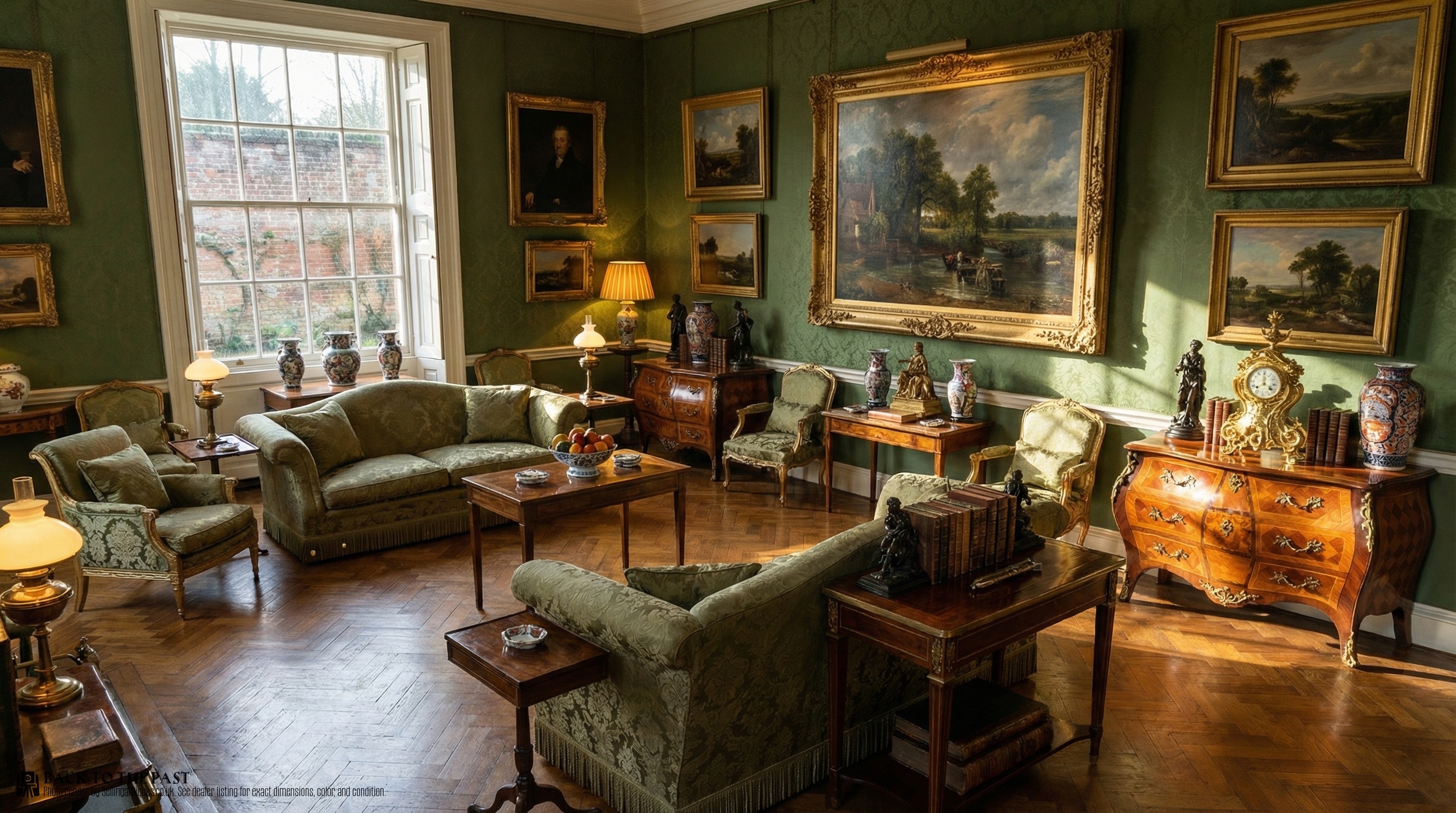
Gilt bronze horology pieces are richly cast and gilded timepieces that bring striking sculptural presence and mechanical interest to any mantel or table.
Gilt Bronze Horology
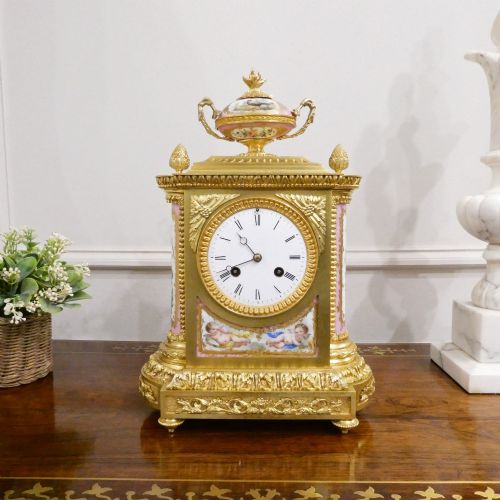
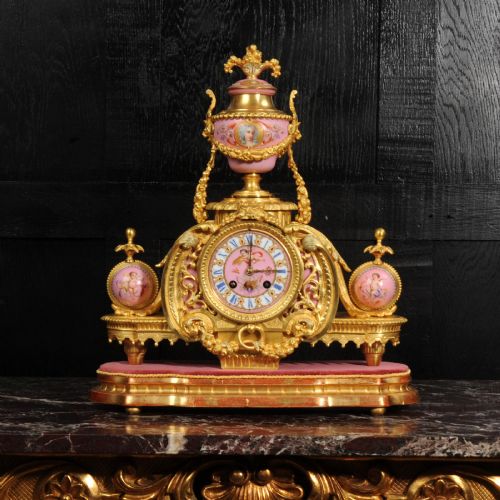
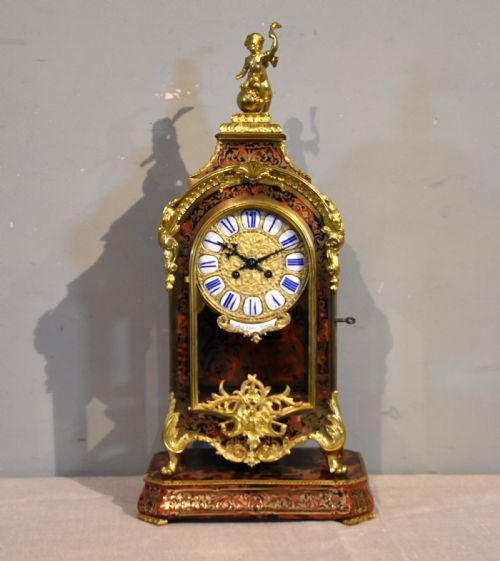
When you search for gilt bronze horology, you encounter French and English timepieces predominantly from the nineteenth century, including the Victorian, Regency, and Edwardian eras. These objects range from substantial mantel clocks and clock garnitures to compact carriage clocks housed in cast gilt cases.
You are most likely to meet French mantel clocks on this page, often styled in the Rococo Revival, Louis XVI, or French Empire traditions. These examples frequently combine gilt bronze or ormolu with porcelain, marble, or enamel dials.
Makers and retailers such as Jean-Baptiste Delettrez, Achille Brocot, Le Roy, Pons de Paul, John Bennett, Baetens, Drocourt, Payne, and Japy Freres appear across the listings. Their work shows the diverse interpretations of horological design found within this category.
Distinctions in quality
Quality rests upon the crispness of the chasing in the gilt bronze mountings and the sculptural depth of figural casts such as cherubs or allegorical subjects. Finer examples display meticulous hand-finishing that preserves sharp relief across scrollwork and foliage.
The sophistication of the internal movement further defines the tier of a piece, with complex striking, repeating, or alarm functions alongside single chain fusee mechanisms elevating the horological merit.
Listings feature items spanning the eighteenth century through to the Edwardian period, executed in materials including porcelain, tortoiseshell, and marble.
Jean-Baptiste Delettrez·Achille Brocot·Pons de Paul·John Bennett·Baetens·Drocourt·Payne·Japy Freres
The Gilt Bronze Horology Glossary
- Ormolu
- A gilded bronze technique utilising mercury gilding to produce a rich gold-coloured surface finish on cast metal mounts.
- Fusee
- A conical pulley used in clock movements to maintain even tension on the driving chain as the mainspring unwinds.
- Gorge case
- A stepped, architectural brass or gilt bronze housing typically found on finer nineteenth-century carriage clocks.
- Garniture
- A set comprising a central clock accompanied by matching decorative side pieces such as urns or candelabra.
- Striking
- A mechanism in a clock that sounds the hours or quarters automatically on a bell or gong.
Gilt Bronze Horology: Frequently Asked Questions
What is a carriage clock?
A carriage clock is a portable spring-driven timepiece developed for travel, usually featuring a rectangular glazed brass or gilt bronze case with a carrying handle on top.
These clocks often include striking or alarm complications and sit securely in fitted travel boxes.
How do I identify a French mantel clock?
French mantel clocks are typically distinguished by their ornate cast cases employing Rococo, Empire, or Louis XVI revival styles, frequently combining gilt bronze with marble or porcelain.
Many bear the names of Parisian clockmakers or firms on their enamel dials or movement backplates.
What is a crystal regulator?
A crystal regulator is a mantel clock featuring glazed glass panels on all four sides, allowing a clear view of the mechanical movement suspended within the gilt frame.
This style gained popularity during the late nineteenth century, highlighting precision pendulum swings.
How do I maintain an antique clock?
Antique clocks require careful placement on a stable, level surface away from direct sunlight and drafts to protect their delicate internal mechanics and wood or marble cases.
Professional servicing every few years ensures the gear trains and springs remain clean and properly lubricated.