






Vintage Figural Sculpture
These vintage figural sculpture pieces capture human and animal forms in bronze, terracotta, and wood, bringing character and narrative depth into a room.
Vintage Figural Sculpture
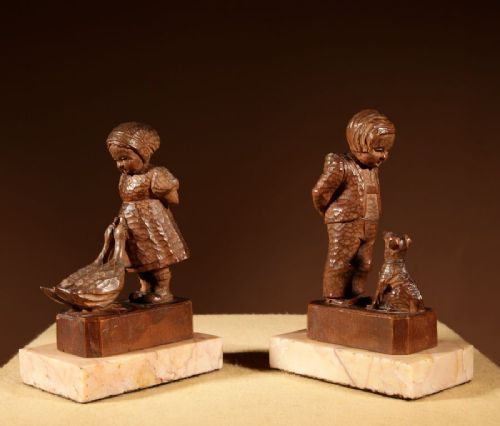
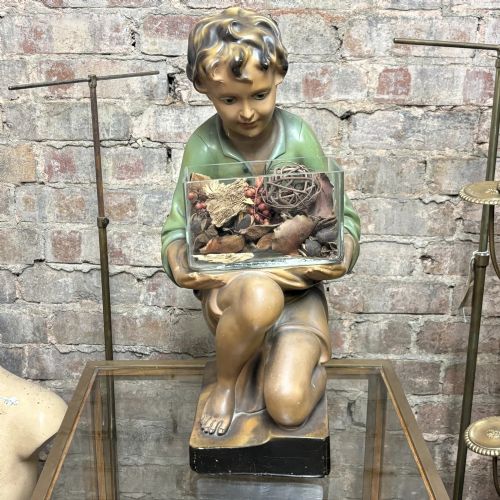
When you search for vintage figural sculpture, you encounter works spanning the Victorian era through the Art Deco period, rendered in mediums from cast bronze to carved wood. These objects take the form of freestanding statues, decorative lamps, and figural groups depicting children, mythological figures, and animals.
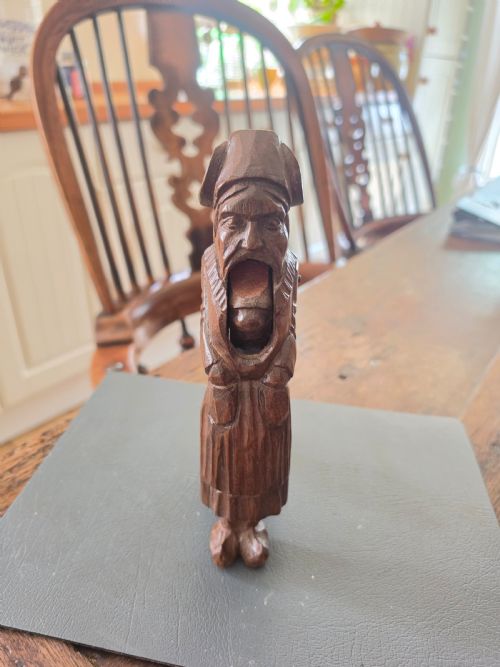
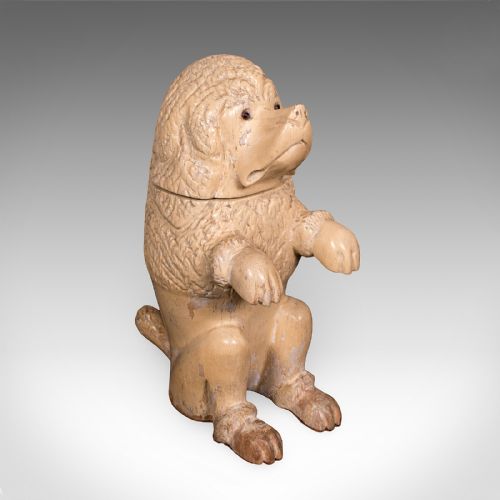
The selection on this page leans heavily toward early twentieth-century creations, particularly Art Deco dancers and lamps, alongside nineteenth-century bronze maidens and Black Forest wood carvings. You will find table lamps, tobacco jars, and nutcrackers alongside pure sculptural studies.
Origins stretch across Europe and Africa, incorporating French bronzes, Italian alabaster figures, German porcelain groups, and African tribal carvings. Each piece reflects the aesthetic priorities of its decade, whether the flowing lines of Art Nouveau or the sharp geometry of Art Deco.
Materials and Techniques
Foundry-cast bronze forms a substantial portion of the works, often finished with a dark patina and mounted on marble or onyx bases. Spelter appears as an alternative metal in various Art Deco figures, offering a lighter metallic base for painted surfaces.
Terracotta and porcelain provide the mediums for moulded and hand-finished figural groups, sometimes enhanced with paint, lace, or gilt. Wood carving dominates the Black Forest and tribal pieces, utilising oak, fruitwood, and bone to create detailed textures and functional objects.
Object types span sculptures, table lamps, porcelain figurines, tobacco jars, nutcrackers, tables, and ceremonial spoons.
Distinctions in Quality
The refinement of the casting or carving dictates the clarity of expression, muscle definition, and drapery folds in the subject. Superior works retain crisp detail in the hands, face, and surface textures without softening from worn moulds or heavy overpainting.
Materials contribute significantly to the standing of a piece, with heavy bronze, solid carved hardwoods, and carved alabaster commanding greater substance than composite materials or lower-grade metal alloys. Signed pieces by recognised sculptors carry distinct evidence of individual artistry compared to anonymous workshop output.
Goldscheider·Bernard Bloch·Ernst Bohne Sohne·H. Moreau·Auguste Moreau
The Vintage Figural Sculpture Glossary
- Spelter
- A zinc alloy frequently used as a substitute for bronze in decorative figures. It is softer than bronze and typically receives a bronze-coloured or painted finish.
- Black Forest carving
- Woodwork originating from the mountainous region of central Europe, noted for realistic animal and human figures carved from lime or walnut.
- Veilleuse
- A French night light or warming lamp, often incorporating figural ceramic or metal elements.
- Treen
- Small handmade wooden household objects and decorative items. These items display traditional woodworking skills from past centuries.
Vintage Figural Sculpture: Frequently Asked Questions
How do I identify an Art Deco figural lamp?
Art Deco lamps typically feature stylised human figures, such as dancers or ladies holding globes and trays, created during the 1920s and 1930s. They often combine metal or terracotta figures with glass shades.
Examine the base and clothing lines for the characteristic geometric shapes and streamlined forms of the period.
What is the difference between bronze and spelter?
Bronze is a durable copper alloy that takes a deep patina and holds fine casting details well. Spelter is a zinc-based metal that is lighter and more brittle.
You can often test them by checking the weight and looking beneath any patination for the silvery-grey colour of zinc.
How do I care for antique terracotta figures?
Terracotta is a porous fired clay that absorbs moisture and oils from handling. Keep these pieces in stable indoor environments away from direct humidity.
Dust them gently with a soft, dry brush and avoid liquid cleaners.