
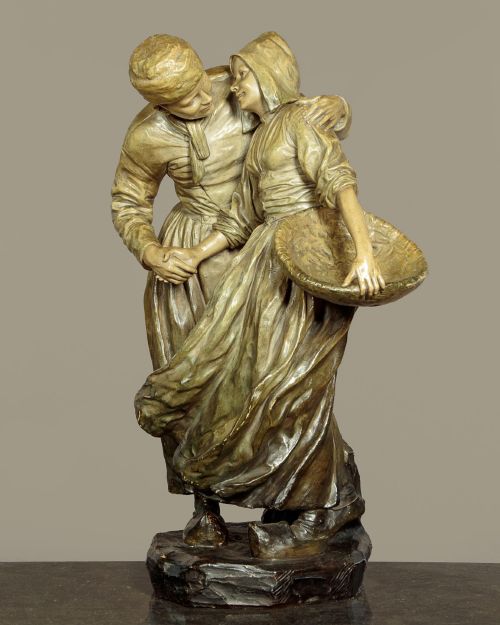


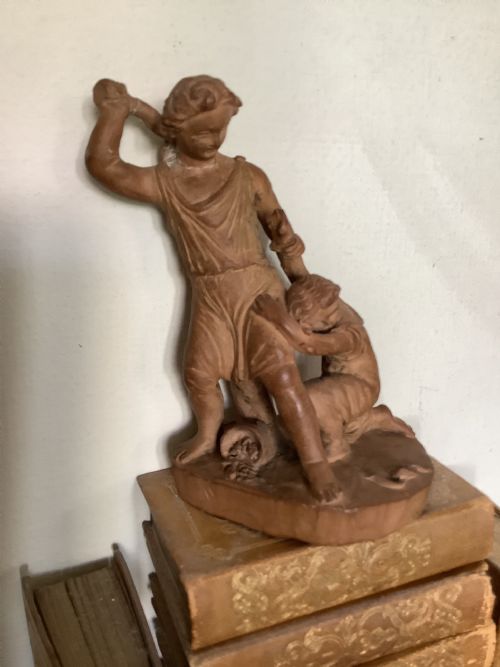


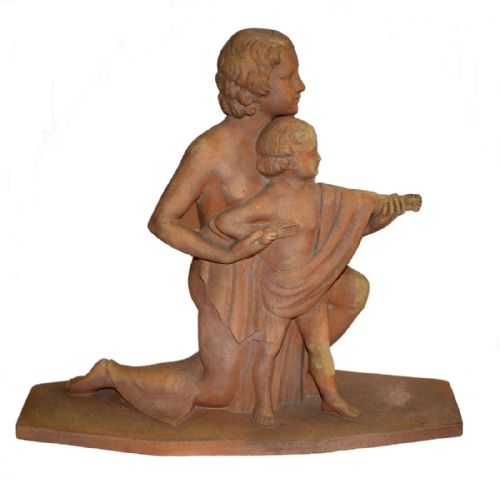
Terracotta Figural Sculpture
Terracotta figural sculpture brings warmth and tactile presence to a room, offering expressive forms shaped from baked earth across the nineteenth and early twentieth centuries.
Terracotta Figural Sculpture
Terracotta figural sculpture encompasses works modelled in clay and fired into robust earthenware, capturing human and allegorical subjects with remarkable immediacy. These pieces range from intimate figurines and statuettes to grand life-size busts and figural planters.
The selections span the Victorian era, the late nineteenth century, and the early twentieth century, taking in Art Nouveau, Art Deco, Neoclassical, and Spanish folk traditions. Buyers encounter everything from classical mythological groups and romantic figures to stylised modern figures and decorative centrepieces.
Makers and modellers of the period utilised the porous nature of clay to achieve subtle modelling that cast iron or marble could not easily match. Whether finished with polychrome pigment or left in the natural biscuit state, each work reflects the sculptural tastes of its decade of creation.
How they were made
The primary material is earthenware clay, modelled by hand or pressed into moulds before undergoing high-temperature kiln firing to fix the form. Many works incorporate internal metal wire armatures to support extended limbs or complex figural groupings during the modelling process.
Surface finish varies from plain terracotta through applied paint and pigment to delicate bisque surfaces. Some Austrian and continental pieces display cold-painted polychromy, while British and French works frequently highlight the natural warmth of the fired clay itself.
Listings feature works spanning the nineteenth century, Victorian period, and the nineteen-twenties and thirties.
What varies in quality
The sophistication of the glaze or pigment application also marks the difference between standard decorative items and high-end artistic production. Original surfaces, clear signatures, and well-executed firing without distortion separate superior examples from lesser output.
Goldscheider·Richard Avrilli·Bernard Bloch·Pietro Calvi·Joseph Gott·Octave Galliard-Sansonetti·B. Rezl·Royal Dux
The Terracotta Figural Sculpture Glossary
- Terracotta
- Fired unglazed clay of a brownish-red colour. It provides a durable medium that records the direct touch of the sculptor's hand.
- Bisque
- Unbleached, unglazed porcelain or earthenware fired once. It offers a matte, chalky surface texture favoured for detailed figurines.
- Polychrome
- Decorated in several colours. This surface treatment brings realistic skin tones and patterned garments to figural works.
- Centrepiece
- An ornamental decorative object placed in the middle of a table. In earthenware, these often combine figural groups with shallow bowls or planters.
- Figurine
- A small statuette representing a human or animal figure. These portable sculptures were popular domestic ornaments in Victorian and Edwardian interiors.
Terracotta Figural Sculpture: Frequently Asked Questions
Were these pieces meant for gardens?
Most figural works and statuettes were intended for interior display on mantelpieces, pedestals, or tabletops rather than outdoor exposure.
While terracotta is robust, frost and damp will degrade painted surfaces and cause porous earthenware to flake over time.
How do I spot a signature?
Signatures, foundry marks, or factory stamps are typically impressed into the wet clay near the base before firing, or painted on afterward.
Inspect the lower edges and undersides closely with a strong oblique light to reveal faint moulded lettering or artist inscriptions.
What is the difference between Victorian and Art Deco pieces?
Victorian examples lean toward Neoclassical subjects, mythological narratives, and highly detailed romantic realism with ornate detailing.
Art Deco works from the nineteen-twenties and thirties favour streamlined geometric forms, stylised figures, and simplified planes.