
Vintage Fauteuil Chair
A vintage fauteuil chair brings classical French seating into a room, offering exposed wooden frames and upholstered comfort.
Vintage Fauteuil Chair
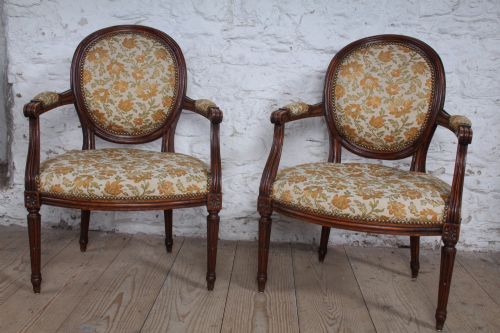
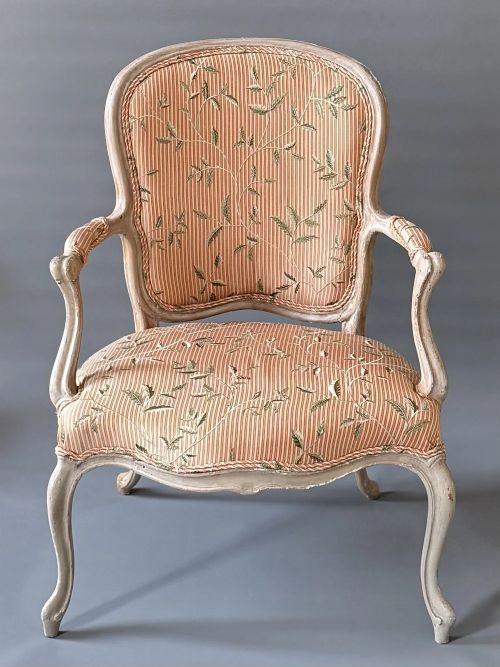
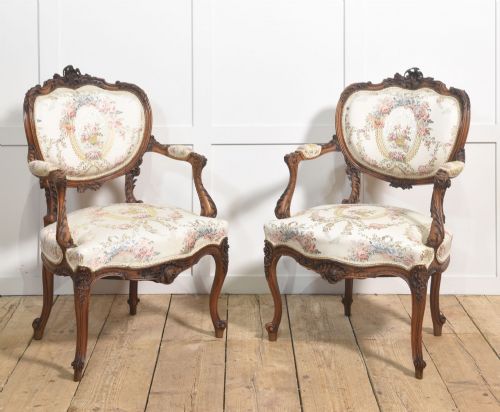
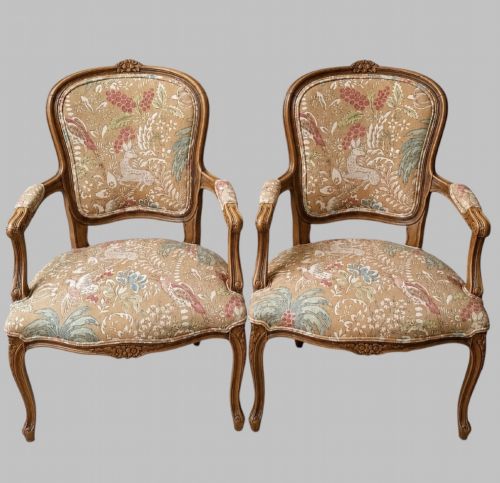
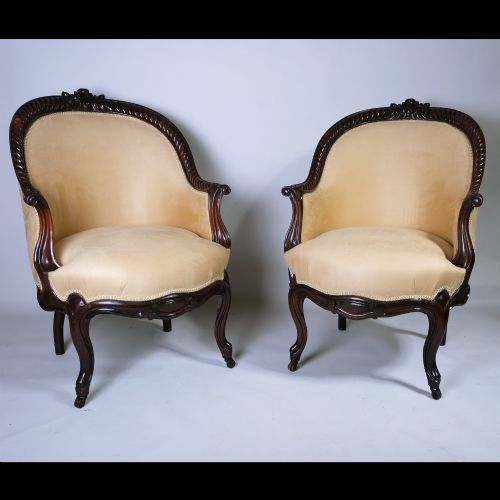
A vintage fauteuil chair is an open-armed armchair originating from French design traditions, built with a visible wooden frame and upholstered seat and back. When searching for this phrase, a buyer looks at pieces ranging from eighteenth-century examples to twentieth-century revivals.
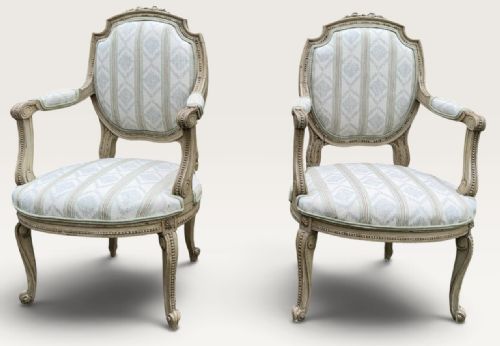
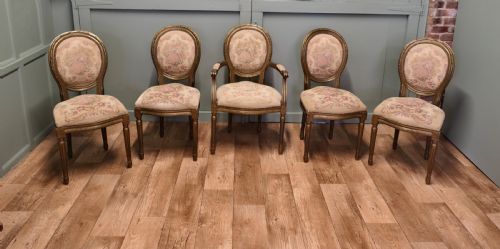
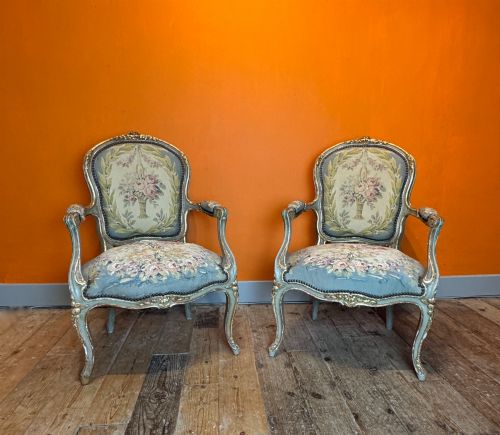
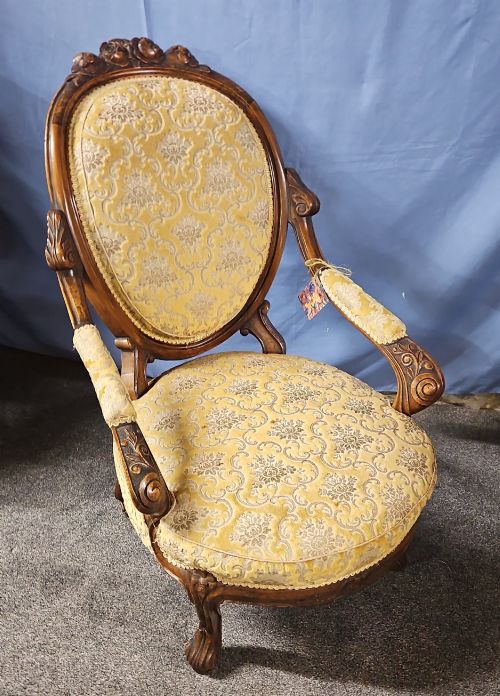
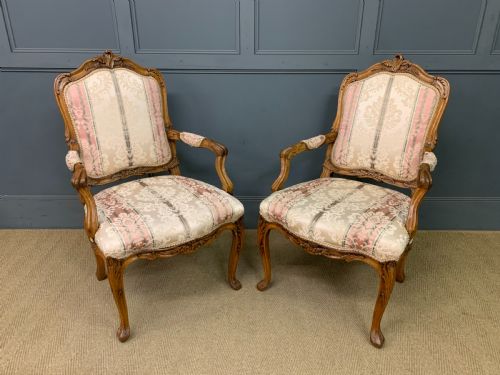
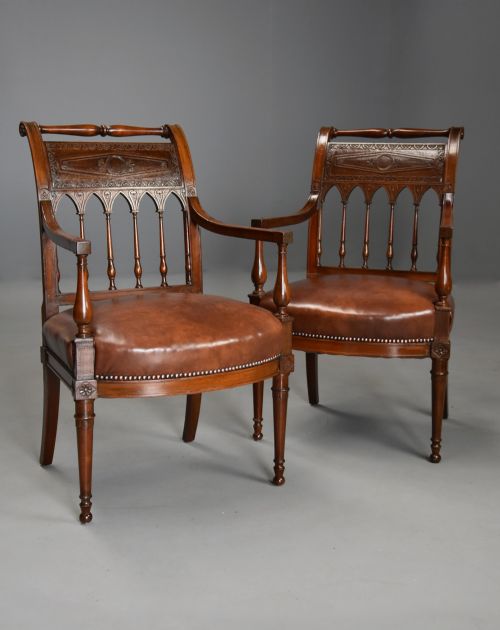
The versions met most frequently on this page date from the nineteenth and early twentieth centuries, drawing heavily on Louis XV and Louis XVI styles. These chairs appear singly or in pairs, often featuring carved woodwork, painted finishes or giltwood frames.
Makers and manufacturers through these periods produced salon chairs, library armchairs and smaller settee forms alongside standard armchairs. The underlying vocabulary remains rooted in French chateau and provincial aesthetics, adapting classical proportions for domestic seating.
How they were made
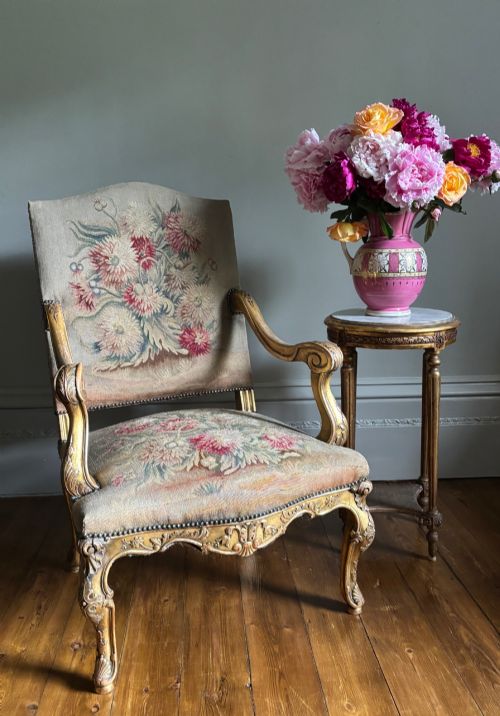
Frames rely on hardwoods such as walnut, beech, oak and mahogany, shaped through traditional carving techniques and jointing. Giltwood and painted surfaces receive specialised preparation, sometimes showing original paint or parcel gilt highlights over the bare wood.
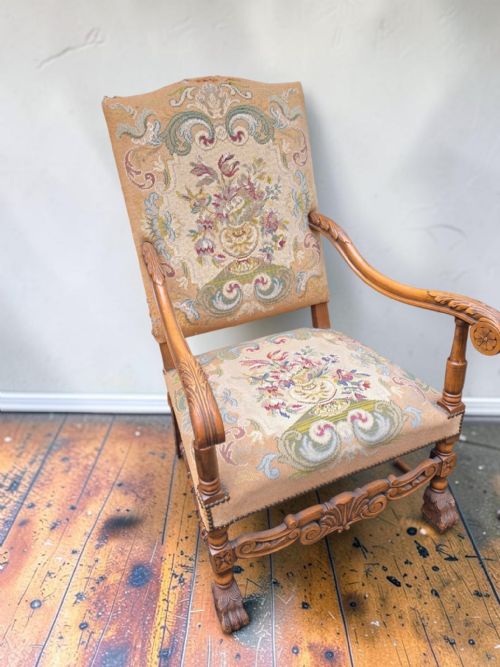
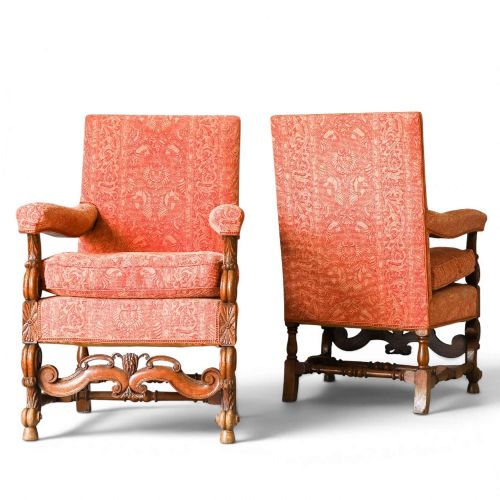
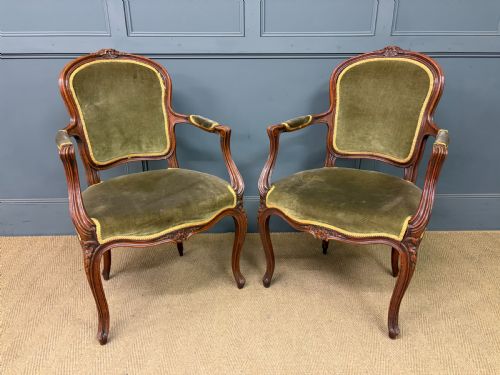
Upholstery involves textile coverings including velvet, tapestry, needlepoint panels and general fabric, secured over padded backs and seats. Brass and gilt bronze mounts appear on specific Empire and revival pieces to accent the structural woodwork.
Several chairs arrive ready for conversation, having spent generations politely holding coats in grand French hallways.
What varies in quality
The standard of carving defines the distinction between ordinary production and superior pieces, with crisp floral motifs, deep relief work and well-proportioned cabriole or fluted legs indicating skilled craftsmanship. Subtlety in the hand-carved details separates workshop standards.
The integrity of the frame construction and the preservation of original surface treatments dictate the standing of an armchair. Chairs retaining their initial giltwood, paint or polished wood finishes hold greater character than heavily restored surfaces.
The Vintage Fauteuil Chair Glossary
- Fauteuil
- An open-armed upholstered armchair originating in France, typically featuring an exposed wooden frame around the back and seat. These chairs emerged in various regional and royal styles.
- Giltwood
- Timber coated with a thin layer of gold leaf or gilt preparation. This finish appears frequently on formal salon seating.
- Tapisserie
- Woven textile used for upholstery, often depicting figurative or botanical scenes. Needlepoint and tapestry panels contribute distinct texture to period chair backs.
- Cabriole leg
- A furniture leg that curves outward and then tapers inward, mimicking an animal's leg. This form underpins many Louis XV designs.
- Parcel gilt
- Woodwork decorated with partial gilding, where gold leaf highlights specific carved elements against a painted or polished ground.
Vintage Fauteuil Chair: Frequently Asked Questions
What is a fauteuil chair?
A fauteuil is a traditional French upholstered armchair with open wooden arms. The design leaves the wooden frame exposed around the padded back and seat.
These chairs developed during the seventeenth century and continued through various French royal periods. They serve as both decorative seating and functional armchairs in a room.
How do I identify Louis styles?
Louis XV style chairs feature curved lines, cabriole legs and asymmetrical floral carvings. They convey a softer, more organic aesthetic.
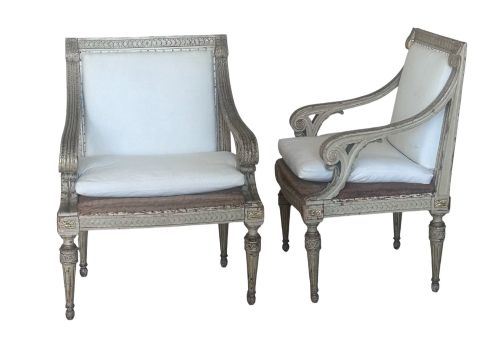
Louis XVI style pieces introduce straight lines, fluted legs, symmetry and neoclassical motifs like urns or ribbons. Revivals of these styles appear frequently across nineteenth-century seating.
Where were these chairs used?
Historically, these armchairs filled French salons, drawing rooms and private libraries. They provided comfortable seating for formal entertaining and conversation.
In modern interiors, they function well as occasional chairs in living rooms, bedrooms or studies. Their classical frames allow them to sit alongside contemporary furniture.
What woods were used?
Cabinetmakers utilised a variety of hardwoods for the structural frames. Walnut, beech, oak and mahogany appear regularly in these pieces.
Some frames were painted or gilded, while others showed the natural grain of the wood. The choice of timber often aligned with the specific period and regional workshop.