



Blue and Gold Armchair
These blue and gold armchairs bring rich colour and polished gilding together to anchor a room with traditional seating.
Blue and Gold Armchair
A blue and gold armchair combines a blue upholstered seat with a gilded or painted wooden frame, creating a striking visual contrast. These seats appear across periods ranging from the eighteenth century to the twentieth century.
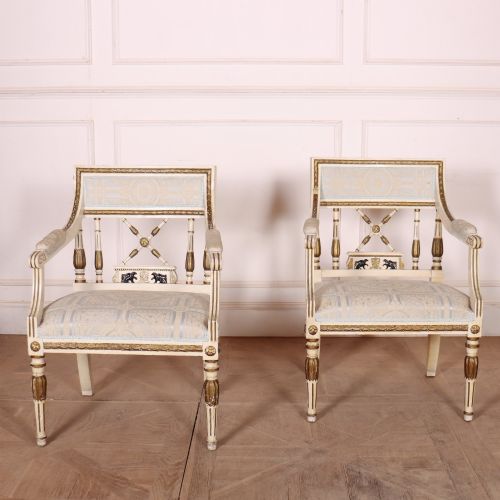
The selections on this page cover distinct historic movements, including George III, Swedish Empire, Victorian, and Art Deco designs. Most pieces on offer lean towards French revival styles and nineteenth century forms.
Buyers encounter various seating types within this group, from fireside chairs and occasional chairs to slipper chairs and wingbacks. Pairs and sets of four offer matching seating arrangements for drawing rooms and salons.
Materials and construction
Frames are constructed from solid woods like walnut or structural timbers finished with gesso and giltwood to achieve a metallic sheen. Carved details define the structural lines of George III and French revival examples.
Blue and Gold Armchair Retail Price Guide 2026
Typical asking prices for blue and gold armchair among the pieces listed under this phrase on Sellingantiques today, from the lower quarter to the upper quarter. They describe what is for sale here now, not the wider market.
The furniture spans distinct movements from eighteenth-century George III to the twentieth-century Art Deco period.
Assessing quality and craftsmanship
The refinement of the wooden carving distinguishes simpler daily seating from grand salon armchairs. Crisp detailing in the giltwood and gesso indicates a higher grade of workshop production.
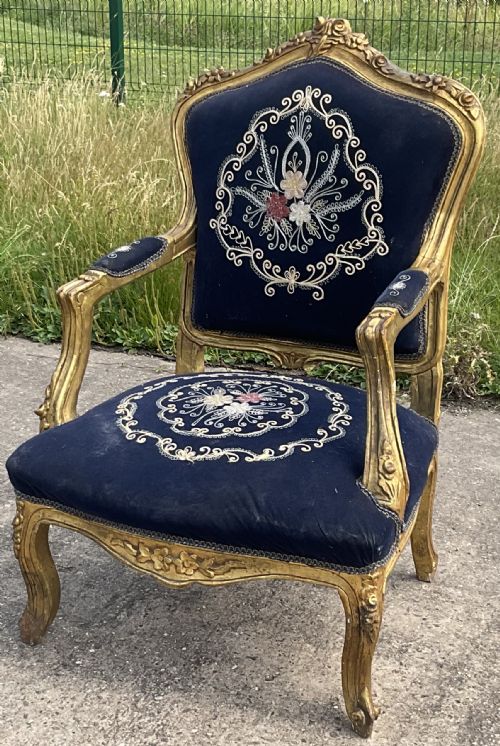
The choice and execution of the upholstery material shift the character of each piece. Intricate silk embroidery or well-fitted velvet with precise piping elevates the finish of the seating.
The Blue and Gold Armchair Glossary
- Giltwood
- Wood that has been coated with thin gold leaf over a prepared surface of gesso. This finish creates the bright metallic appearance seen on classical frames.
- Gesso
- A plaster mixture applied to wooden frames as a smooth base for gilding. It allows carvers to crisp up ornamental details before applying gold leaf.
- Wingback armchair
- A large seat featuring characteristic side panels designed to shield the occupant from draughts. These pieces often serve as fireside seating.
- Slipper chair
- A low-seated upholstered chair originally designed for bedrooms to assist with putting on footwear. Twentieth century versions often adopt streamlined silhouettes.
Blue and Gold Armchair: Frequently Asked Questions
Where should I place a blue and gold armchair?
These seats suit principal reception rooms, studies, or bedrooms where their strong colour palette can serve as a focal point. Pairs work effectively beside a fireplace or flanking a central piece of furniture.
Single occasional chairs fit neatly into corners or empty landings, providing both practical seating and decorative impact without overcrowding the floor space.
How do I identify a French revival chair?
French revival pieces typically display curved cabriole legs, carved floral motifs, and scroll arms inspired by eighteenth-century royal furniture. Giltwood frames and exposed polished walnut are common across these decorative historic interpretations.
Craftsmen in the nineteenth century revived these classical shapes, often combining traditional silhouettes with rich blue velvets and silks to suit contemporary interior tastes.
What is the difference between an occasional chair and a salon chair?
Salon chairs were traditionally built for formal entertaining and conversation in large reception rooms, featuring lighter frames and decorative upholstery. They are designed to be moved easily around a social space.
Occasional chairs encompass a broader category of flexible seating intended for sporadic use throughout the home. Their specific shapes vary according to the exact period of manufacture.
How do I care for antique velvet upholstery?
Velvet textiles require gentle brushing with a soft-bristled brush to maintain the pile and prevent the fabric from crushing over time. Professional cleaning helps preserve the depth of blue tones and protects delicate fibres.
Keeping gilded wooden frames away from direct sunlight and damp conditions prevents the gesso and gold leaf from cracking or deteriorating.