




Vintage Ebonised Pedestal Table
A vintage ebonised pedestal table brings dark timber presence and architectural form to a room.
Vintage Ebonised Pedestal Table
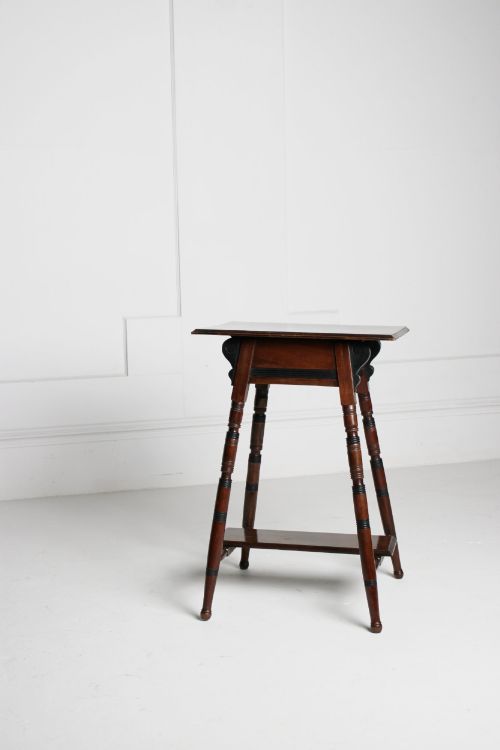
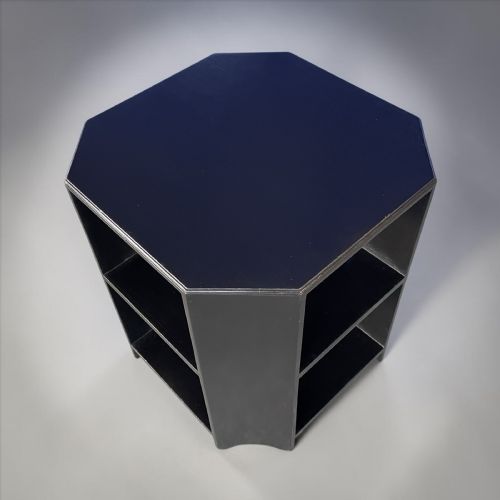
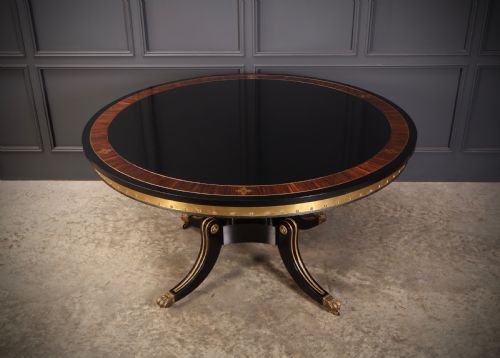
A vintage ebonised pedestal table combines a blackened wood finish with a central column support, taking forms such as occasional tables, centre tables, and side tables. These pieces span the nineteenth century through the interwar years, encompassing Victorian, Edwardian, and Art Deco periods.
The selection includes specific variations like round centre tables with brass inlay and occasional pieces featuring contrasting timbers like burr walnut. Buyers encounter everything from compact lamp tables to substantial pedestal desks and dressing tables.
Origins range across English country house pieces, continental styles including Swedish Empire revival, and Far Eastern craftsmanship. The overarching characteristic remains the dark ebonised surface acting as a foil to grain and inlay.
Materials and Construction
Construction relies on solid hardwoods and secondary timbers finished with an ebonised coating to imitate costly ebony. Workshops utilised woods such as mahogany, birch, and walnut as bases for this dark finish.
Surface decoration frequently incorporates brass inlay, marquetry, and original stencilled designs. Glass elements, marble tops, and leather inserts appear on desk and table surfaces across the Victorian and Art Deco eras.
Materials represented across the inventory include ebonised wood, mahogany, walnut, rosewood, and brass.
Assessing Quality and Execution
Quality rests on the crispness of the ebonised finish and the integrity of the underlying timber. Superior examples display careful preparation of the blackened surface without obscuring the grain beneath.
Execution shows in the precision of brass inlay and the stability of the central pedestal structure. Better pieces maintain balanced proportions between the central column, the supporting base, and the top.
Druce & Co London
The Vintage Ebonised Pedestal Table Glossary
- Ebonised
- Wood finished to resemble ebony through staining, painting, or chemical darkening. This technique creates a dense black surface popular in nineteenth and twentieth-century furniture.
- Pedestal
- A single central support or column holding up the top of a table or desk. It replaces traditional four-legged designs to maximise legroom and create a distinct silhouette.
- Aesthetic Movement
- A late nineteenth-century design style emphasising visual beauty over narrative subject matter. Pieces from this movement often feature ebonised surfaces paired with contrasting gilt or wood details.
- Marquetry
- Decorative veneer patterns applied to furniture surfaces using thin slices of wood. Craftsmen cut various timbers to form intricate pictorial or geometric designs.
- Kneehole
- A desk or dressing table configuration featuring a central recess for the sitter's legs, flanked by pedestals of drawers or cabinets.
Vintage Ebonised Pedestal Table: Frequently Asked Questions
How do I clean an ebonised table?
Dust regularly with a soft, dry cloth to prevent accumulation. Avoid abrasive cleaners or harsh chemicals that can strip the dark finish.
Apply a microcrystalline wax sparingly if the surface appears dry. Buff gently to maintain a soft sheen without creating buildup.
Where does an occasional table work best?
Place an occasional table beside seating to hold lamps, books, or drinks. Its compact footprint allows it to fit easily into corners or small alcoves.
Position the piece where natural light catches the ebonised surface and any metal inlay. This highlights the architectural form of the central pedestal.
How do I identify a Victorian ebonised table?
Look for construction details typical of the nineteenth century, including hand-cut joints and heavy timber cores. Aesthetic Movement pieces often combine the black finish with contrasting burl walnut.
Check for period-appropriate wear patterns and traditional finishing materials like shellac or wax. Stencilled decoration and brass mounts also point toward nineteenth-century manufacture.
Can I use a pedestal table as a desk?
Certain pedestal forms, such as kneehole desks and writing tables, provide suitable surfaces for daily tasks. Ensure the height matches your seating requirements before use.
Protect finished surfaces from ink and moisture using appropriate blotters or pads. This preserves the historical timber while allowing practical utility.