
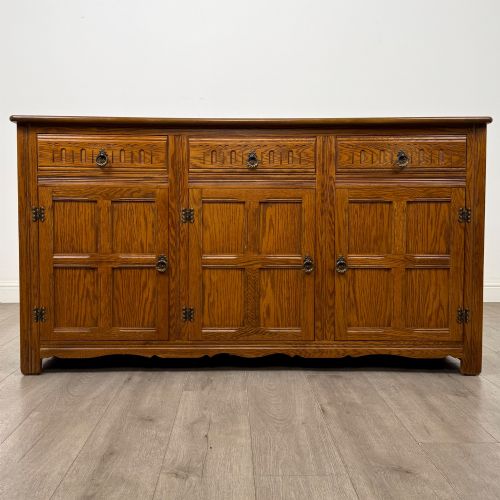
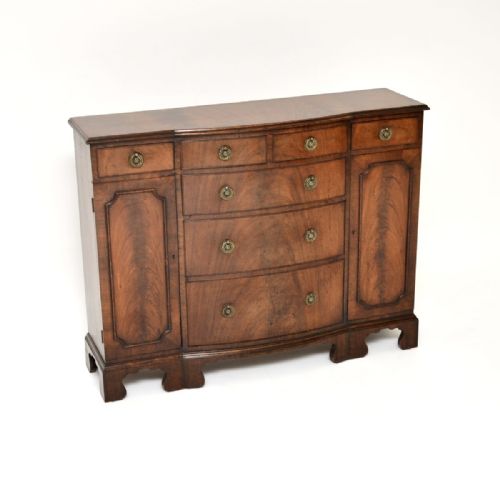
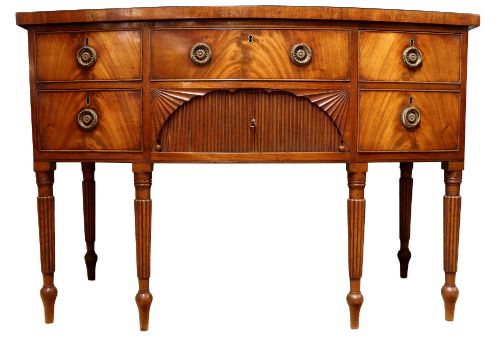
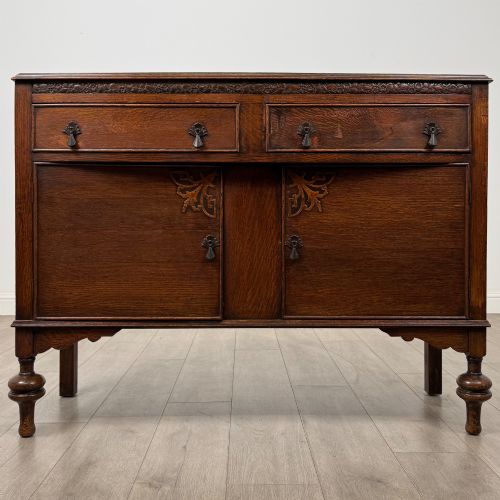
Vintage Dining Room Credenza
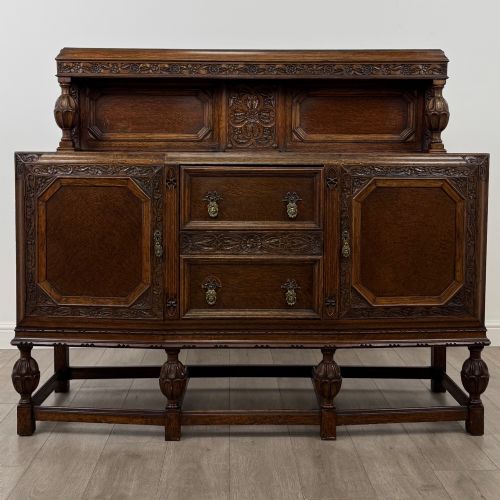
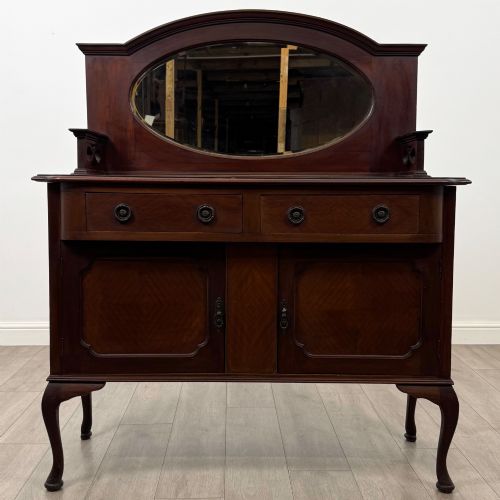
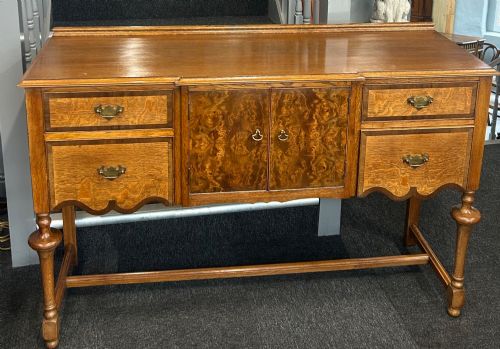
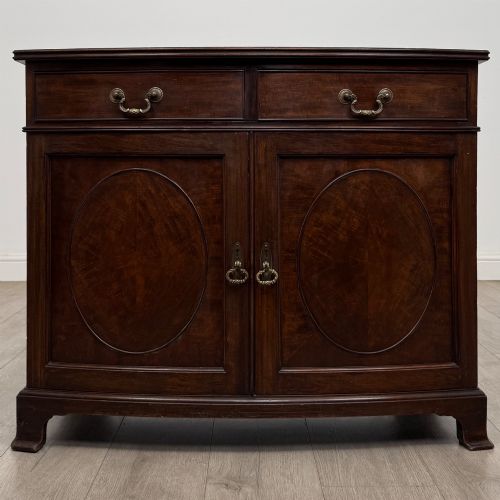
A vintage dining room credenza serves as a substantial focal point for storage and display during formal meals.
Vintage Dining Room Credenza
A vintage dining room credenza encompasses large serving pieces, sideboards, and cupboards found in formal dining spaces. Buyers search for these items to provide generous storage for tableware while anchoring the room with period presence.
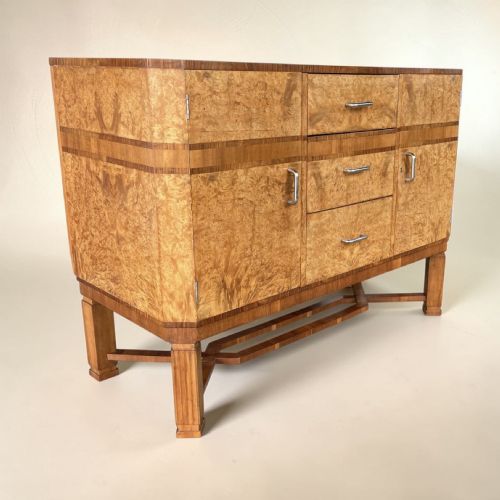
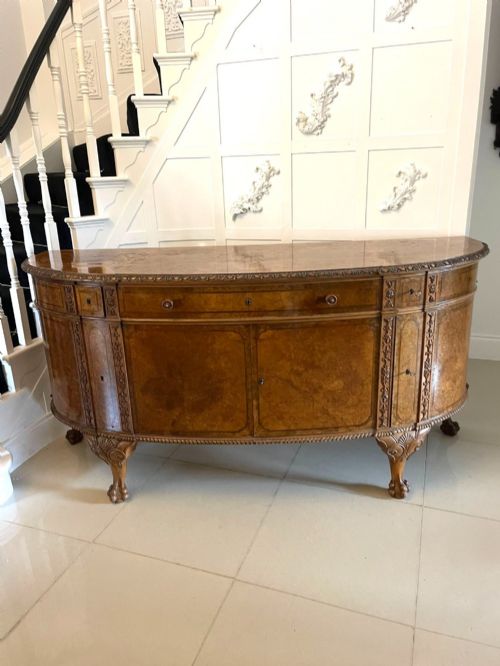
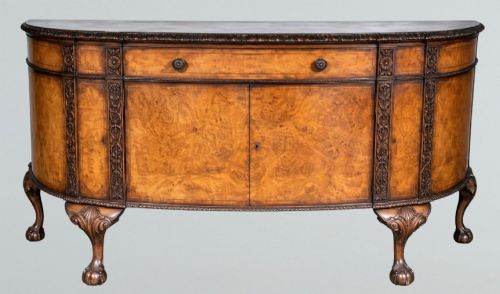
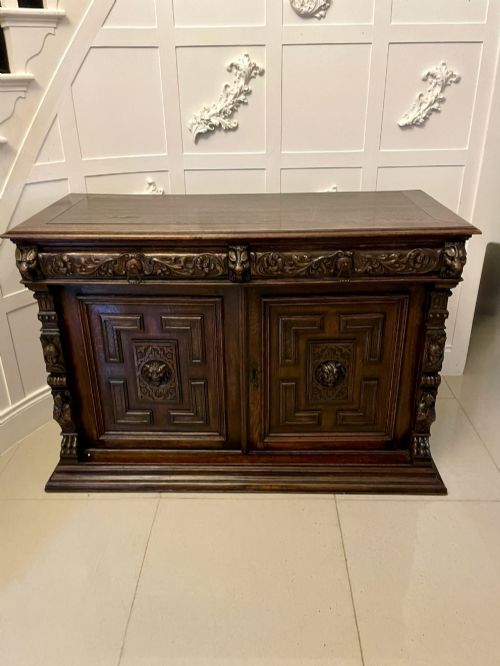
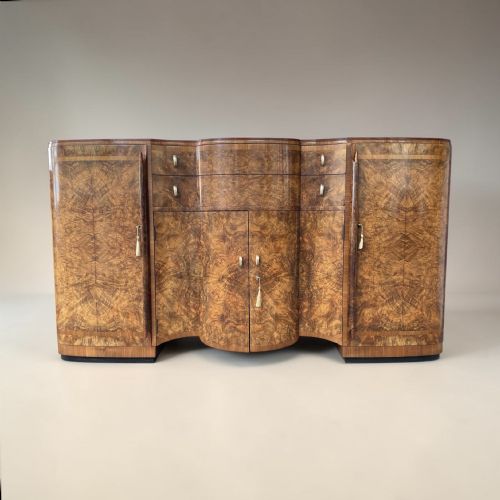
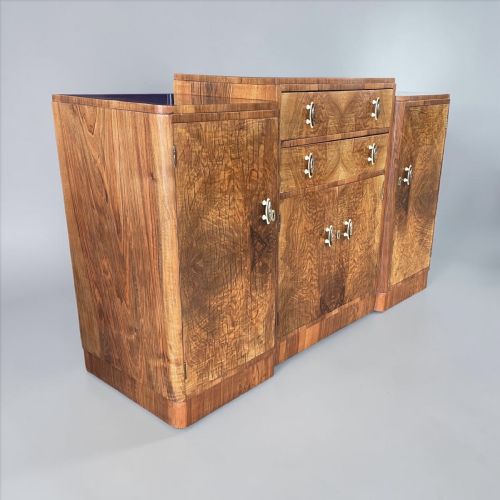
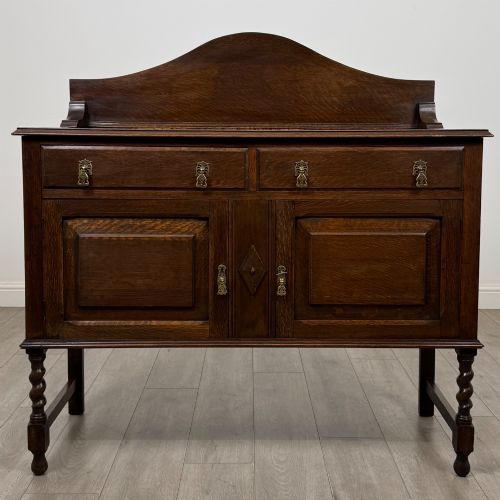
The pieces listed on this page span several distinct periods, with Edwardian and 1930s examples appearing frequently alongside Victorian, Georgian, and Regency forms. Sideboards, side cabinets, and chiffoniers dominate the selection, often taking the shape of bow-fronted or breakfront cabinetry.
Makers and designers from various eras influence the stock, ranging from George III revival pieces to Art Deco creations by known cabinetmakers. Oak and mahogany serve as the primary foundational timbers across the selection.
Materials and construction methods
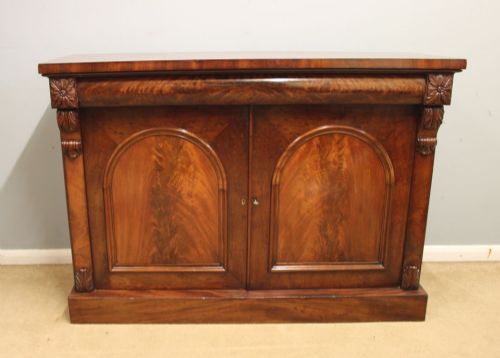
Cabinetmakers utilised solid timbers and selected veneers, applying mahogany, oak, and burr walnut across the carcase and drawer fronts. Flame mahogany veneer and figured walnut provide striking grain patterns on the principal surfaces.
Decorative detailing relies on craftsmanship such as satinwood inlay, brass hardware, glass panels, and carved motifs including barley twists. Internal compartments often house specialised fittings, such as fitted cutlery sets, behind panelled doors.
The inventory spans the Georgian, Regency, Victorian, and Edwardian periods, alongside 1930s Art Deco designs.
Judging the quality of the work
The standard of a piece depends on the selection of timber and the precision of its veneers. Highly figured burr walnut or carefully matched flame mahogany denote superior cabinetmaking compared to plain surfaces.
Construction detail reveals the tier of production, visible in the crispness of carved oak motifs, the finesse of satinwood inlay, and the integration of brass mounts. Pieces attributed to recorded makers or specific design traditions generally display a higher degree of finish.
Maurice Adams·Epstein·M. D. Miller & Sons
The Vintage Dining Room Credenza Glossary
- Bow front
- A convex curved front section that projects outward from the main body of the cabinet. This contour became popular during the Georgian and Regency periods.
- Chiffonier
- A low compact sideboard or cabinet featuring shelves or enclosed storage below. These pieces evolved during the Regency and Victorian eras for dining and parlour use.
- Breakfront
- A cabinet design where the central section projects forward from the flanking wings. This architectural arrangement creates depth and shadow across the elevation.
- Satinwood inlay
- Contrasting blonde timber inserted into the primary wood surface to form geometric or floral patterns. Sheraton revival pieces frequently use this technique.
- Barley twist
- A turned wooden column carved in a spiral resembling a twist of barley. This decorative feature appears frequently on Edwardian oak furniture.
Vintage Dining Room Credenza: Frequently Asked Questions
How do I date a credenza?
Dating relies on timber choice, construction methods, and stylistic cues such as inlay or leg turning. Edwardian pieces often show lighter oak or mahogany with satinwood, while Georgian and Regency examples use heavier solid mahogany with simpler structural lines.
Examining the drawer construction and hardware helps confirm the manufacturing era. Hand-cut dovetails and original brass handles point toward earlier periods, whereas later 20th-century pieces incorporate different interior layouts and machine-finished joints.
Where should I place a sideboard?
These large serving pieces fit naturally against the main wall of a dining room, providing a surface for food and drink during meals. Their height also makes them suitable for displaying silver, glassware, or lamps.
Ensure adequate floor space is available to allow cabinet doors and drawers to open fully. Placing the piece away from direct heat sources protects the timber veneers from drying out.
How do I care for wood surfaces?
Regular dusting with a soft, dry cloth prevents particle buildup on mahogany, oak, and walnut surfaces. Applying a quality beeswax occasionally helps nourish the grain and maintains the natural lustre of the polish.
Avoid placing damp items or hot dishes directly onto the wooden top without protective mats. Keeping the room at a stable humidity level prevents the timber and veneers from splitting.
What is the difference between a sideboard and a credenza?
Sideboards traditionally feature cupboards and drawers designed specifically for storing dining room linens and cutlery. They often stand on legs and offer a broad flat top for serving food.
Credenzas share a similar storage purpose but historically sat closer to the floor with enclosed cupboards spanning most of the width. In modern usage, the terms frequently overlap across different periods.