


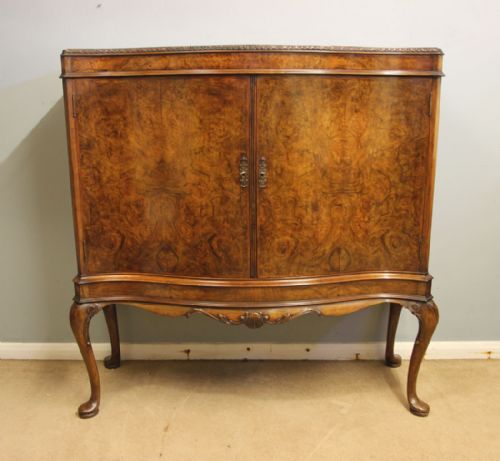

Carved Cabriole Leg Sideboard
A carved cabriole leg sideboard brings sculptural curves and rich timber grain to a dining room or hallway.
What a carved cabriole leg sideboard is
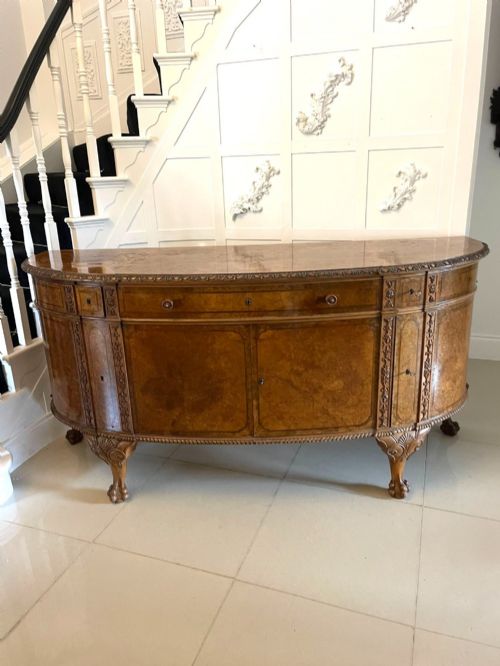
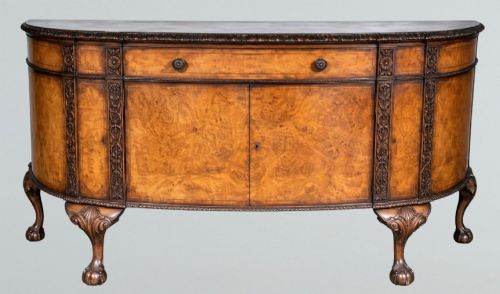
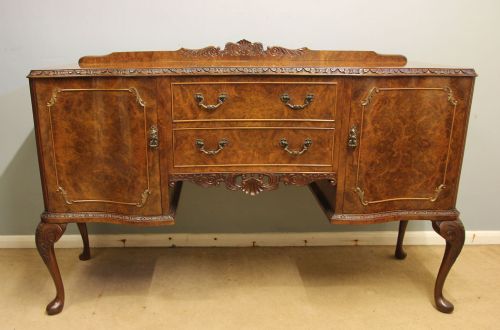
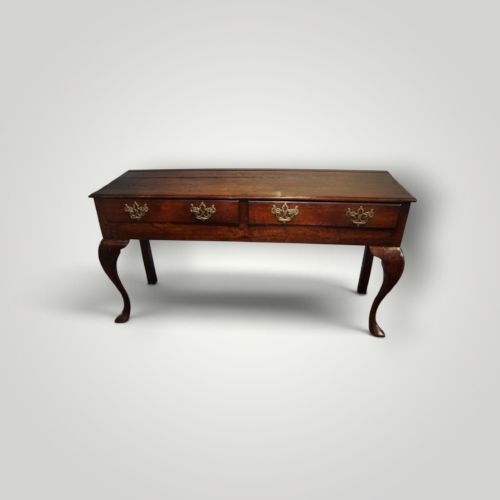
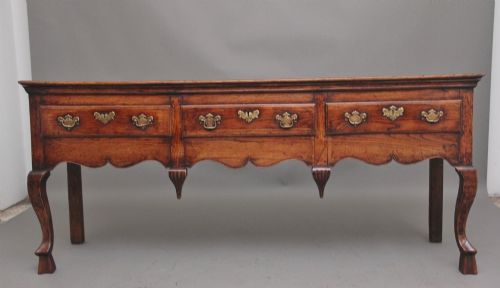
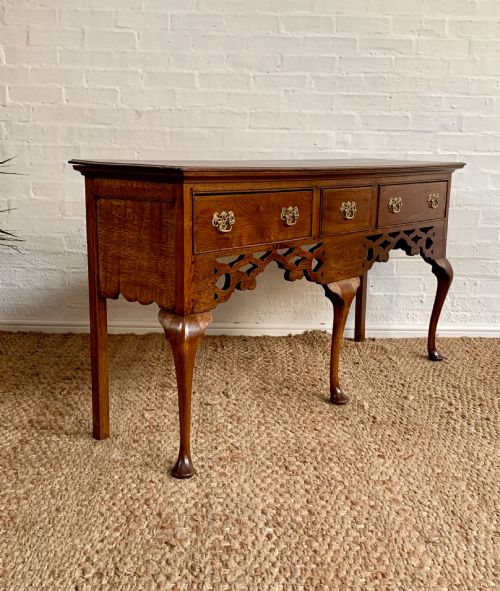
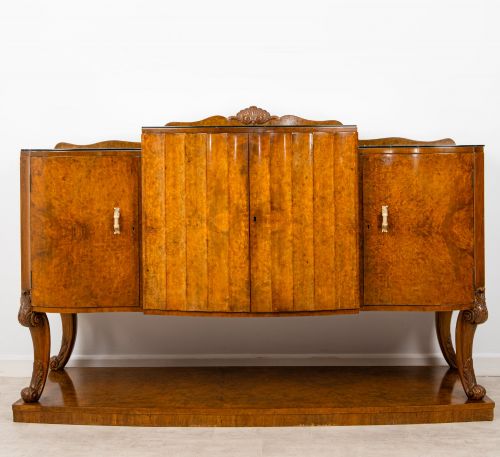
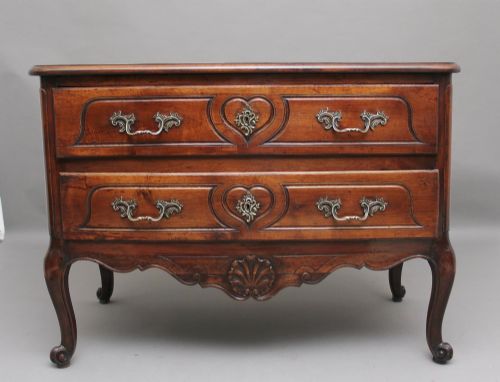
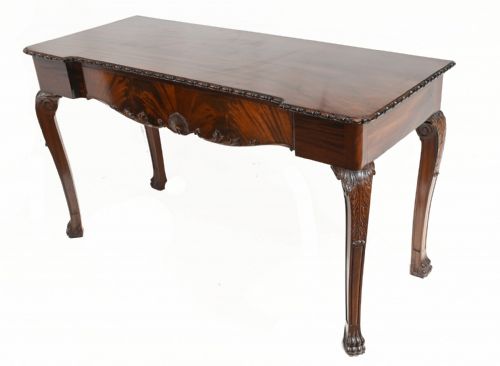
A carved cabriole leg sideboard provides substantial storage while standing upon distinctive S-curved supports that taper gracefully down to pad or claw feet. These pieces combine practical capacity with decorative flair, often featuring bow fronts, central drawers, and flanking cupboards designed for dining room service.
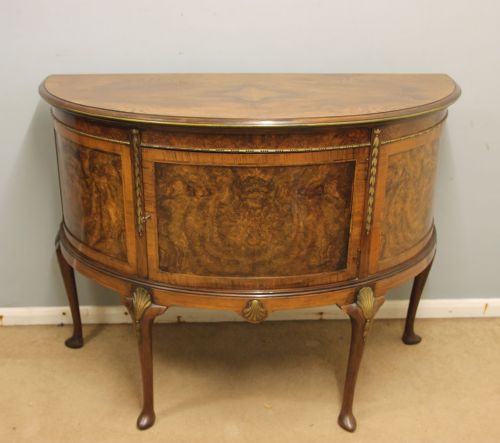
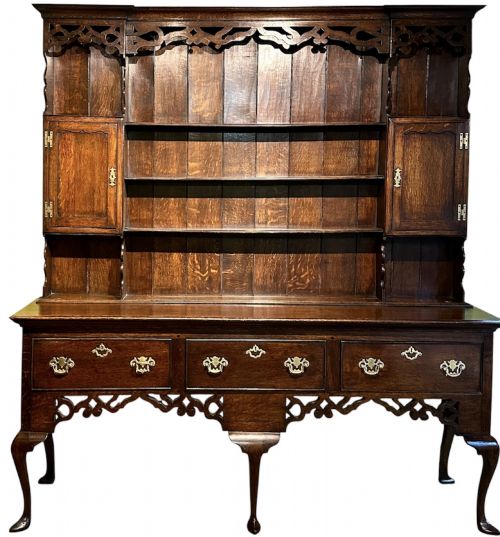
The versions most commonly met on this page span the 1920s and 1930s, heavily influenced by the Queen Anne revival alongside occasional earlier oak dresser bases. Makers of the early twentieth century frequently utilised burr walnut veneers to create dramatic grain patterns across the broad drawer fronts and cabinet doors.
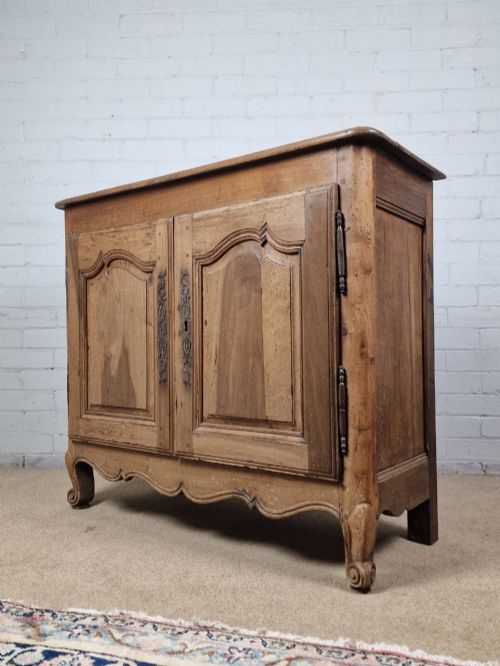
Earlier Georgian examples and nineteenth century interpretations also appear, showing how cabinet makers adapted these curved forms across different generations. Whether finished with crossbanded borders or left as heavy carved oak, each piece reflects the enduring appeal of cabriole supports in formal furniture.
How they were made
Cabinet makers constructed these sideboards using solid hardwoods such as oak and walnut as foundational frames, overlaid with decorative veneers including burr walnut to create striking visual patterns. Brass handles, escutcheons, and hinges provide functional hardware accents against the polished timber surfaces.
Carved details on the cabriole legs require skilled hand-tooling, shaping the knee into scrolls or shells before sweeping down to the foot. Glass components occasionally appear in associated display sections, while internal fitted trays or twelve-piece cutlery sets organise the storage space.
Retail Price Guide 2026
Typical UK retail prices for carved cabriole leg sideboard, calculated from the Sellingantiques database of over a million retail prices indexed since 2003. This retail price guide relies exclusively on Sellingantiques data; no external sources or auction records are used, so the figures do not describe the wider market.
Listings span from the eighteenth century to the 1930s, incorporating oak, walnut, burr walnut, brass, and glass.
What varies in quality
The distinction between standard production and the top of the range lies in the choice of veneer and the depth of hand-carving on the legs and friezes. Exceptional pieces display matched burr walnut grain that flows symmetrically across multiple drawer fronts, whereas simpler items rely on plain timber or modest mouldings.
Structural integrity also separates the grades, with superior cabinet work showing tight joinery, substantial drawer linings, and heavy brass hardware that withstands daily use. The crispness of the carving on the cabriole knees reveals whether the maker possessed true sculptural skill or merely applied hurried decoration.
Epstein
The Carved Cabriole Leg Sideboard Glossary
- Cabriole leg
- A furniture support that curves out at the knee and in at the ankle, mimicking animal legs in motion. This form dates back to antiquity but became prominent in British furniture during the early eighteenth century.
- Burr walnut
- A prized timber harvested from walnut tree growths, yielding intricate, swirling grain patterns. Cabinet makers slice this wood into thin veneers to ornament the most visible surfaces of fine sideboards.
- Bow front
- A convex, curved cabinet front that projects outward in an arc. This shape softens the rectangular geometry of a room and provides deeper central storage space.
- Queen Anne revival
- A design movement popular in the late nineteenth and early twentieth centuries that reinterprets early eighteenth century styles. Furniture from this period frequently adopts cabriole legs, pad feet, and rich walnut veneers.
- Dresser base
- A low sideboard or cabinet featuring drawers and cupboards without upper shelving. These heavy pieces originate from earlier centuries and serve utilitarian storage functions in domestic dining spaces.
Frequently Asked Questions
What is a cabriole leg?
A cabriole leg is a curved furniture support that bows outward at the knee and tapers inward toward the foot. This traditional shape adds sculptural movement to heavy storage furniture.
Cabinet makers have utilised this design across various eras, pairing the curved silhouette with carved ornamentation on the upper knee.
How do I style a sideboard?
A sideboard works effectively in a dining room or entrance hall to anchor the wall space while storing tableware or linens. Its surface provides an ideal platform for lamps, decorative trays, or mirrors.
Matching the timber tone with existing room elements helps integrate the piece into your overall interior arrangement.
How do I date a sideboard?
Dating a sideboard involves examining the underlying construction timber, hardware types, and stylistic revival influences. Pieces from the 1920s and 1930s often feature burr walnut veneers alongside Queen Anne revival motifs.
Earlier eighteenth or nineteenth century examples display solid oak construction, hand-cut dovetails, and simpler framing techniques.
What is burr walnut?
Burr walnut is a decorative wood veneer sourced from tree growths that produce dense, swirling grain formations. Craftsmen prize this material for its rich texture and complex visual patterns.
Sideboard makers typically apply these veneers symmetrically across large drawer fronts to create striking focal points.