

Vintage Desktop Drawers
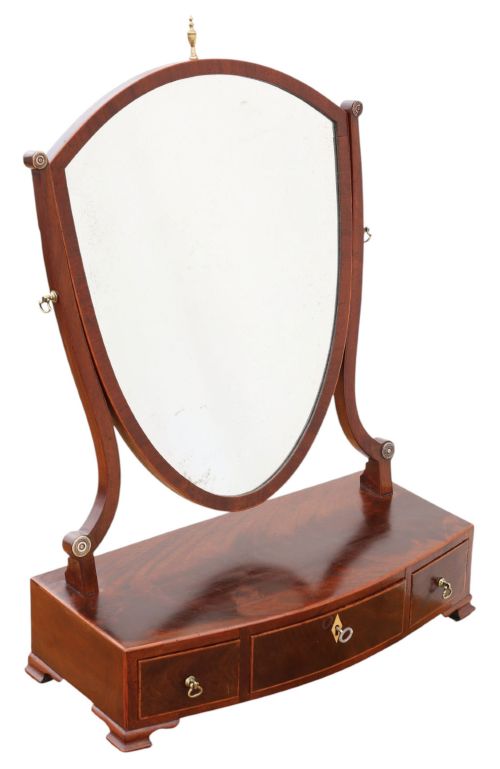
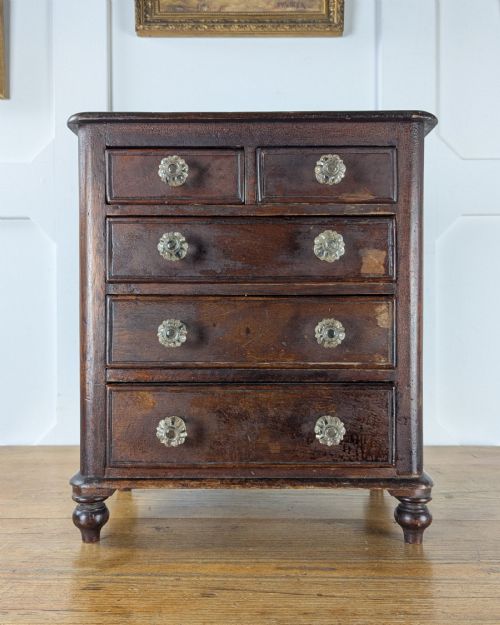
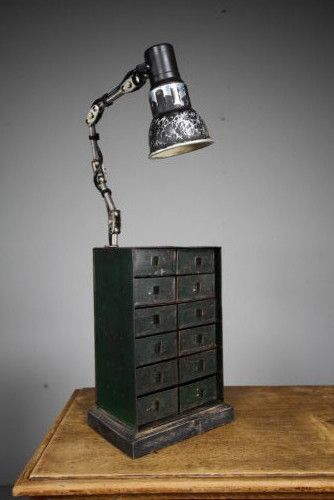
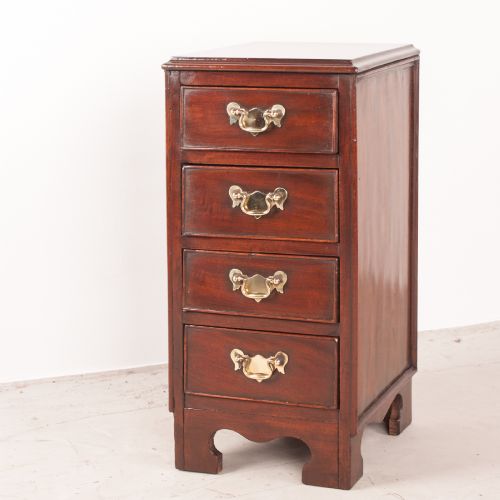
These vintage desktop drawers bring order to a study or desk, offering compact storage in mahogany, oak, and pine from the Georgian, Victorian, and Edwardian eras.
Vintage Desktop Drawers
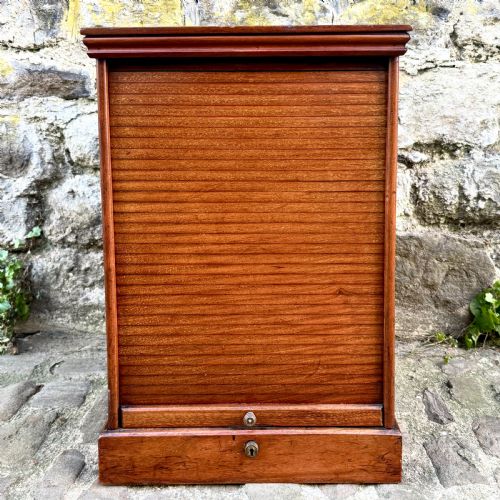
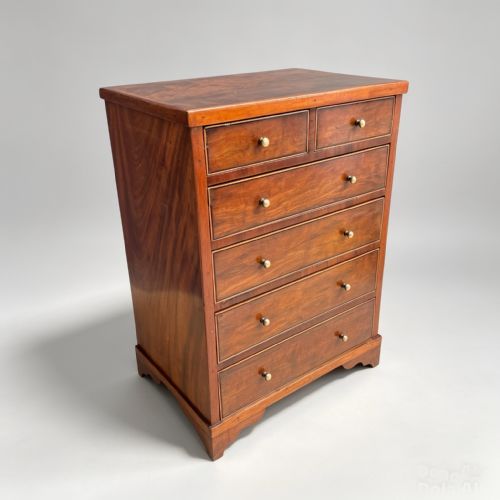
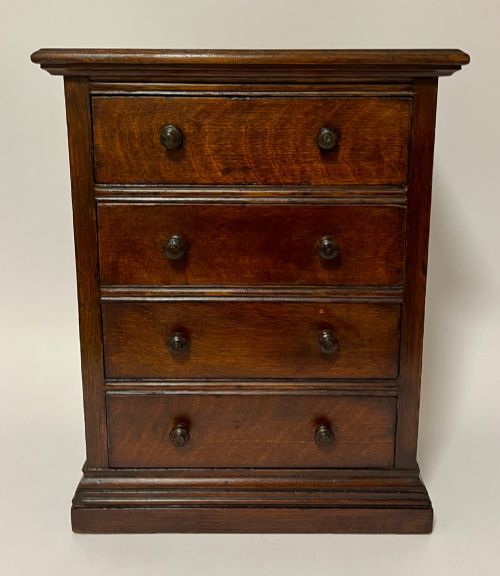
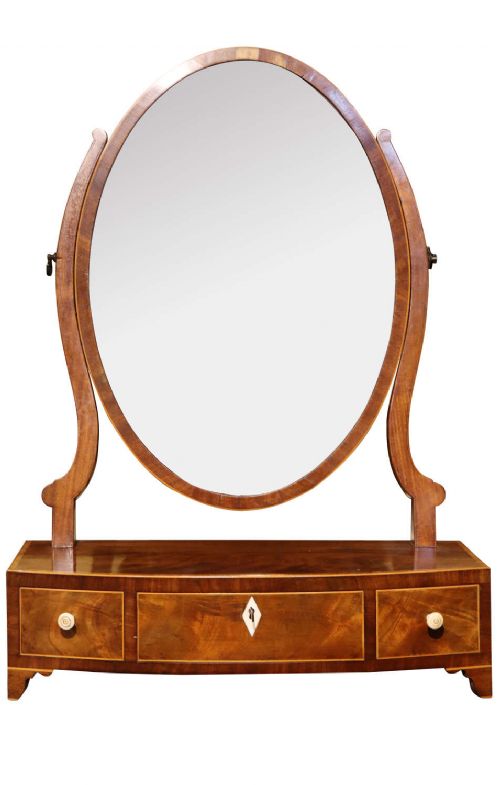
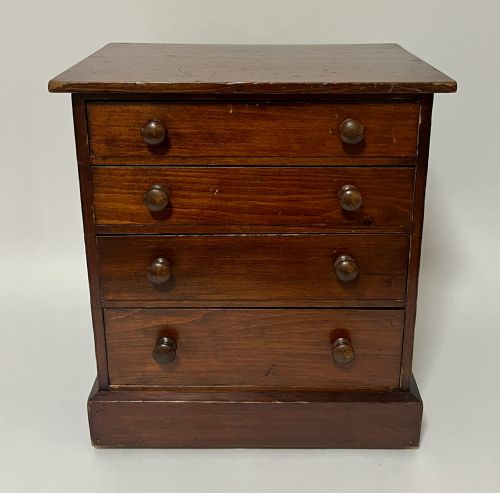
Vintage desktop drawers encompass miniature chests, collectors' cabinets, spice drawers, and filing cases designed for tabletop use. They provide compartmentalised storage for small items, correspondence, and specimens.
The selections span multiple eras, including Georgian, Victorian, and Edwardian periods, alongside pieces from the 1920s and 1930s. Mahogany and oak dominate the offerings, often complemented by brass handles and glass elements.
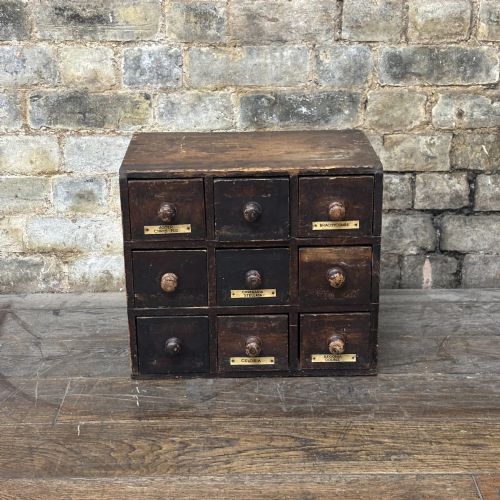
Forms range from apprentice chests and apothecary spice drawers to desktop filing cabinets and jewellers' chests. Many survivors originate from specialised domestic or commercial contexts, such as doctors' surgeries, drapery shops, and seed merchants.
How they were made
Construction relies heavily on traditional cabinet-making timbers such as mahogany, oak, walnut, and pine, occasionally enhanced by burr elm, satinwood, or fruitwood veneers. Carcases frequently utilise dovetail joints for drawer construction, ensuring durability in daily desktop use.
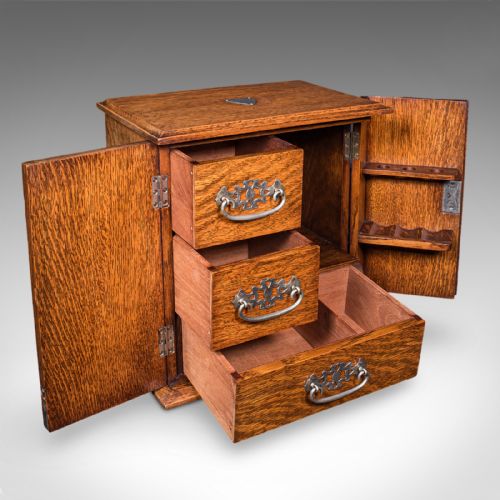
Secret drawers tucked behind dummy panels remind us that Victorians loved hiding their spare keys.
What varies in quality
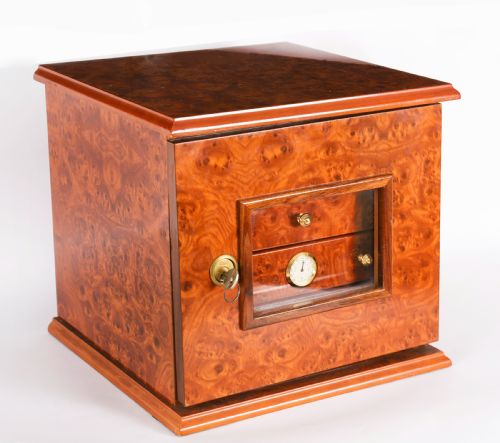
Quality differentiates through the choice of timber and the precision of the cabinetwork, such as fine crossbanding and neatly cut dovetails. Figured timbers like burr elm and figured oak elevate the visual appeal of a desktop chest.
The integrity of original brass hardware, working locks with keys, and bevelled glass panels distinguish finer examples from standard utility pieces. Finer proportions and secondary wood selection separate bespoke workshop pieces from mass-produced items.
The Vintage Desktop Drawers Glossary
- Apprentice piece
- A small-scale item demonstrated by a craftsman to prove proficiency. These miniature chests replicate full-size furniture with exact joinery.
- Barograph
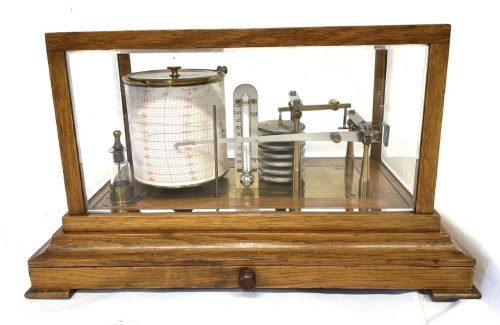
- A recording barometer housed in a wood case with a chart drawer. These instruments often feature oak or mahogany cabinetry with bevelled glass.
- Crossbanding
- A decorative border of veneer laid with the grain running perpendicular to the main panel. This technique appears on Georgian and Victorian cabinetwork.
- Escutcheon
- A protective plate surrounding a keyhole, usually fashioned from brass. They prevent wear to the surrounding wood on cabinet doors and drawer fronts.
Vintage Desktop Drawers: Frequently Asked Questions
What were vintage desktop drawers used for originally?
These compact storage units served various administrative and specialist purposes in homes and businesses. They held correspondence, medical supplies, seeds, spices, and small collectables.
Commercial examples organised drapery needles or seed packets on shop counters. Domestic pieces kept stationery, jewellery, and personal documents organised on writing desks.
How do I date a set of desktop drawers?
Dating relies on timber selection, construction methods, and hardware styles. Georgian and Victorian pieces frequently employ solid mahogany or oak with hand-cut dovetails.
Later Edwardian and 1920s examples often introduce machine-sawn elements, stained pine, or commercial utility designs. Brass drop handles and escutcheons also shift in profile across these periods.
Are these drawers suitable for modern desks?
Their compact footprints make them practical for organising modern stationery, pens, and small electronics. They fit comfortably on standard desk surfaces and tabletops.
Collectors utilise them for fountain pens, watch collections, and desk accessories. Their internal drawer depths accommodate contemporary office supplies while adding period character.
What is the difference between a specimen cabinet and a chest?
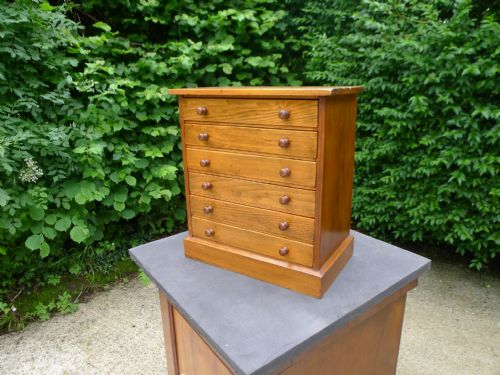
Specimen and collectors' cabinets feature multiple shallow drawers designed for organising natural history items or small objects. They often include secure locking doors.
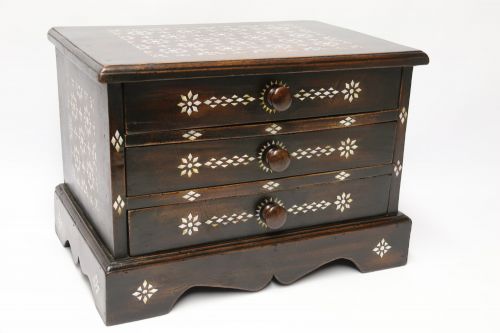
Miniature chests replicate the form of domestic drawer units without the specific internal divisions required for scientific specimens. Both styles sit on desks or tabletops.