


Apothecary Style Drawers
These apothecary style drawers bring multi-drawer utility to a room, offering compact storage in pine, mahogany, walnut and teak.
Apothecary Style Drawers
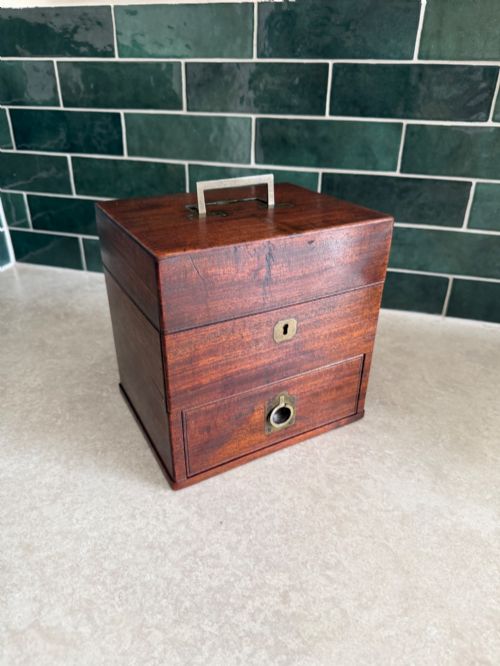
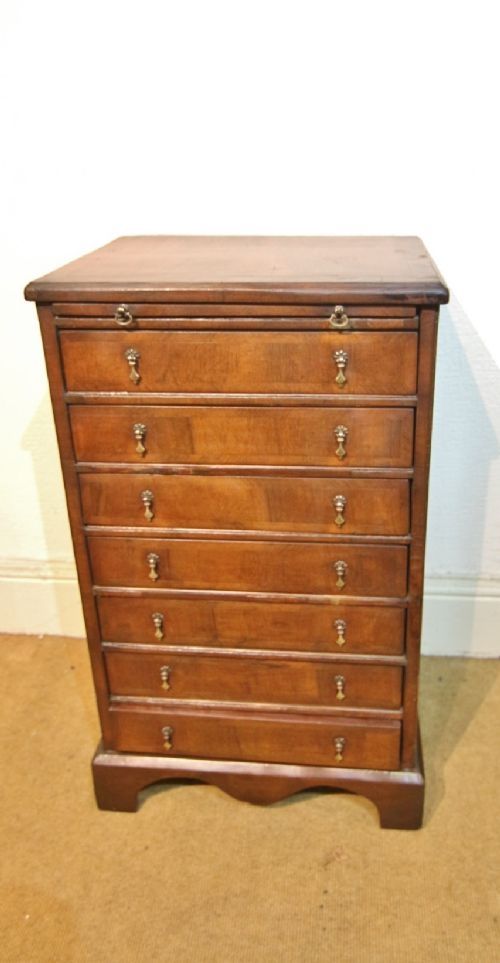
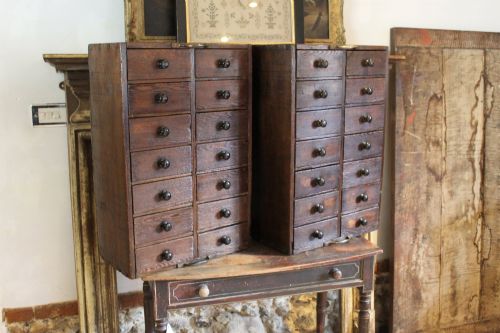
Apothecary style drawers encompass small multi-drawer units, collectors' chests and filing cabinets designed for organised storage. When searching for apothecary style drawers, you meet pieces ranging from nineteenth-century pine and walnut collectors' chests to early twentieth-century industrial filing cabinets and Chinese provincial apothecary chests.
How they were made
Construction relies on solid timbers such as mahogany, pine, walnut, teak and eastern elm, shaped into multi-drawer carcasses. Carpenters utilised durable woods to house numerous small drawers intended for frequent daily use.
Hardware forms an integral part of the construction, with brass and iron handles, pulls and key escutheuims fitted to secure contents. Lacquered timber finishes appear alongside simpler wood surfaces, protecting the material while highlighting grain patterns.
Materials recorded across the inventory include mahogany, walnut, pine, teak, eastern elm, brass, iron and lacquered timber.
What varies in quality
Quality rests in the selection of timber and the precision of the drawer joinery. Finer examples employ dense hardwoods like mahogany and walnut with neatly fitted partitions, whereas simpler variants utilise pine or eastern elm.
Hardware quality distinguishes everyday utility pieces from superior cabinets. Substantial brass pulls and original locking mechanisms with working keys elevate the standing of a chest compared to replacement iron fittings.
D Napier & Sons
The Apothecary Style Drawers Glossary
- Collectors Cabinet
- A specialised multi-drawer cabinet built to house small objects, specimens or items requiring categorised storage. These pieces often feature numerous shallow drawers within a compact footprint.
- Filing Cabinet
- An upright office unit designed for document storage, appearing in industrial and period styles with multiple pull-out drawers. Materials commonly include timber or metal.
- Escutcheon
- A protective plate surrounding a keyhole, frequently cast in brass or iron on period cabinet drawers. It prevents the wood around the lock from sustaining wear.
- Table-Top Chest
- A scaled-down set of drawers designed to sit upon a desk, counter or table rather than stand on the floor. They offer accessible compartmentalised storage at arm level.
Apothecary Style Drawers: Frequently Asked Questions
What were apothecary drawers originally used for?
These multi-drawer chests originally held dried herbs, roots, powders and medicinal ingredients in apothecary shops and dispensaries. The numerous small compartments kept distinct substances separated and organised for rapid retrieval by practitioners.
Over time, similar multi-drawer formats were adopted by watchmakers, naturalists and offices for sorting small components, specimens and documents.
How do I date a set of drawers?
Dating relies on observing construction methods, timber choices and hardware styles across the piece. Nineteenth-century examples often feature hand-cut dovetails in the drawer construction and heavier brass or iron pulls.
Twentieth-century pieces introduce industrial elements, painted finishes or lighter timbers like teak and pine. Comparing the carcass construction to documented period examples clarifies the era of manufacture.
Where should I place these in a home?
Compact table-top chests and small cabinets sit comfortably on sideboards, desks or tabletops where surface space permits. Taller filing cabinets and chests function well freestanding in studies, hallways or living spaces.
The numerous small drawers make them particularly practical for organising stationery, jewellery, collections or everyday clutter.
What timbers are most common?
Pine and mahogany appear frequently across nineteenth-century British and European pieces, offering durable surfaces for daily handling. Walnut and eastern elm also feature in finer table-top and collectors' chests.
Later industrial and colonial examples incorporate teak, iron and lacquered timber finishes to withstand robust commercial or workshop environments.