



Industrial Pine Drawers
Industrial pine drawers combine utilitarian mass storage with robust timber construction, offering practical organisation and bold aesthetic character for modern interiors.
Industrial Pine Drawers
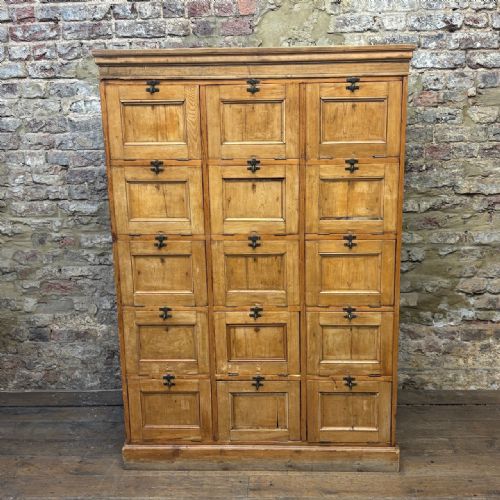
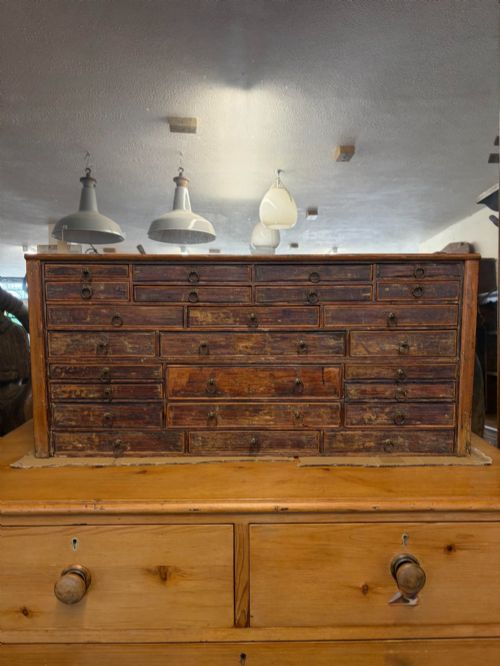
Industrial pine drawers encompass multi-drawer banks, shop fittings, and filing cabinets built for commercial or workshop use during the nineteenth and early twentieth centuries. These functional storage units emerge primarily from the Victorian and Edwardian periods, reflecting the utilitarian needs of drapers, ironmongers, and watchmakers.
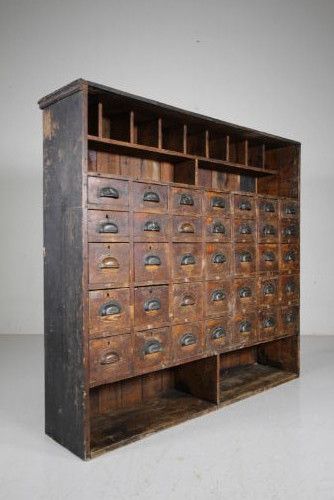
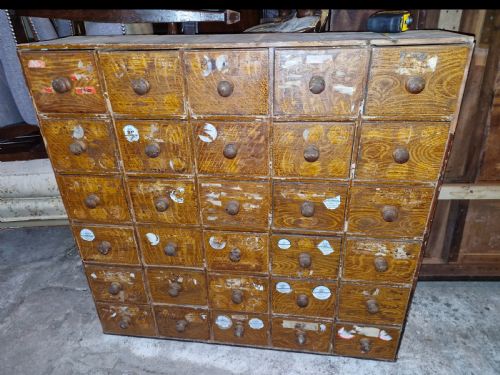
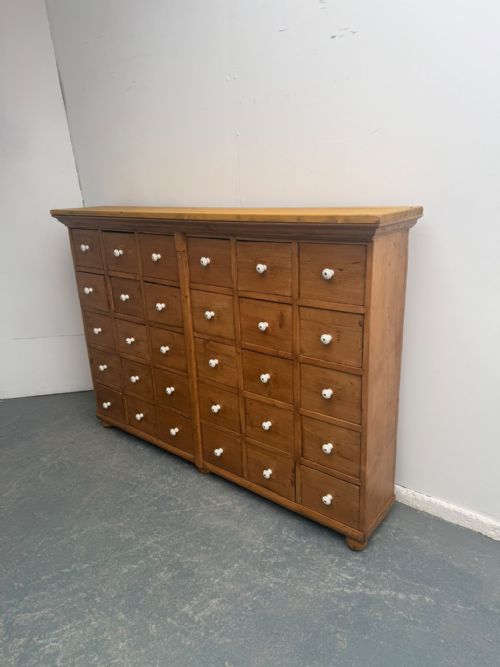
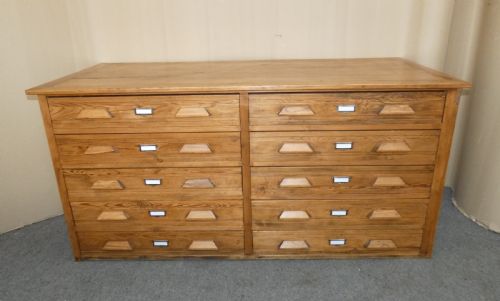
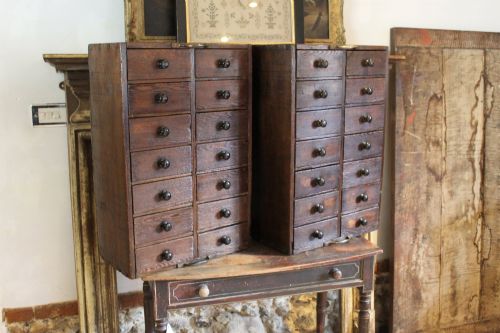
Banks of drawers dominate the available forms, featuring configurations ranging from compact nine-drawer chests up to massive thirty-drawer storage units. Carpenters chests and plan chests provide alternative storage formats in solid pine and pitch pine.
English and French examples appear regularly, spanning rustic country workshop pieces to commercial shop fittings with painted finishes. The prevalence of nineteenth-century and 1900s dates highlights an era when heavy-duty timber storage was built for continuous daily trade.
Materials and Construction
Construction relies heavily on solid pine and pitch pine timbers, chosen for availability and structural resilience under heavy commercial loads. Cabinet makers joined drawer carcasses and frames to withstand the rigorous demands of ironmongers, drapers, and workshops.
Metal hardware such as iron brackets and brass handles provide functional reinforcement and operational longevity on frequently opened drawers. Painted surfaces, including original light green finishes, appear alongside natural wood grains to protect and define the exterior surfaces.
Some watchmakers' drawers still retain faint graphite numbers scrawled by apprentices to track tiny missing screws.
Assessing Quality and Provenance
Scale and compartment density dictate much of the differentiation across pieces, with larger banks of twenty or more drawers demanding superior structural joinery to support extended use. The presence of original trade association or maker provenance, such as specific regional furnishers, elevates the historical interest of a unit.
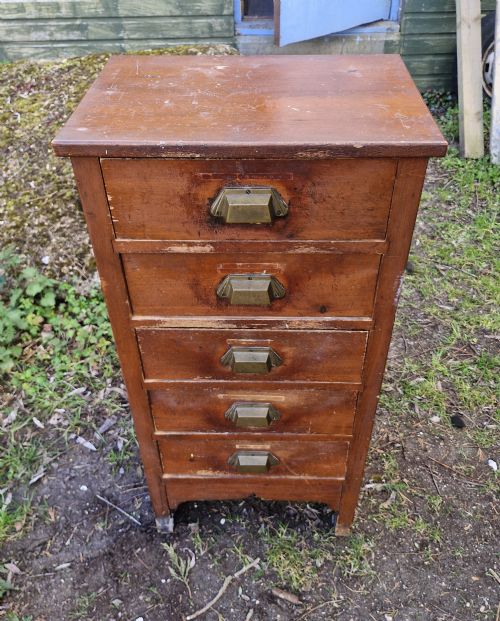
Hardware integrity separates standard utility items from finer commercial survivors, particularly where period brass handles and intact metal label holders remain untouched. Surface preservation also plays a role, distinguishing pieces with original painted finishes or honest workshop patina from later alterations.
Luxmore's of Ilfracombe·D Napier and Sons
The Industrial Pine Drawers Glossary
- Bank of Drawers
- A multi-drawer storage unit featuring numerous small compartments designed for organised stock or component storage. These large modular chests were standard fixtures in trade establishments and workshops.
- Pitch Pine
- A dense, resinous softwood timber utilised for heavy-duty furniture and large plan chests. It offers superior durability and a pronounced grain pattern compared to standard softwoods.
- Shop Fitting
- Custom cabinetry and shelving built directly for commercial retail premises such as drapers and ironmongers. These pieces prioritised functional display and extensive compartmentalised storage.
- Plan Chest
- A wide, shallow multi-drawer cabinet designed specifically for storing architectural drawings, maps, and large sheets of paper. They utilise deep banks of wide drawers to keep documents flat and protected.
- Haberdashers Drawers
- Tall storage banks originally employed in textile shops to sort ribbons, threads, and small sewing goods. They typically feature many glass-fronted or shallow wooden compartments.
Industrial Pine Drawers: Frequently Asked Questions
What trades used industrial pine drawers?
These multi-drawer units served commercial businesses that needed to organise vast inventories of small parts or dry goods. Ironmongers, drapers, and watchmakers relied on them daily.
Workshops and offices also utilised large banks of drawers for carpenters' tools and administrative filing. Their robust construction suited heavy commercial environments.
How do I date an industrial drawer unit?
Dating relies on construction methods, timber choice, and hardware styles found across the piece. Nineteenth-century examples often feature hand-cut dovetails and heavy pine timbers.
Twentieth-century versions shift towards standardised industrial utility with simplified joinery. Maker marks and original brass handles provide further chronological clues.
Are pine plan chests suitable for modern homes?
Their broad proportions and shallow drawers make them exceptional storage consoles for hallways and living spaces. They provide substantial surface area alongside concealed organisation.
Pitch pine variations bring warmth and grain texture to contemporary interiors. Their solid build ensures they handle everyday domestic use with ease.
What is the difference between shop fittings and domestic chests?
Shop fittings were built for commercial endurance, resulting in higher drawer counts and specialised compartment layouts. They often feature integrated label holders for inventory management.
Domestic chests focus on apparel storage with deeper, wider drawer configurations. Commercial pieces prioritise accessibility across numerous smaller contents.