



Pine Specimen Cabinet
A pine specimen cabinet offers a sturdy and honest home for small collections, built to keep delicate items organised and secure.
Pine Specimen Cabinet
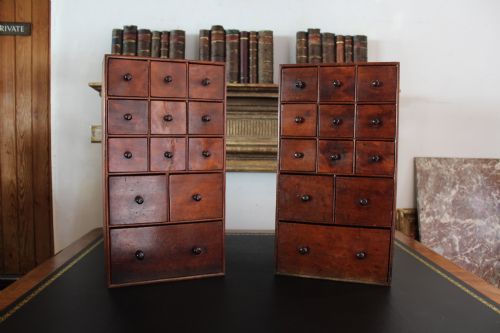
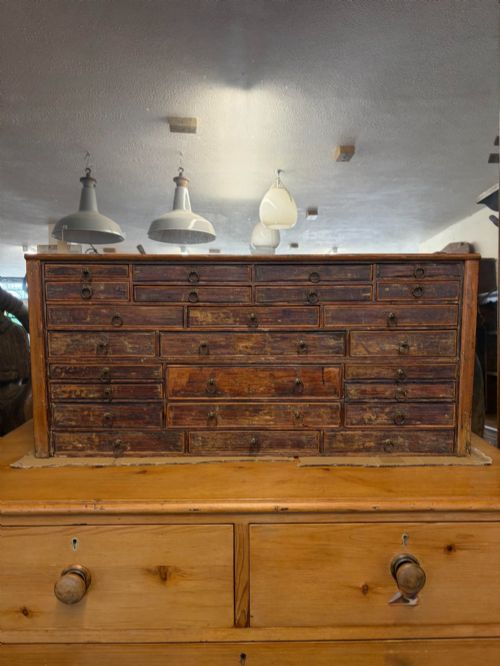
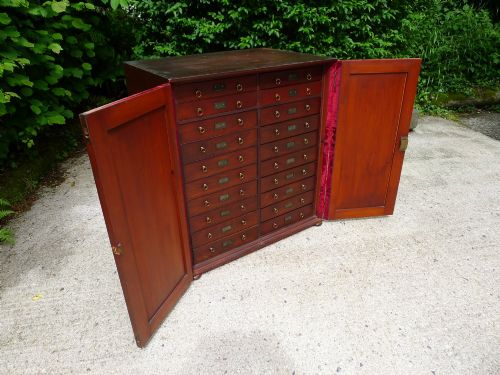
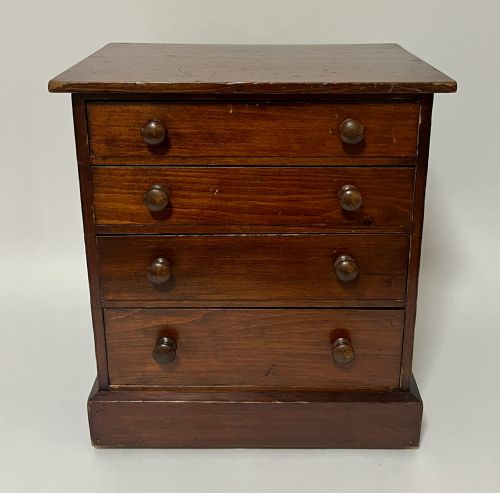
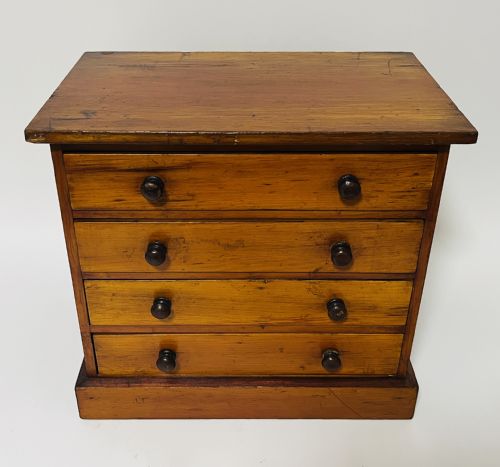
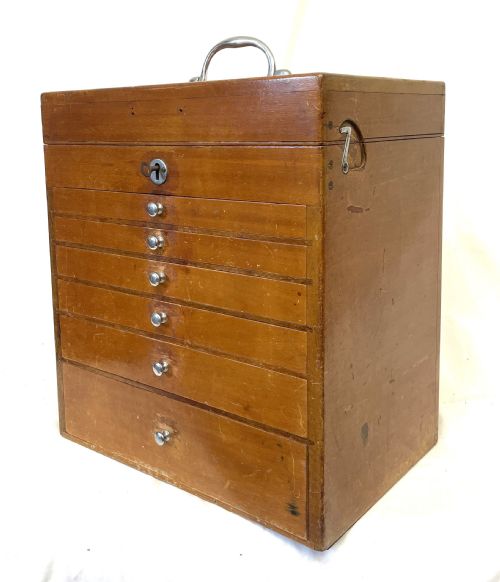
A pine specimen cabinet serves as a dedicated storage unit with multiple shallow drawers, designed originally for natural history collections, medical samples, or small trinkets. The pieces on this page span the nineteenth century and the Edwardian era, taking forms such as banks of drawers, tabletop chests, and tall apothecary units. Buyers seek these cabinets for their utilitarian charm and their practical ability to organise modern collections in living spaces or studies.
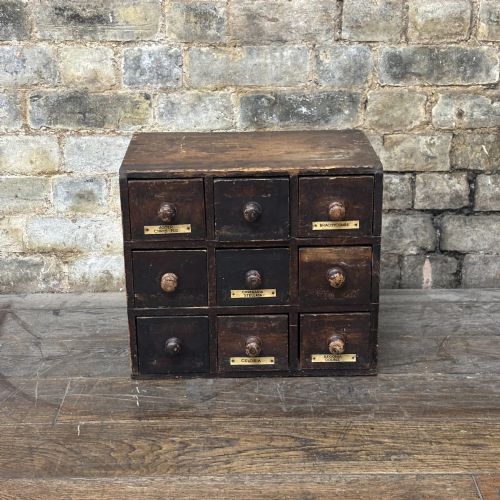
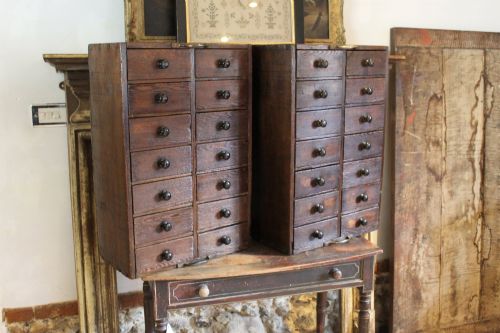
Most examples you encounter here are constructed from pine, deal, or pitch pine, often bearing the marks of utilitarian or industrial utility styles alongside Victorian and Arts and Crafts influences. You will find configurations ranging from compact six-drawer chests to banks housing twenty-five drawers, some retaining original paint finishes while others show stained and polished surfaces.
What varies in quality
Quality in these cabinets rests upon the precision of the drawer construction and how smoothly the banks of drawers operate within their carcases. Finishes range from simple utilitarian surfaces to carefully polished deal and figured pitch pine.
The presence of original hardware, such as brass pulls and metal label holders, distinguishes standard utility pieces from finer workshop productions.
Some cabinets still carry traces of botanical dust and forgotten remedies tucked away in the back of twenty-five tiny drawers.
Luxmore's of Ilfracombe·D Napier and Sons·J T Crockett
The Pine Specimen Cabinet Glossary
- Deal
- A softwood timber, typically fir or pine, widely used for carcases and drawer construction in 19th-century cabinet making.
- Pitch pine
- A durable, resinous pine variety with a pronounced grain pattern, favoured for better quality Victorian storage chests.
- Bank of drawers
- A tall or wide multi-drawer unit designed for intensive cataloguing and storage of small objects.
- Specimen cabinet
- A piece of furniture built with numerous shallow drawers specifically for housing natural history collections or small artefacts.
Pine Specimen Cabinet: Frequently Asked Questions
What were pine specimen cabinets originally used for?
These cabinets served laboratories, apothecaries, and collectors who needed to organise botanical specimens, insects, medical equipment, or watch parts.
Today, the multitude of shallow drawers makes them ideal for storing jewellery, craft supplies, and small stationery items in a domestic setting.
How do I date a Victorian pine specimen cabinet?
Dating relies on observing construction methods, timber choices, and hardware styles. Nineteenth-century pieces often feature hand-cut joints and simple deal carcases.
Later Edwardian examples tend to show standardised industrial utility designs and machine-cut elements.
Can I paint or wax an unfinished pine cabinet?
Many period cabinets were left in bare pine or received simple wax treatments that darkened gracefully over time.
Applying a traditional beeswax feed protects the wood whilst preserving the historic surface character.
Where should I place a heavy bank of drawers?
Due to the dense arrangement of multiple drawers and solid pine construction, these cabinets require stable, level surfaces.
Placing them against a sturdy wall ensures safety, especially when several loaded drawers are pulled out simultaneously.