



Vintage Desktop Drawer Unit
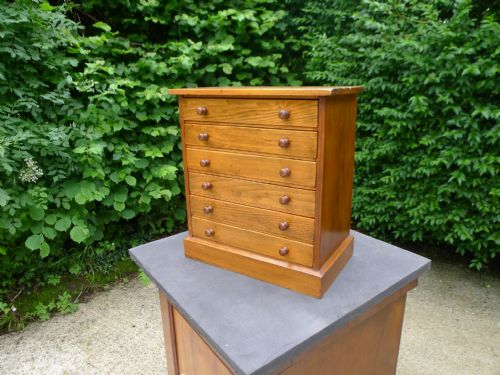
These vintage desktop drawer units are practical storage chests and cabinets built to keep small items organised.
Vintage Desktop Drawer Unit
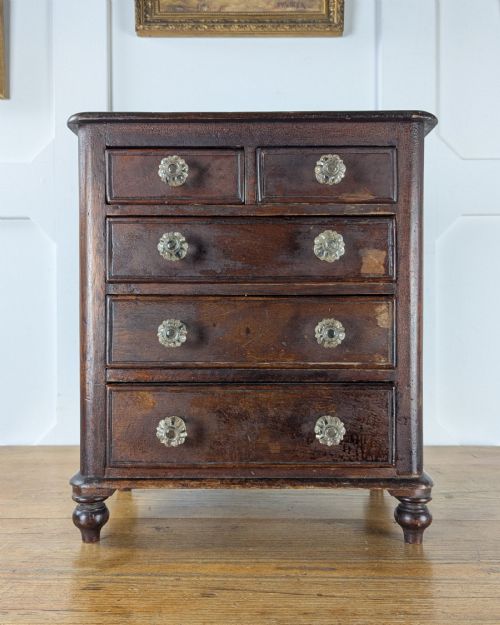
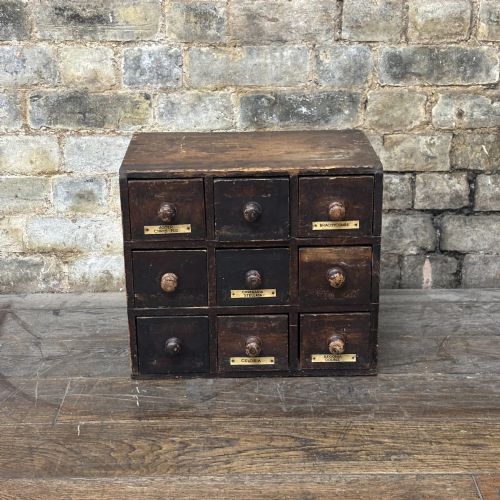
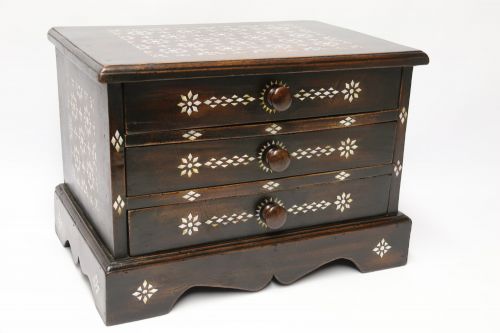
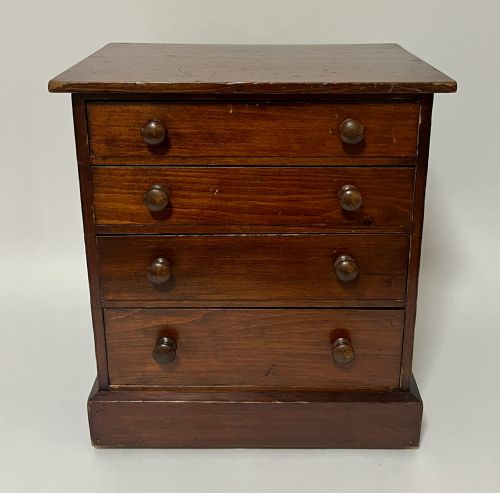
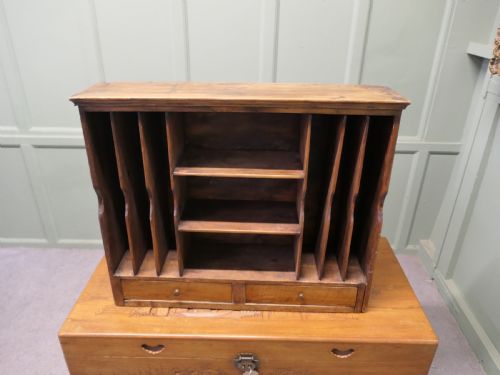
A vintage desktop drawer unit provides compact storage for small items, documents, and collections right on a work surface. Buyers seeking a vintage desktop drawer unit encounter a diverse selection ranging from miniature apprentice chests and jewellers chests to countertop needle drawer cabinets and index filing drawers.
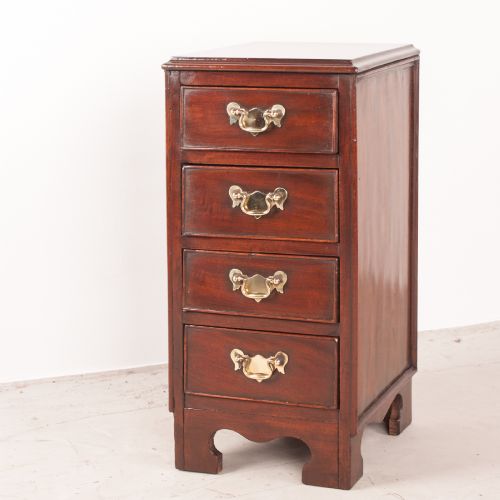
The pieces span several decades and eras, including Victorian, Edwardian, and 1930s examples, alongside 19th-century filing shelves. Formats vary from small oak drawers and mahogany trinket storage chests to larger collectors cabinets in satin walnut and stained deal.
Origins and influences range from English florists and drapers to French post offices and Anglo-Indian workshops. These functional objects reflect commercial, domestic, and industrial uses from the past.
How they were made
Cabinet makers utilised a variety of solid timbers and metals, combining oak, mahogany, pine, beech, and satin walnut with brass hardware and glass elements. Stained finishes and natural wood grains predominate across the selection.
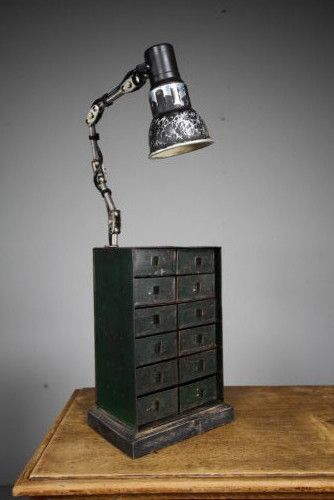
Construction techniques serve specific practical functions, such as turned feet on miniature apprentice chests, integrated light fittings on metal jewellers chests, and specialised compartmentalisation for seeds, needles, and index cards.
One exceptional metal jewellers chest arrives equipped with its own original light fitting, ready to illuminate your trinkets.
What varies in quality
Quality differences lie in the choice of materials and the refinement of construction, distinguishing standard utilitarian pieces from finer decorative examples. Finer items feature dense hardwoods like mahogany and satin walnut, intricate inlay work, or specialised hardware.
Condition and originality dictate the character of each piece, from robust industrial steel and beech filing units to delicate domestic trinket chests. The integrity of the original drawers, handles, and labels shapes the overall standard.
The Vintage Desktop Drawer Unit Glossary
- Apprentice piece
- A small-scale model demonstrating a craftsman's skill to attain master status. These miniature chests replicate full-sized furniture with accurate proportions.
- Collectors cabinet
- A specialised storage unit containing multiple shallow drawers. They are designed for organising specimens, coins, or small objects.
- Trinket chest
- A small box or chest fitted with multiple drawers for personal valuables. They often feature polished mahogany or inlaid hardwood.
- Index filing drawers
- Modular storage units designed for organising cards or documents. Beech and oak versions were standard in early offices.
- Draper counter unit
- A specialised retail cabinet used in shops for storing small haberdashery items. Countertop placement allowed easy access for merchants.
Vintage Desktop Drawer Unit: Frequently Asked Questions
What were vintage desktop drawer units used for originally?
These units served various commercial, domestic, and institutional purposes depending on their specific design. Florists, drapers, jewellers, and post offices utilised them to organise seeds, needles, jewellery, and documents.
In domestic settings, smaller versions held trinkets, letters, or personal collections. Their countertop or desktop placement kept frequently used items within immediate reach.
How do I date a vintage desktop drawer unit?
Dating relies on observing construction materials, wood types, hardware, and stylistic indicators such as Victorian turned feet or Edwardian utilitarian forms. Period markers like circa dates or specific timber preferences help place pieces across the nineteenth and twentieth centuries.
Industrial pieces often show patent marks or institutional stamps that narrow down their era of manufacture. Comparing hardware styles provides further clues to the decade of production.
Are these drawer units suitable for modern office use?
Many of these compact cabinets and filing drawers fit seamlessly into contemporary workspaces for organising stationery, business cards, or small electronics. Their shallow drawer depths prevent clutter from accumulating.
Robust oak, beech, and metal variants handle daily desktop use easily. They combine historical character with practical modern utility.
How should I clean a wooden desktop cabinet?
Maintain wooden surfaces by dusting gently with a dry, soft cloth to protect the aged finish and patina. Avoid harsh chemical cleaners that strip historical waxes and varnishes.
Nourish older timbers periodically with appropriate furniture wax if the wood appears dry. Keep pieces away from direct heat sources to prevent warping.