
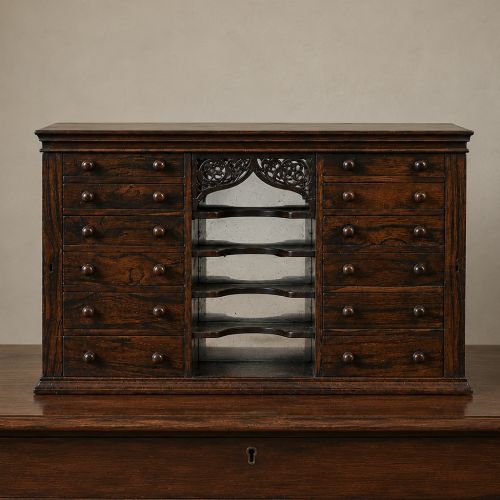
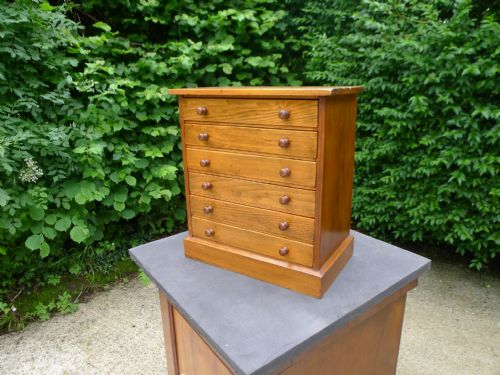
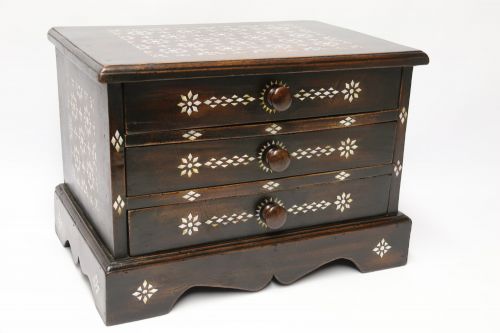
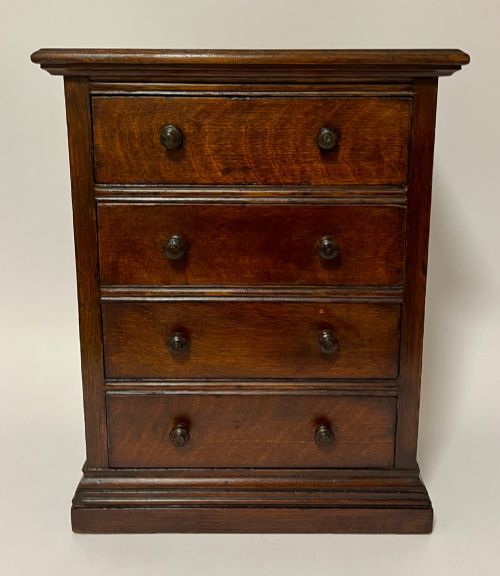


Small Wooden Specimen Drawers
Small wooden specimen drawers are compact tabletop cabinets built for organised storage, offering tactile historical charm for modern desktops.
Small Wooden Specimen Drawers
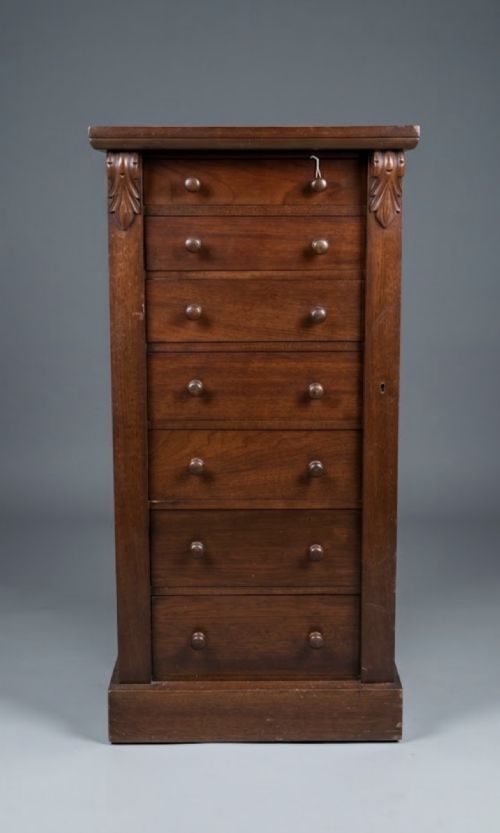
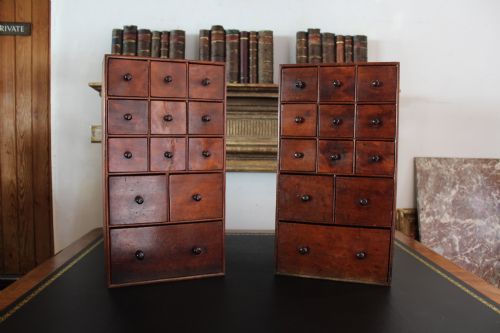
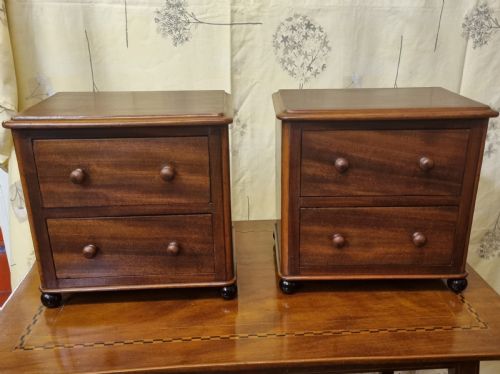
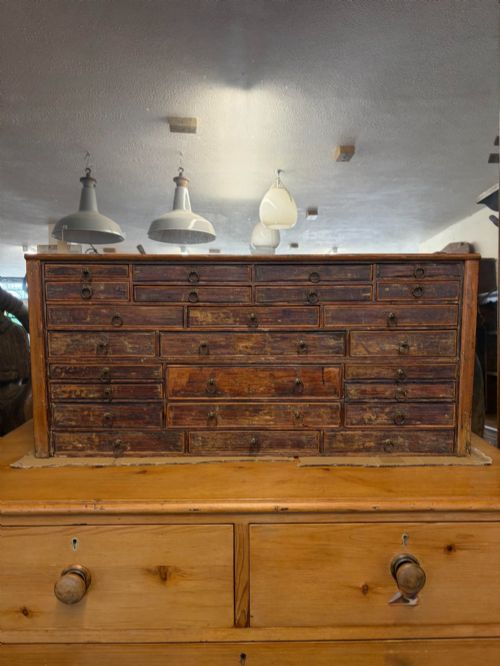
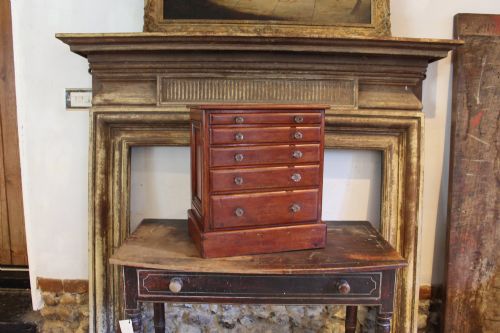
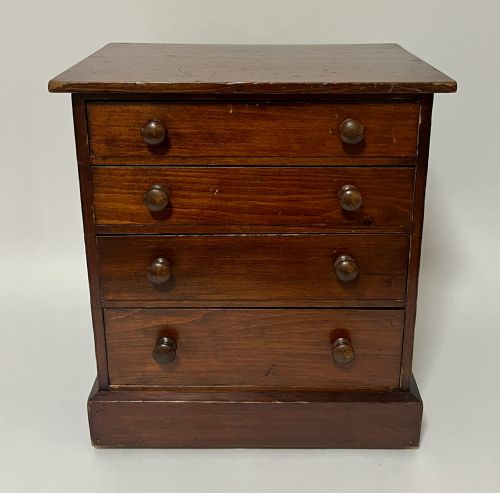
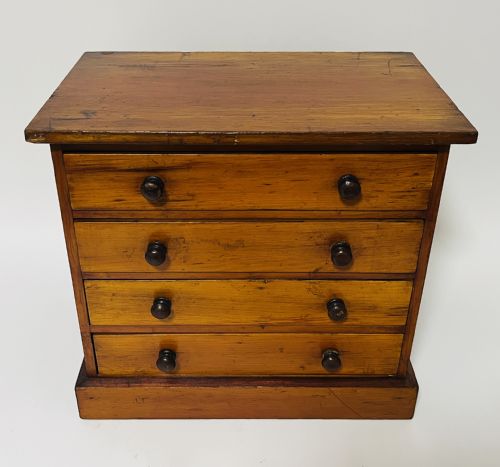
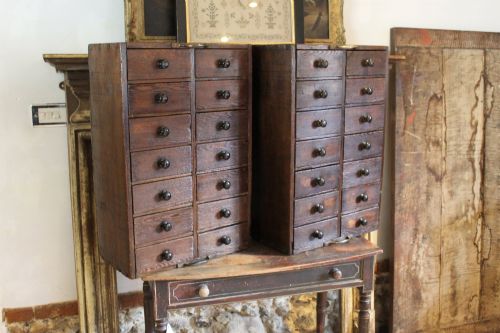
Small wooden specimen drawers span tabletop chests, miniature furniture, and banks of multiple tiers designed to house natural history objects, coins, or medical gear. These pieces emerge predominantly from Victorian workshops alongside Regency and Georgian iterations.
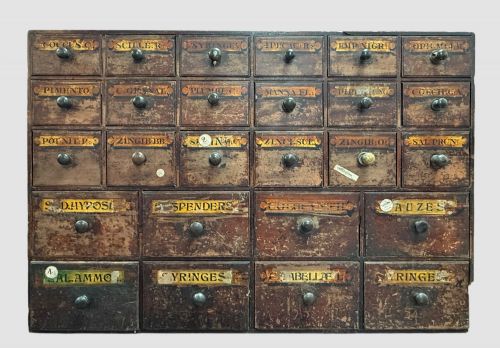
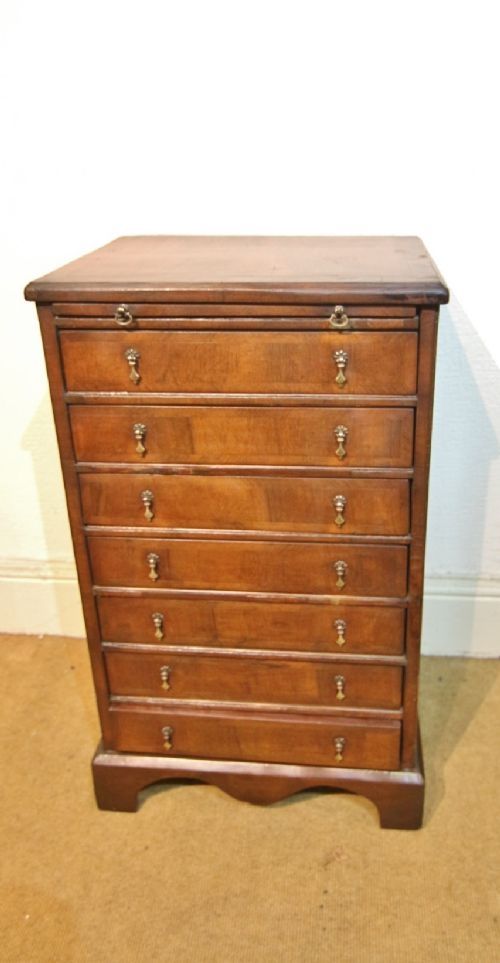
Forms range from multi-drawer apothecary banks and Wellington chests to small desktop collector cases with brass handles. Cabinets appear in configurations from single-column stacks to wider miniature chests.
Origins stretch across British workshops and Anglo-Indian production, utilising timber frames constructed for functional desktop organisation. Pieces scale from compact two-foot heights down to miniature tabletop boxes.
Materials and construction
Carpenters utilised dense hardwoods including mahogany, walnut, oak, yew, and rosewood alongside utilitarian pine, deal, and stained softwoods. Surfaces display natural grain figures, burr veneers, satinwood banding, and inlaid hardwood details.
Hardware relies on brass drop handles, carrying side brackets, inset locks with functional keys, and occasionally glass viewing doors. Drawers are built with tight joints to protect contents from dust and environmental shifts.
Listings feature woods spanning mahogany, walnut, oak, rosewood, pine, and palmwood across Victorian and Georgian periods.
Quality and execution
Superior examples demonstrate meticulous timber selection, using figured veneers, match-grained drawer fronts, and precise dovetail joinery. Lesser execution appears in simpler stained pine or deal constructions with plain secondary woods.
Hardware integration separates standard storage boxes from finer pieces fitted with original brass drop handles, working locks with keys, and subtle cockbeading around drawer apertures.
Luxmore's of Ilfracombe·D Napier & Sons
The Small Wooden Specimen Drawers Glossary
- Wellington chest
- A tall, narrow chest of drawers secured by a locking side flap that bars access to all drawers simultaneously.
- Apprentice piece
- A miniature furniture item constructed by a craftsman to demonstrate skill and secure trade certification.
- Specimen cabinet
- A specialised housing unit with shallow drawers designed for scientific samples, insects, or botanical collections.
- Apothecary chest
- A multi-drawer storage cabinet originally intended for medicines, herbs, or pharmaceutical equipment.
Small Wooden Specimen Drawers: Frequently Asked Questions
What were small wooden specimen drawers used for?
These cabinets stored delicate natural history specimens, coins, microscopic slides, and medical equipment. Collectors utilised the shallow drawer depths to keep delicate items organised and protected.
Over time, many units transitioned into general desktop storage for documents, jewellery, and small household trinkets. Their compartmentalised nature suited any pursuit requiring tidy categorisation.
How do I date a Victorian specimen cabinet?
Dating relies on timber choices, construction techniques, and hardware styles typical of the nineteenth century. Mahogany and burr walnut dominate this era, often accompanied by brass drop handles.
Secondary woods like pine, machine-sawn components, and specific lock mechanisms provide further chronological clues. Comparing drawer dovetailing against known periods refines the timeline.
Where should I place a tabletop chest?
Tabletop chests suit sturdy writing desks, sideboards, or console tables where their proportions can be appreciated. Positioning them away from direct sunlight and heating vents preserves the timber and finish.
Ensure the supporting surface balances the weight of hardwood construction and loaded drawers. Placing them at eye level allows easy access to the upper tiers.
Are apothecary chests different from collector cabinets?
Apothecary chests generally served medicinal functions, housing pharmaceutical ingredients, scales, and small bottles. Collector cabinets focused on display and storage for scientific specimens or coins.
While both share multi-drawer formats, apothecary versions often show utilitarian labelling or specialised interior partitions. Collector pieces frequently incorporate glass doors or finer veneer work.