


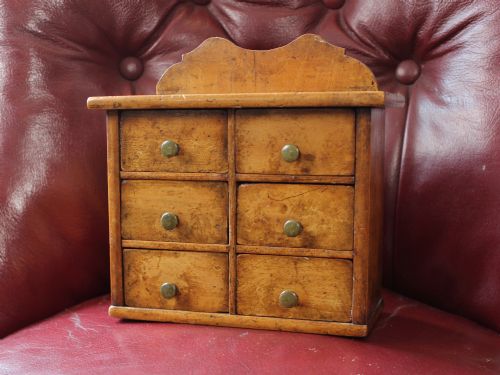

Brown Wooden Tabletop Drawers
Brown wooden tabletop drawers organise small valuables and papers, uniting practical compartmentalisation with cabinetmaker craft.
Brown Wooden Tabletop Drawers
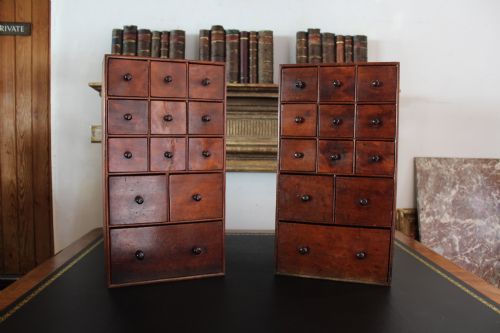
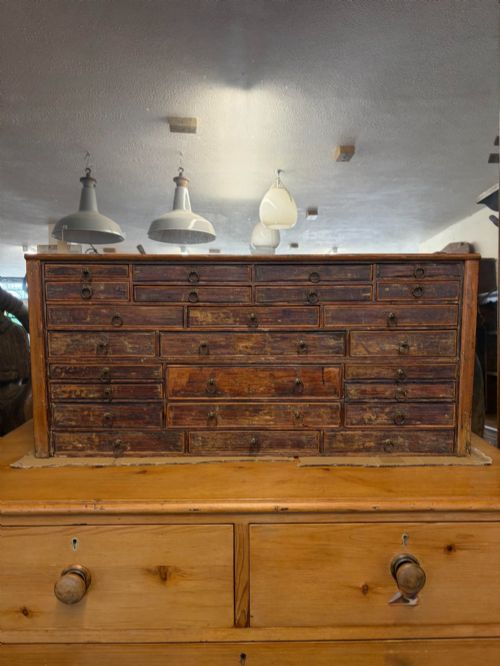
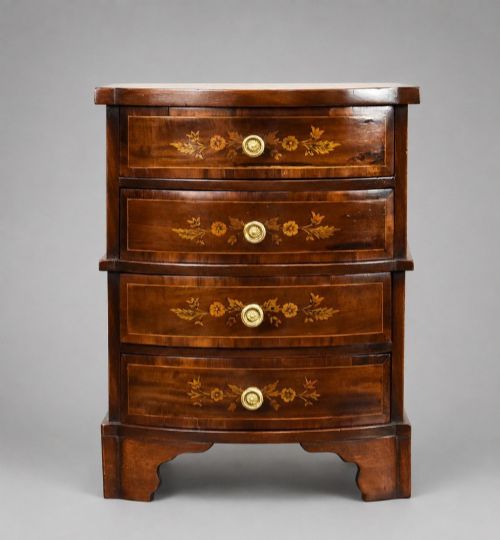
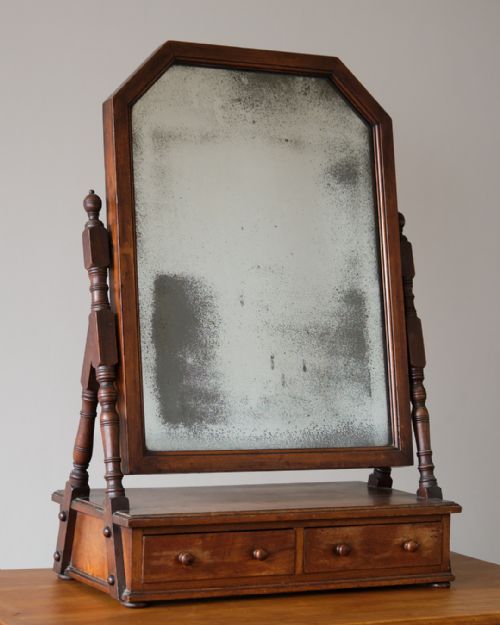
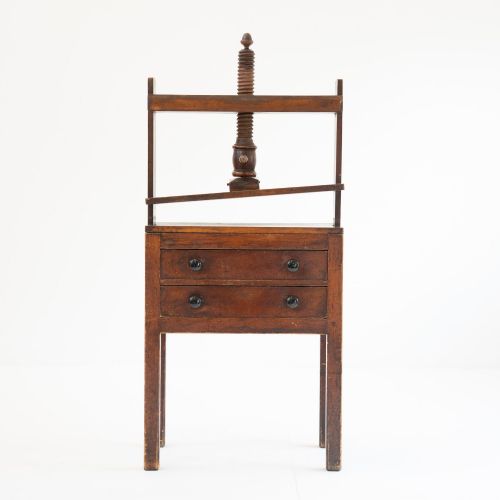
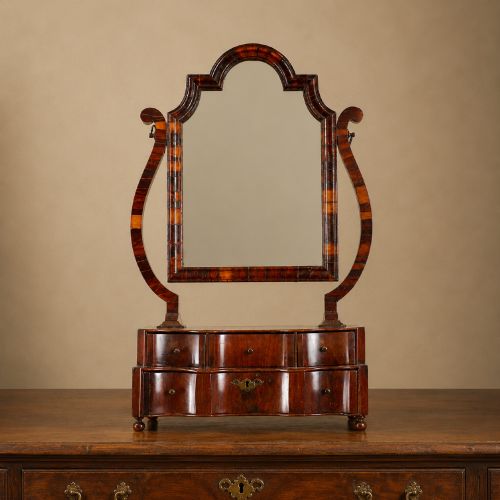
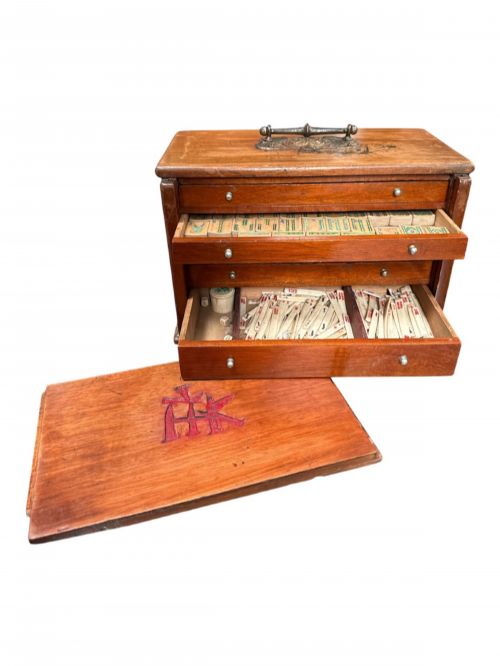
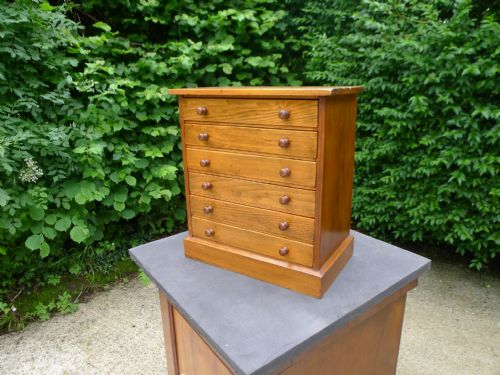
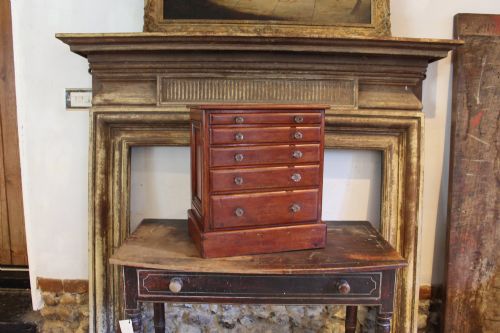
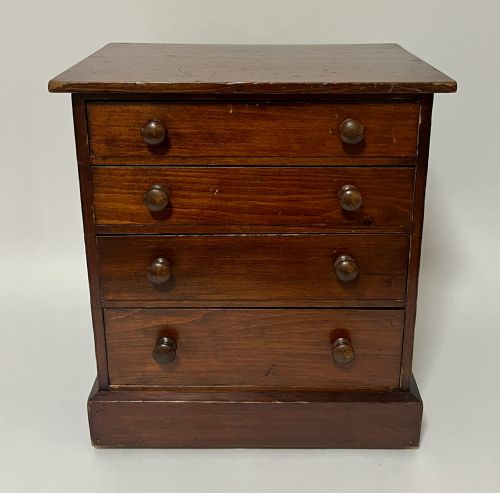
Brown wooden tabletop drawers encompass miniature chests, collectors' cabinets, and toilet mirrors originating across the eighteenth, nineteenth, and early twentieth centuries. These pieces serve domestic organisation, holding jewellery, letters, or specimens within compact proportions suited for desks and dressing tables.
Miniature chests and banks of small drawers dominate the available selection, often demonstrating the skilled joinery typically reserved for full-scale furniture. Examples range from country house apothecary chests to refined walnut dressing mirrors and specialised storage cabinets.
Materials and Construction
Makers utilised a diverse palette of dense hardwoods, predominantly mahogany, walnut, oak, and elm, frequently enhanced by fruitwood, amboyna, or yew veneers. Secondary timbers such as pine and deal provide structural framing for drawer linings and internal dividers.
Construction techniques combine dovetail joints for drawer assembly with brass hardware, inlaid banding, and glass panels. Surfaces receive hand-applied polishes that emphasise the natural grain patterns of burr elm, satin walnut, and mahogany.
Homeopathic chests offer tiny compartments designed to store microscopic remedies safely out of reach of ordinary ailments.
Distinguishing Quality
Superior examples display precise dovetailing, matched veneer grains across drawer fronts, and original brass fittings without replacement. The integration of secondary elements, such as hand-blown glass or bone escutcheons, separates workshop-produced items from simpler utilitarian boxes.
Proportion and execution define the hierarchy among miniature pieces, where accurate scaling mimics standard case furniture. Original patination and intact interior fittings preserve the integrity of specialised cabinets intended for scientific or domestic collections.
Luxmore's of Ilfracombe·Heal & Sons·Johnston’s of London
The Brown Wooden Tabletop Drawers Glossary
- Apprentice piece
- A small-scale item demonstrating a craftsman's skill before gaining guild admission. These objects frequently duplicate full-sized furniture designs with exact detail.
- Dovetail
- A joint formed by interlocking wedge-shaped fingers, securing drawer corners and case construction. This method provides high tensile strength without relying on metal fasteners.
- Toilet mirror
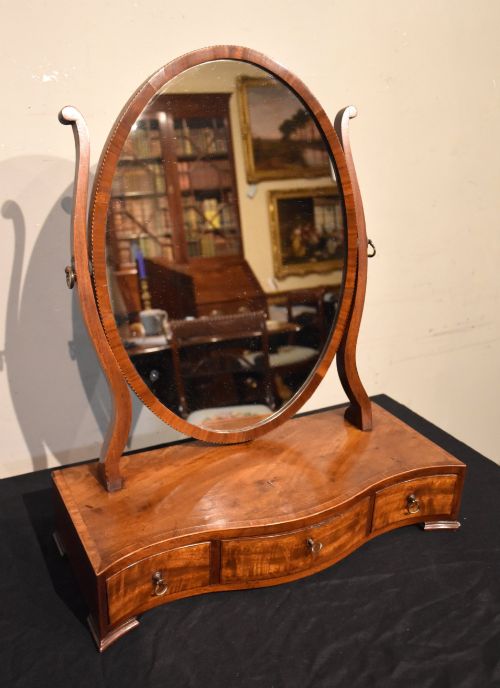
- A small adjustable glass mounted upon a miniature chest or frame, designed for dressing tables. These pieces often incorporate small compartments or drawers in the base.
- Escutcheon
- A protective plate surrounding a keyhole, frequently fashioned from brass or bone. It prevents the surrounding wood from wearing during repeated use of the key.
- Patina
- The surface sheen and colour acquired by wood through age, handling, and light exposure. This characteristic layer indicates genuine historical use rather than artificial distress.
Brown Wooden Tabletop Drawers: Frequently Asked Questions
What were miniature chests used for?
Miniature chests served various domestic purposes, from holding precious jewellery and trinkets to storing sewing implements and personal correspondence.
Craftsmen also produced them as trade samples or demonstration pieces to display proficiency in joinery and carving techniques.
How do I identify a collector cabinet?
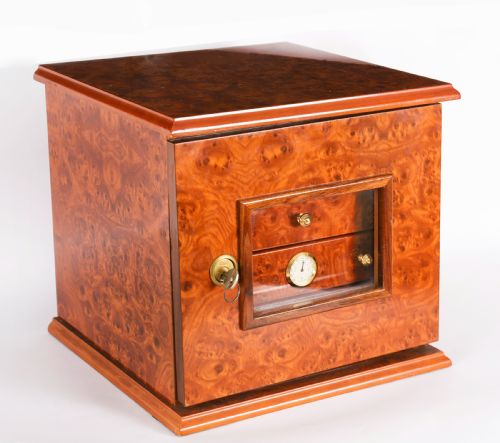
Collectors' cabinets feature multiple shallow drawers specifically proportioned for organising botanical specimens, coins, microscopic slides, or minerals.
Many incorporate glass doors or secure locking mechanisms to protect fragile contents from dust and handling.
Are toilet mirrors adjustable?
Toilet mirrors typically employ brass pivots or side arms mounted to upright supports, allowing the glass to tilt at various angles.
The supporting base frequently contains one or more small drawers for cosmetics or grooming accessories.
What woods are common in these pieces?
Mahogany and walnut appear frequently, often selected for their stability and rich grain patterns across Georgian and Victorian periods.
Pine, oak, and fruitwood also support secondary elements, while exotic veneers like amboyna and yew decorate luxury surfaces.