



Small Wooden Trinket Drawers
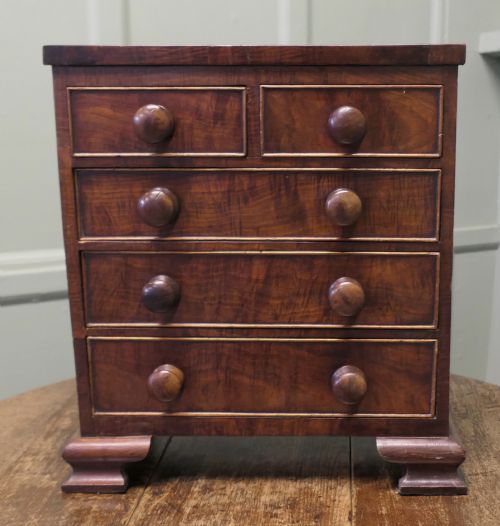
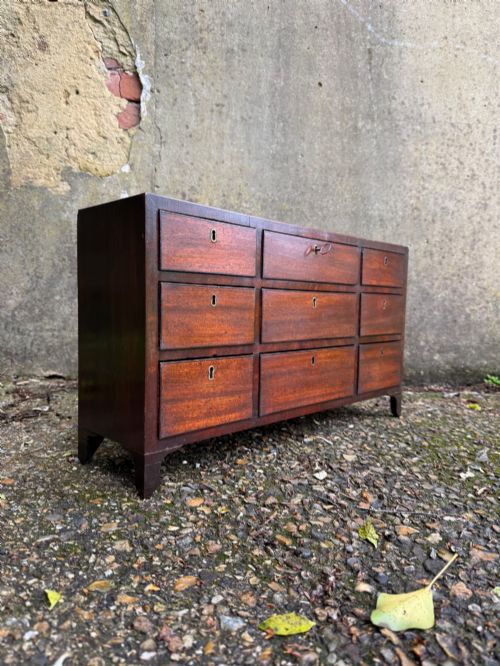
Small wooden trinket drawers are compact miniature chests that offer clever storage for keepsakes, largely appearing here as nineteenth-century mahogany apprentice pieces.
Small Wooden Trinket Drawers
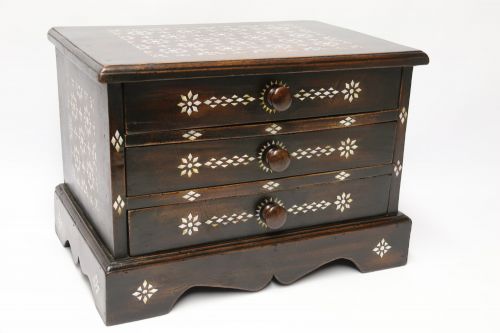
Small wooden trinket drawers encompass miniature chests of drawers, jewellery boxes, and spice cabinets originating from the eighteenth, nineteenth, and early twentieth centuries. These diminutive pieces mirror full-scale furniture forms, serving historically as cabinetmakers' demonstration pieces or tidy desktop storage.
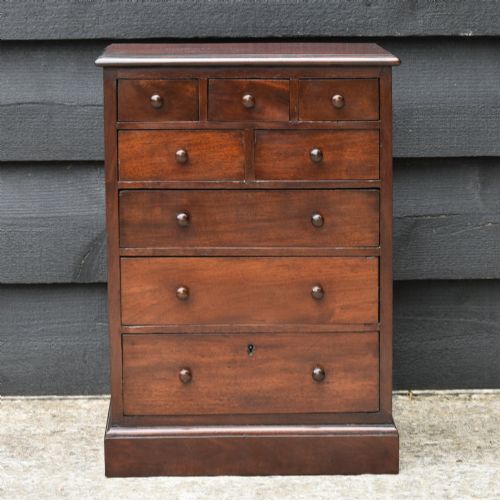
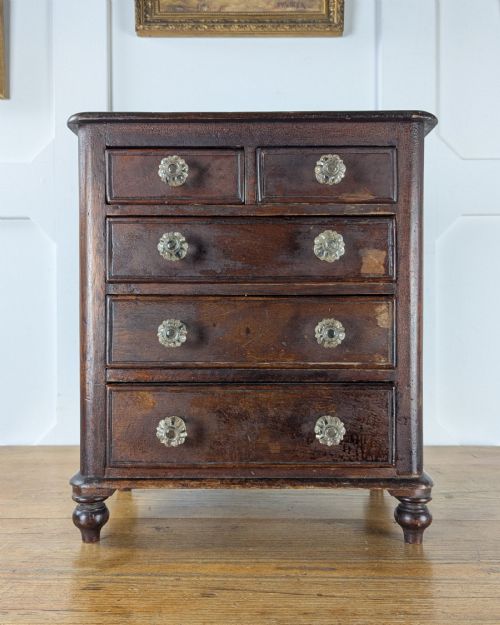
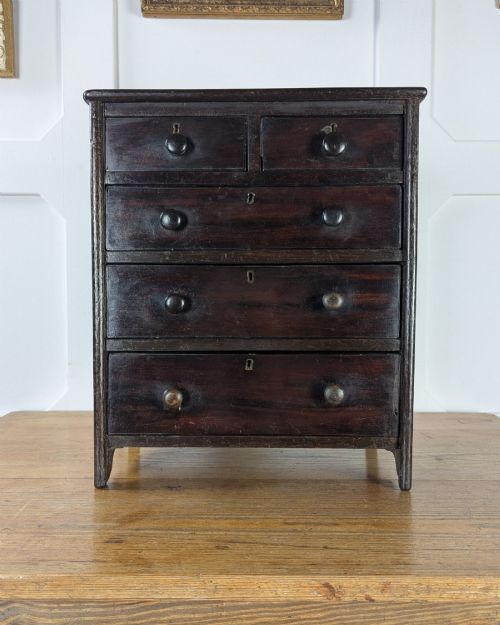
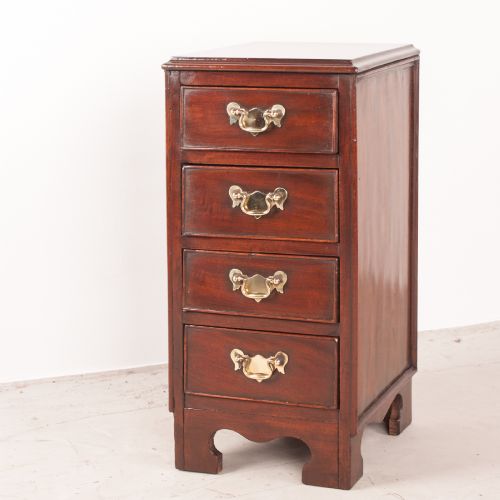
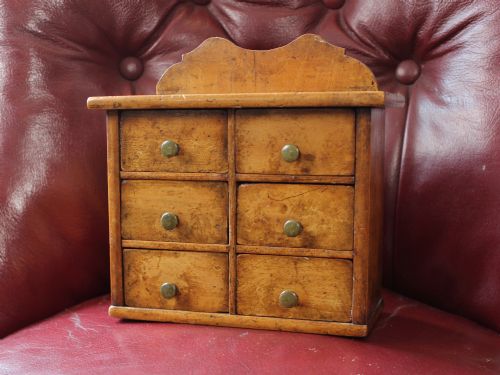
The version met most often on this page is the nineteenth-century mahogany miniature chest of drawers, frequently described as an apprentice piece or jewellery chest. Alongside these standard drawer configurations, variations such as Anglo-Indian collector chests, Japanese table cabinets, and Welsh oak spice drawers appear across the selection.
Geographic origins and stylistic influences span Georgian, Regency, Victorian, and Edwardian periods, stretching occasionally to Anglo-Indian and Japanese Meiji period designs. The forms range from simple elm boxes shaped like chests to bow-fronted mahogany examples standing on turned feet.
How small wooden trinket drawers were made
Construction relies primarily on hardwoods such as mahogany, oak, walnut, elm, and fruitwood, sometimes enhanced with boxwood stringing, bone inlay, or black lacquer. Cabinetmakers utilised traditional dovetail joints for the small drawers and applied polished finishes that produced deep patinas over time.
Detailing often included turned wooden feet, brass handles or knobs, and occasionally glass panels or fitted interior compartments. Woods like burr walnut and amboyna were selected for their decorative grain patterns, while softer woods served for structural carcases.
The listings feature miniature chests spanning the eighteenth, nineteenth, and early twentieth centuries, utilising mahogany, oak, walnut, elm, and fruitwood.
What varies in quality
Quality differentiates through the crispness of the dovetailing, the selection of figured timber veneers, and the preservation of original hardware and polished surfaces. Pieces possessing well-proportioned miniature cornices, smooth-running drawers, and untouched patinas represent the higher tier of cabinetmaking.
Simpler provincial items or later twentieth-century interpretations demonstrate less complex joinery and plainer timber selections. The presence of specialised materials like amboyna or intricate inlay distinguishes more ambitious studio pieces from standard utilitarian boxes.
The Small Wooden Trinket Drawers Glossary
- Apprentice piece
- A small item of furniture demonstrated by a craftsman to prove his skill before gaining master status. These miniature chests replicate full-sized domestic furniture on a reduced scale.
- Bow front
- A convex curved front contour seen on certain miniature chests. This curved shaping requires advanced woodworking skill to execute properly.
- Patina
- The surface sheen and mellow tone developed by wood through age, handling, and polishing. Pieces with wonderful patina show decades of gentle use.
- Compactum
- A multi-functional wardrobe or cabinet combining drawers and hanging space in a miniature format. Examples date into the Edwardian era.
- Spice drawers
- A small set of multi-tiered drawers traditionally used for storing culinary spices or small valuables. Fruitwood and oak are common materials for these functional units.
Small Wooden Trinket Drawers: Frequently Asked Questions
What are apprentice pieces?
Apprentice pieces are miniature furniture items traditionally created by tradesmen to demonstrate their woodworking proficiency to a guild. They replicate full-sized chests and wardrobes accurately.
These small models served practical storage roles in domestic settings once completed. Their scaled-down proportions required the same joinery techniques as large furniture.
How do I date these drawers?
Dating relies on examining the timber species, construction methods, handles, and overall stylistic period. Georgian and Victorian examples show distinct joinery traits compared to Edwardian pieces.
Secondary woods inside the drawers provide further clues regarding the manufacturing era. Hardware styles also shift noticeably from eighteenth-century brass pulls to later turned wooden knobs.
Were these used for jewellery?
Many miniature chests and cabinets functioned as jewellery boxes or compact storage units for personal valuables. Their compartmentalised drawers suited small precious items.
Owners placed them on dressing tables or desks for daily access. Lined interiors and secure small drawers protected delicate trinkets.
How do I care for wooden miniature chests?
Keep wooden miniature chests away from direct heat sources and fluctuating humidity to prevent timber warping or cracking. Dust them gently with a dry, soft cloth.
Avoid harsh modern polishes that can damage antique finishes. Occasional applications of appropriate wax help maintain the historic surface sheen.