
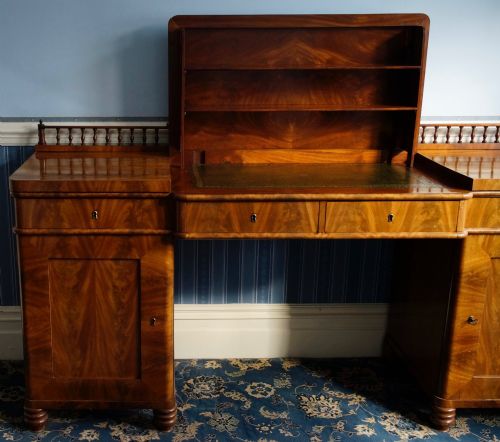

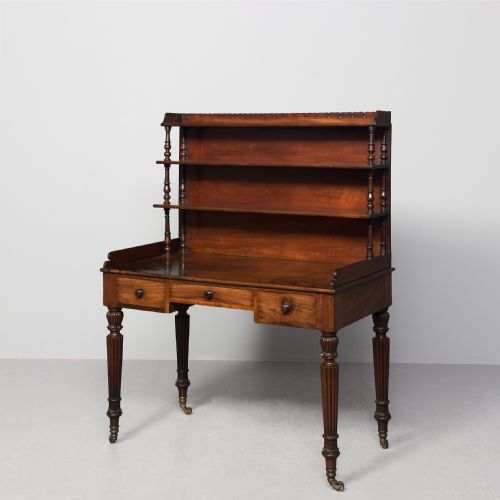
Vintage Desk with Shelves
These vintage desk with shelves designs combine practical workspace with fitted compartments, offering useful storage alongside a traditional writing surface.
Vintage Desk with Shelves
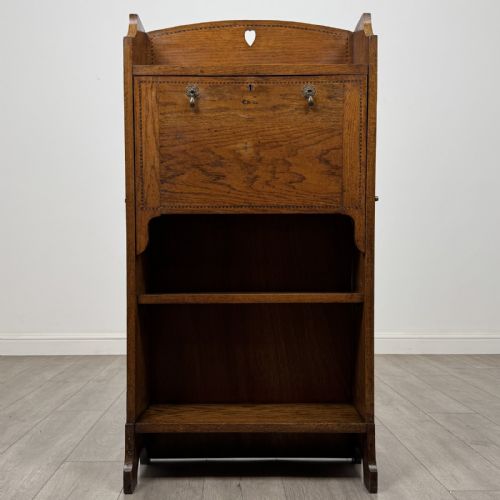
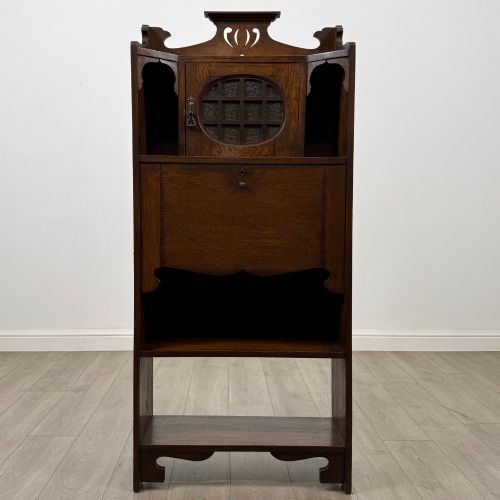
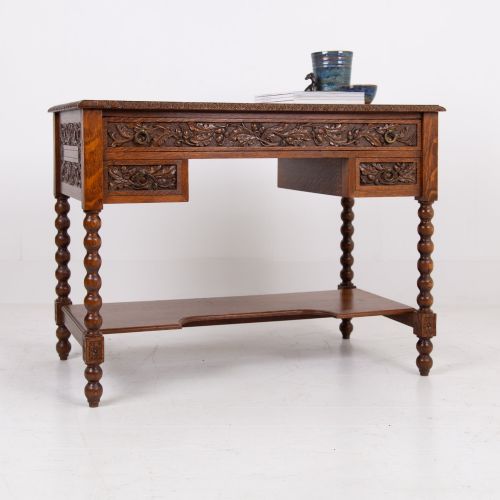
A vintage desk with shelves brings together sturdy writing surfaces and integrated storage tiers, often taking the form of writing desks, bureau cabinets, and students' bureaux. These pieces span multiple periods, drawing on Edwardian, Victorian, Art Deco, and Arts and Crafts traditions.
The most common form you will meet combines a hinged or flat writing surface with upper shelving or compartmentalised bureau interiors. Such pieces utilise timbers like mahogany, oak, satinwood, and walnut to create functional workspaces suited to studies and living areas.
Materials and construction methods
Cabinet makers constructed these pieces using solid timbers and veneers, predominantly mahogany, oak, and satinwood, often enhanced with contrasting inlay work. Brass fittings, leather inserts, and glass elements appear frequently across the various styles.
Joinery techniques ranged from traditional dovetailed drawers to fitted pigeonholes and shelf units secured within bureau cabinets. Decorative touches such as gilt bronze mounts and hand-painted or inlaid motifs reflect the specific period aesthetics from Georgian proportions to Art Deco geometry.
Edwardian cabinet makers occasionally inlaid poppies into walnut writing desks.
Judging the quality of a vintage desk with shelves
Quality in these pieces rests upon the selection of timber and the precision of the cabinet work. Superior examples display carefully matched grain patterns, tight joinery in the shelving and drawers, and intact original hardware.
Finer items often incorporate decorative details like marquetry inlay, gilt bronze mounts, or finely turned galleries around the upper shelves. The integration between the lower desk section and the upper storage tiers reveals the maker's attentiveness to structural balance and visual harmony.
James Mein of Kelso·Japy Freres
The Vintage Desk with Shelves Glossary
- Bureau cabinet
- A writing desk combined with an upper cabinet section enclosed by doors. These pieces provide concealed workspace alongside enclosed shelving.
- Bonheur du jour
- A light ladies' writing desk featuring a small set of drawers and shelves on the upper surface. This form gained popularity during the Edwardian period.
- Escritoire
- A tall writing cabinet featuring a drop-down writing flap and internal compartments. It serves as a compact alternative to a traditional bureau.
- Inlay
- The technique of inserting contrasting pieces of wood or metal into a recessed surface to form decorative patterns. Edwardian pieces often utilise this for floral motifs.
- Ormolu
- Gilded bronze used for decorative mounts and feet on furniture and clocks. It provides a bright metallic contrast against dark wood veneers.
Vintage Desk with Shelves: Frequently Asked Questions
What is a vintage desk with shelves called?
These pieces go by several names depending on their specific form and period of origin, including writing desks, bureau cabinets, and students' bureaux.
Each term describes a slightly different arrangement of workspace and integrated storage, from compact writing tables with upper ledges to tall cabinets featuring enclosed shelving.
How do I choose the right size?
Consider both the available floor space and the clearance needed for a chair when the writing surface is in use. Bureau cabinets and escritoires offer vertical storage that maximises shelf capacity without demanding excessive room width.
Take measurements of doorways and stairwells if you plan to place the desk on an upper floor, as these solid timber items can be heavy to manoeuvre.
Where should I place my desk?
Position the desk near a natural light source, such as a window, to illuminate the writing surface and upper shelves effectively. Avoid placing timber furniture directly next to radiators or in strong direct sunlight, which can dry out the wood and fade veneers over time.
Allow enough clearance around the piece so that doors and drawers can open fully without obstruction.
How do I care for the wood surface?
Dust the surfaces regularly with a soft, dry cloth to prevent the accumulation of grit that might scratch the polish. Apply a quality beeswax periodically to nourish the timber and maintain a natural lustre.
Avoid using modern liquid polishes containing silicone, as these can build up a cloudy residue over time and harm antique finishes.