
Vintage Desk Drawers
These vintage desk drawers bring practical workspace storage from Georgian, Victorian and Edwardian eras into modern rooms.
Vintage Desk Drawers
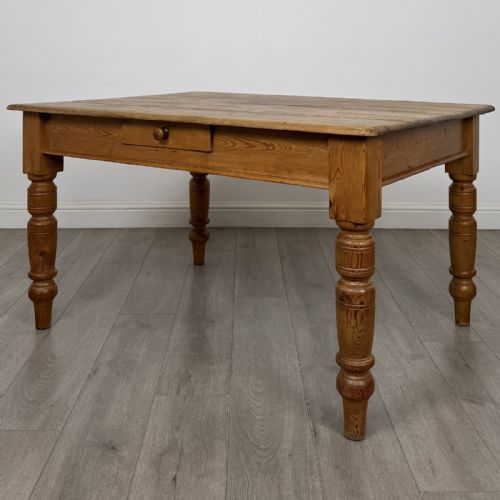
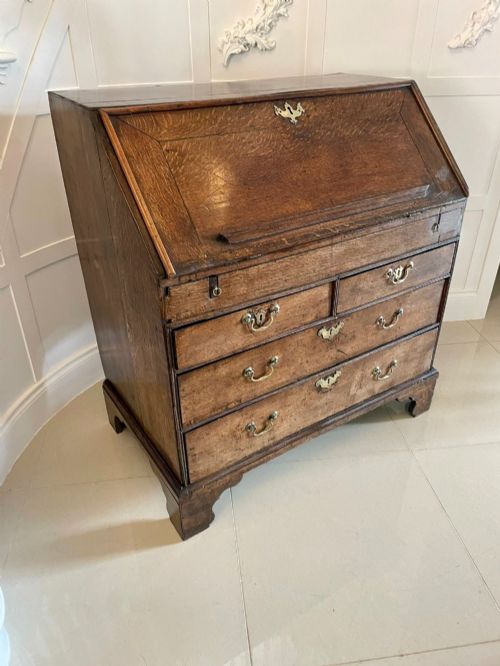
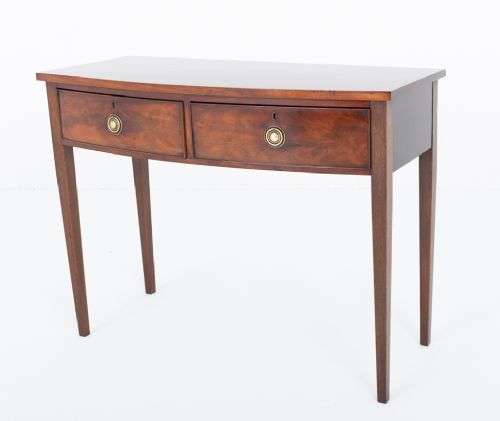
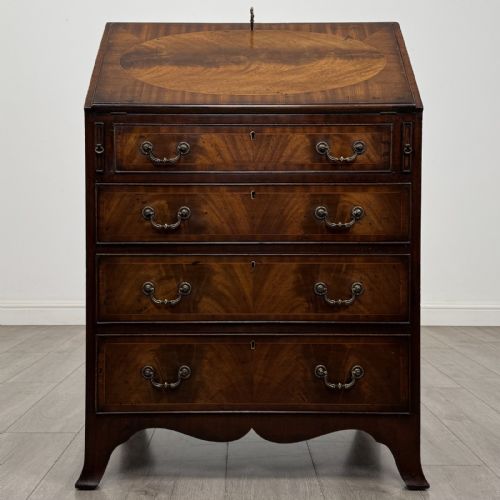
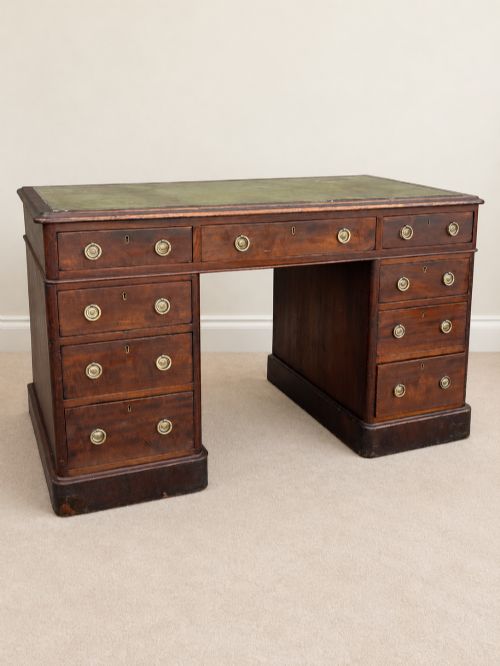
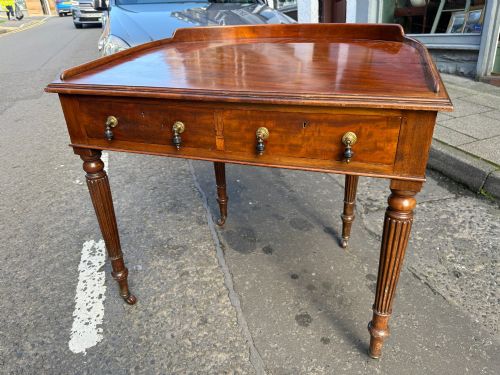
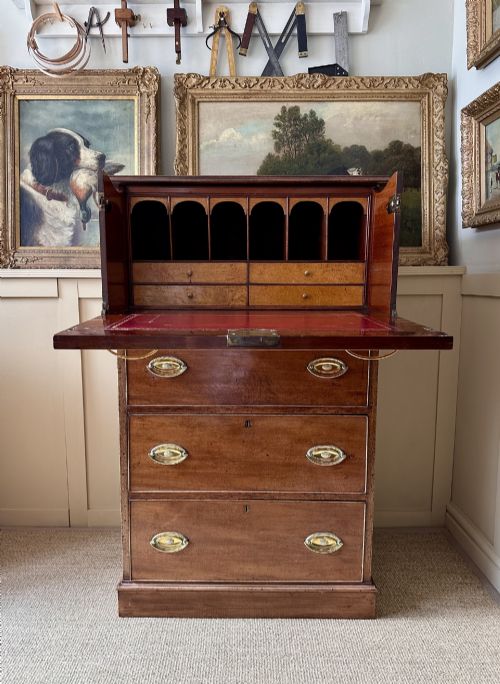
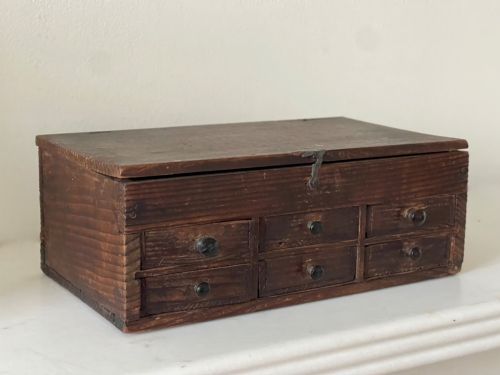
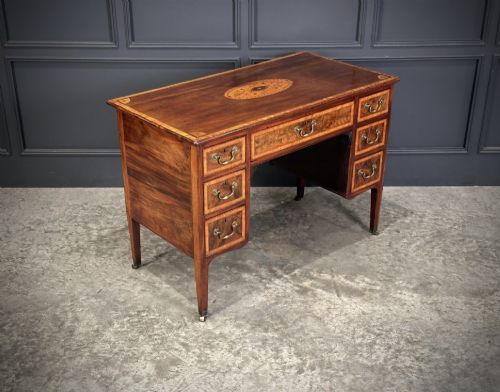
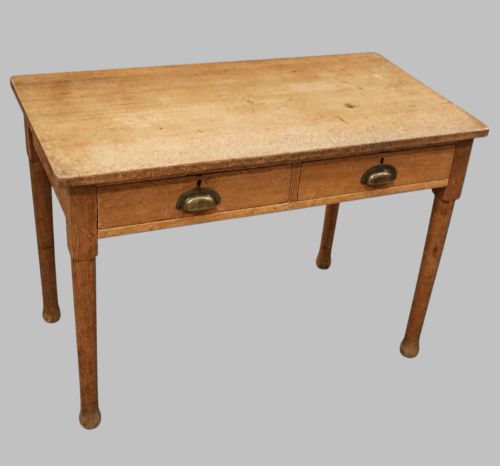
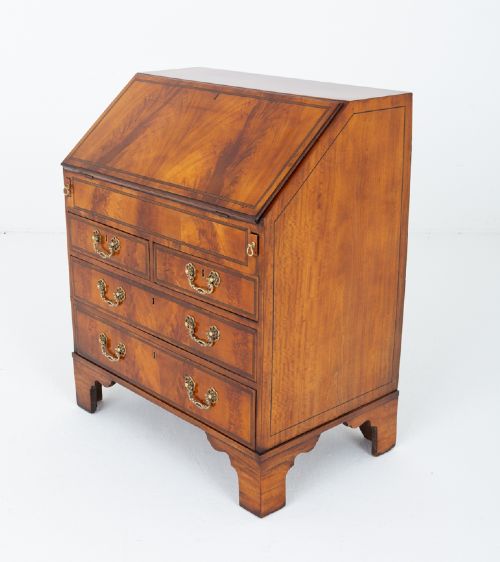
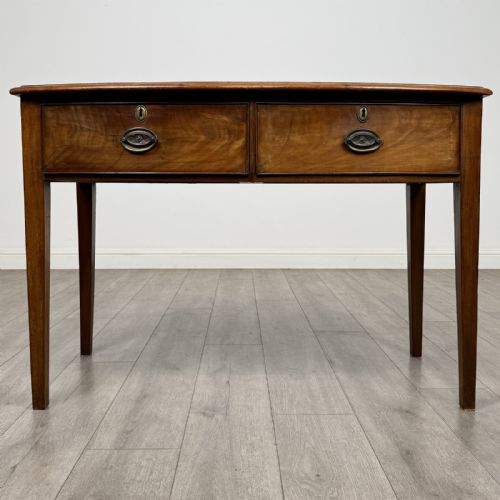
The selection spans robust kneehole desks with fitted stationary drawers, drop-front writing bureaux and compact side tables with single or multiple drawers. Pieces originate across the eighteenth, nineteenth and twentieth centuries, reflecting changing domestic and commercial workspace demands.
Form follows function closely in these pieces, ranging from large partners tables designed for shared use to compact tambour front filing cabinets and metal jewellers chests. Surviving examples demonstrate the evolution of storage, from deep bureau compartments to multi-drawer pedestal arrangements.
Materials and Construction
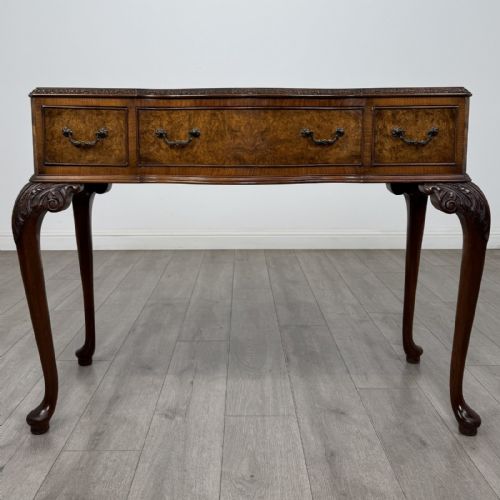
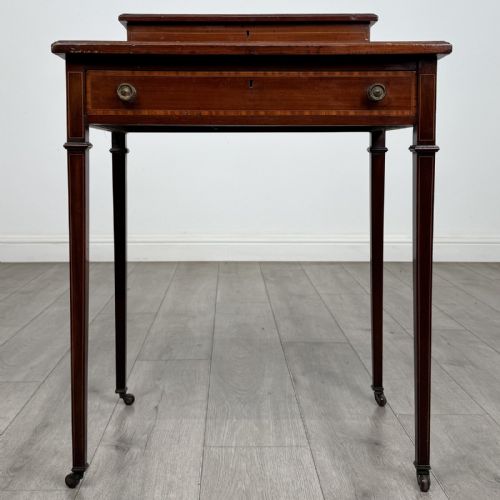
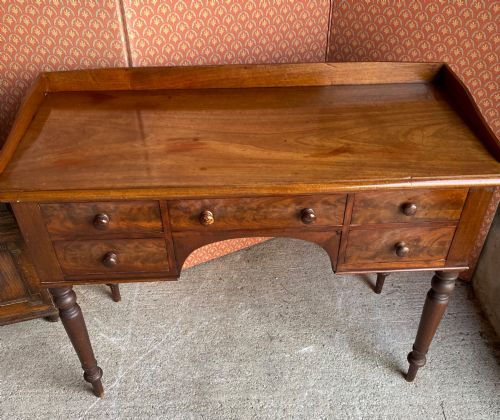
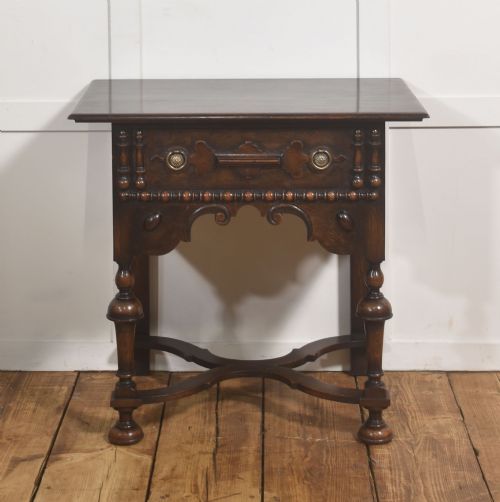
Cabinet makers relied predominantly on timbers such as oak, mahogany, walnut and burr walnut, frequently incorporating secondary woods like pine for internal partitions and drawer linings. Surface detailing often included inlaid stringing, carved linenfold panels and figured veneers.
Hardware played an integral functional and decorative role, with original brass handles, drop pulls and key escutcheons marking the period of manufacture. Construction methods utilised traditional dovetail joints for drawers and panelled framing for carcases to ensure structural durability.
Listings feature pedestal desks, writing tables and bureaux spanning the Georgian, Victorian and Edwardian periods in oak, mahogany and walnut.
Evaluating Craftsmanship
Quality rests upon the selection of timbers, evidenced by figured walnut veneers, choice mahogany grains and quarter-sawn oak. Superior pieces display meticulous attention to internal construction, including hand-cut dovetails on every drawer and matching secondary timbers.
The survival of original furniture elements elevates a piece significantly, particularly matching brass handles, working locks with keys and intact leather writing surfaces. Maker signatures, stamps or paper labels also distinguish workshop production from standard commercial output.
Edwards & Roberts·Heals of London
The Vintage Desk Drawers Glossary
- Bureau
- A writing cabinet featuring a hinged sloping flap that folds down to reveal a fitted interior of small drawers and pigeonholes.
- Kneehole desk
- A pedestal desk featuring a central recessed space for the legs beneath a set of flanking drawers.
- Tambour
- A sliding door constructed from narrow vertical strips of wood glued to a canvas backing, commonly found on filing cabinets.
- Partners desk
- A large pedestal desk designed with drawers and cupboards on both sides to accommodate two users facing one another.
- Linenfold
- A style of wood carving popular in revival pieces that imitates folded vertical folds of fabric.
Vintage Desk Drawers: Frequently Asked Questions
What is a kneehole desk?
A kneehole desk is a pedestal desk configuration featuring a central recess for seating flanked by banks of working drawers. This layout became standard during the eighteenth century and persisted through the Victorian and Edwardian periods.
Such desks provide substantial surface area alongside partitioned drawer storage for papers and writing implements. They typically stand free in a room with finished backs or sit against a wall.
How do I date a wooden bureau?
Dating a bureau involves examining construction traits, timber choices and secondary woods used inside the drawer boxes. Earlier Georgian examples often feature oak linings and distinct bracket feet, while later Victorian and Edwardian iterations utilise mahogany or walnut with machine-sawn elements.
Hardware styles and interior pigeonhole configurations also shift across decades, moving from serpentine partitions to simpler geometric pigeonholes. Makers marks or paper trade labels inside the primary drawers offer definitive chronological markers.
Are tambour front cabinets secure?
Tambour front cabinets utilise flexible slatted wooden doors that slide along tracks to enclose shelving or filing space. When fitted with a working operational lock, the slatted curtain secures the contents effectively.
These mechanisms were favoured in Edwardian offices for managing paperwork efficiently within compact footprints. The slatted construction requires occasional maintenance to ensure smooth movement along the internal grooves.
What timber was used most?
Oak and mahogany dominate the surviving inventory, supported by walnut, burr walnut and pine across various periods. Georgian and Victorian workshops heavily favoured dense mahogany and figured oak for structural resilience.
Walnut experienced surges in popularity during specific revivals and the early twentieth century, particularly for decorative veneer work. Secondary woods like pine frequently appear inside drawer carcases and internal partitions.