

Vintage Desk Bookends
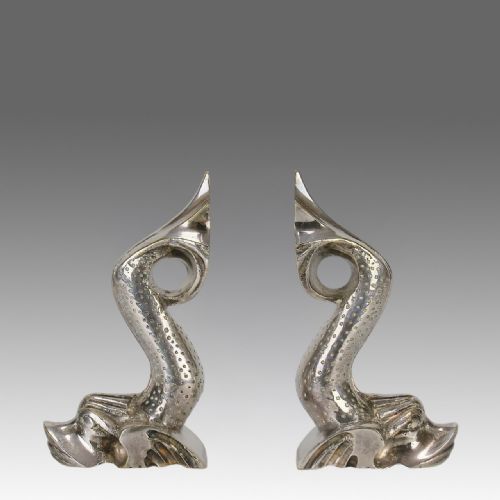
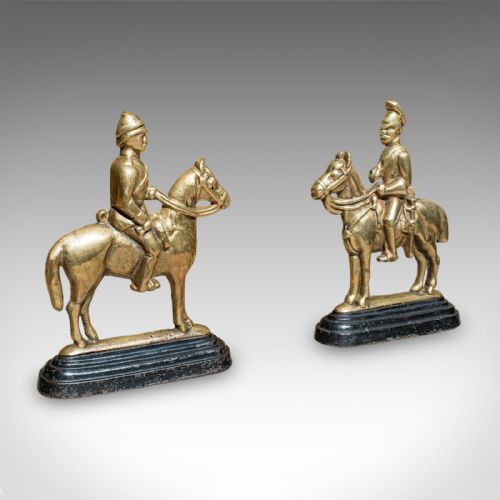
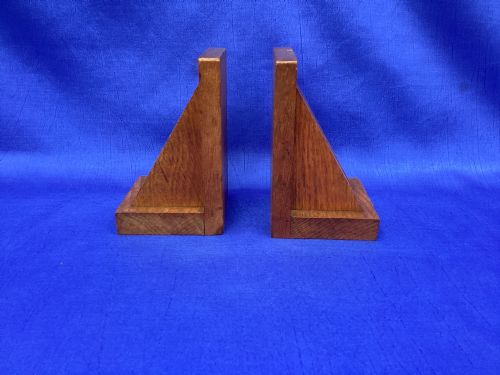
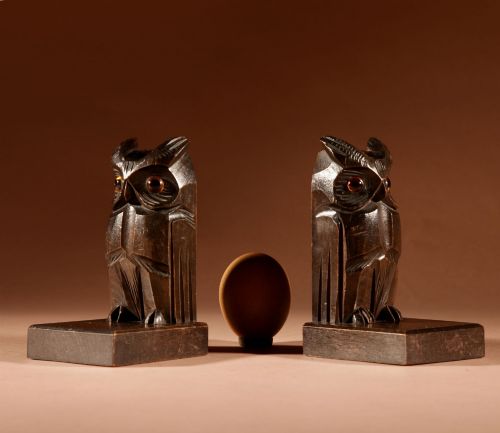
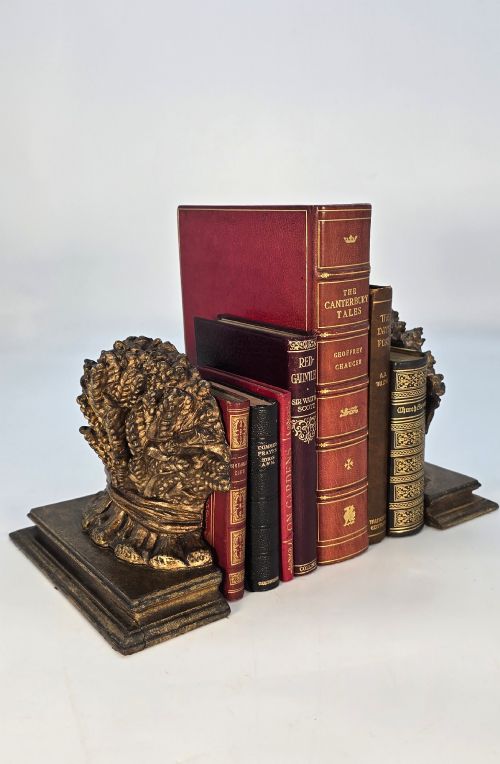
These vintage desk bookends bring character to a study, pairing sculptural animals and architectural forms with practical weight.
Vintage Desk Bookends
Vintage desk bookends comprise matched pairs of heavy supports designed to keep rows of volumes upright on a shelf or writing table. When you search for vintage desk bookends, you encounter heavy functional objects spanning the Victorian era through the Art Deco period.
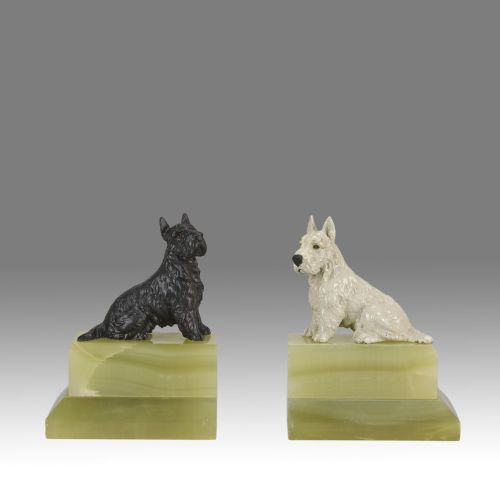
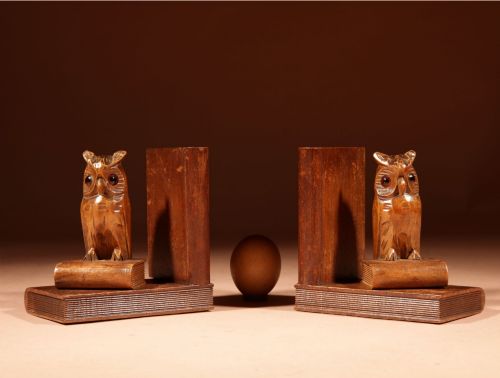
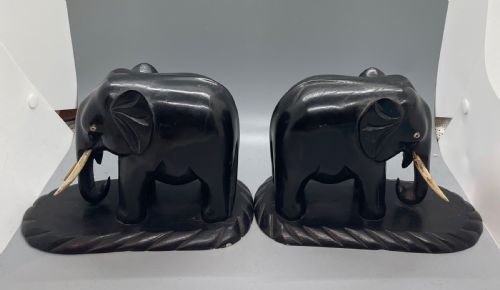
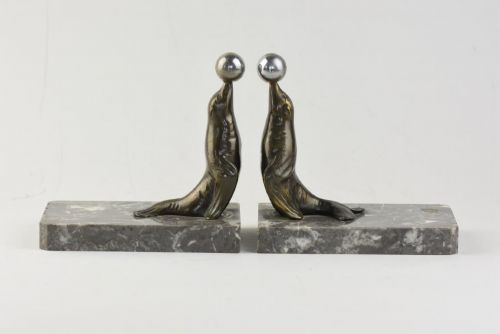
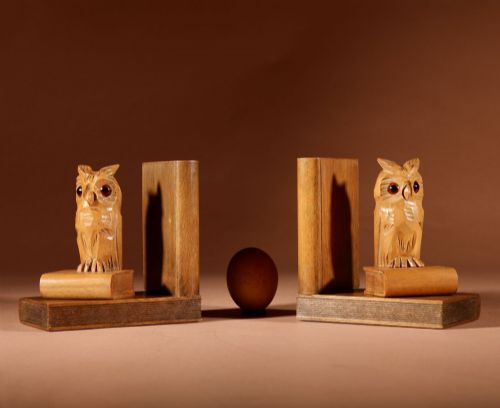
The selection here draws heavily from the early twentieth century, with numerous examples rendered in the Art Deco style alongside Black Forest carvings and Victorian mahogany or coromandel pieces. Animal subjects predominate, featuring elephants, terriers, owls, and sea lions alongside architectural book slides.
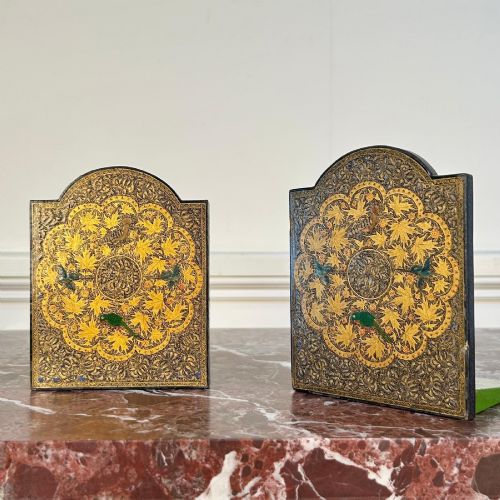
Origin points range from British workshops to French foundries, Austrian studios, and colonial centres such as India and Kashmir. These items served both domestic libraries and administrative offices, transitioning from mere utilitarian desk accessories into decorative sculptural statements.
How they were made
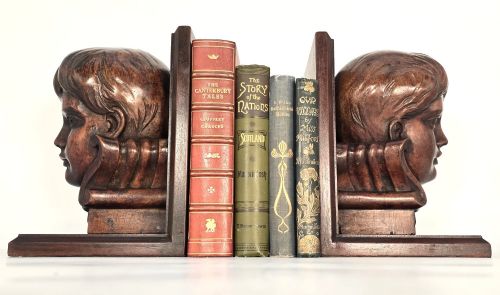
Materials divide into natural timbers like oak, olive wood, linden wood, and ebony, alongside metals including bronze, brass, silvered alloys, and spelter. Carved wooden examples rely on skilled hand woodworking, particularly in Black Forest animal studies and intricate Anglo-Indian beech or coromandel pieces.
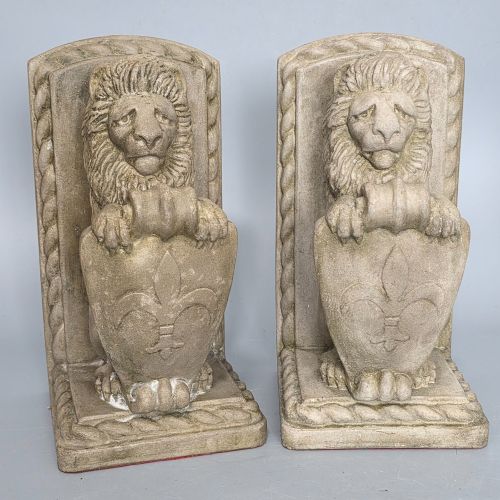
Metal versions utilise casting techniques, pouring molten bronze, brass, or spelter into moulds to capture fine anatomical details in figures like squirrels, dogs, and lions. Stone and mineral elements such as marble, alabaster, jade marble, and cast stone provide the substantial base weight necessary to anchor heavy books securely.
Several mischievous owls, bears, and terriers keep watch over the library, proving that Victorian and Art Deco desks rarely lacked a sense of humour.
What varies in quality
Hand-carved wooden pairs show variation in the depth of undercut details and the natural patination of the timber over decades of handling. Weight distribution also matters, as higher quality examples combine heavy stone or metal bases with balanced proportions to prevent tipping under pressure.
F Abella And Sons·Franz Gruber·C Omin·Gordon Russell·Thornton Smith Co
The Vintage Desk Bookends Glossary
- Book slide
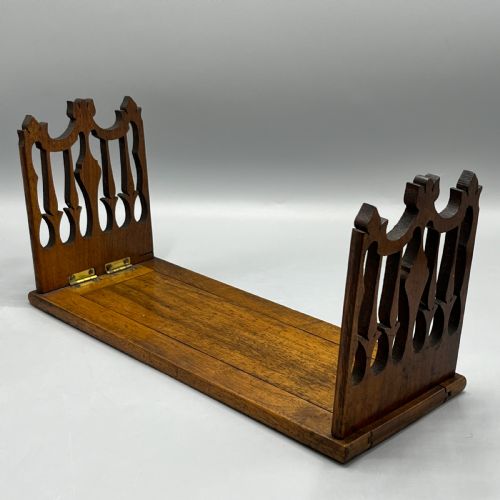
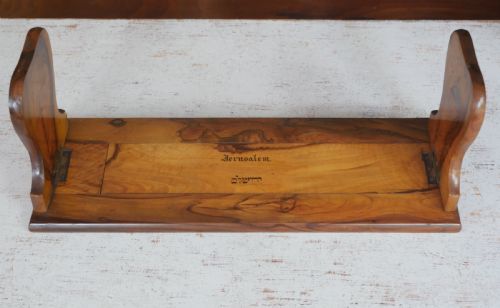
- An extendable desktop rack featuring expanding wooden or metal sides held together by a central mechanism. This allows the holder to lengthen or shorten the shelf space depending on the volume count.
- Spelter
- A zinc alloy frequently utilised as a cost-effective substitute for bronze in decorative figures. It accepts patination and metallic paint finishes well, particularly during the Art Deco period.
- Black Forest carving
- Woodwork originating from the mountainous region of central Europe, distinguished by naturalistic animal subjects. Bears, owls, and dogs are carved with deep relief from linden wood or walnut.
- Anglo-Indian
- Furniture and decorative accessories produced in the Indian subcontinent under British rule, often employing indigenous timbers like coromandel and ebony. Carvings frequently incorporate dense floral motifs or exotic fauna.
- Dog of Fo
- A traditional guardian lion depicted in Chinese art and decorative objects, symbolising protection and prosperity. These stylised creatures frequently appear in jade marble and other stone compositions.
Vintage Desk Bookends: Frequently Asked Questions
What materials were used for vintage desk bookends?
Makers utilised a wide array of materials depending on the period and stylistic movement. Natural timbers such as oak, olive wood, and ebony appear alongside heavy metals like bronze, brass, and spelter.
Stone bases carved from marble, alabaster, and jade marble frequently provide the necessary weight to anchor the pieces securely against sliding volumes.
How do I care for wooden bookends?
Wooden surfaces benefit from occasional light dusting with a dry, soft cloth to prevent particulate accumulation in carved recesses. Avoid harsh chemical polishes and keep the timber away from direct heat sources to prevent cracking.
Natural oils in the wood are preserved by maintaining stable room humidity and applying appropriate wax sparingly when the surface appears dry.
Are book slides different from bookends?
Book slides serve a similar organisational purpose but feature an extending wooden or metal track that holds volumes between two fixed or sliding ends. Standard bookends consist of two separate, independent heavy objects placed at either end of a row.
Both items functioned as desk accessories in nineteenth and twentieth-century libraries and studies.
How can I tell Art Deco bookends apart?
Art Deco pieces display characteristic geometric symmetry, stylised animal forms, and the use of contrasting materials such as polished chrome paired with marble or alabaster. The subjects often include sporting figures, streamlined animals, and theatrical personalities.
Foundry marks and the characteristic weight of spelter or cast metal help distinguish these twentieth-century productions from earlier Victorian designs.