




Edwardian Carved Bookends
Edwardian carved bookends bring character to a study, drawing the eye with detailed woodwork from the early twentieth century.
Edwardian Carved Bookends
Edwardian carved bookends are desk and shelf accessories designed to keep volumes upright, frequently taking sculptural animal forms. The examples found here encompass Black Forest bird and mammal carvings alongside standard wooden supports.
Buyers will encounter various stylistic influences across these pieces, ranging from continental animal carvings to English revival designs. The selection also includes extending book slides alongside paired upright blocks.
Makers utilised specific timber varieties such as oak, pine, beech, and Linden wood to shape these items. Certain pieces double as letter stands or incorporate sporting motifs like cricket bats and balls.
How they were made
Artisans carved these objects from solid woods such as oak, pine, beech, and Linden wood, sometimes applying an ebonised finish to the surface. Detailed hand-carving defines the figural pieces, particularly the animal subjects.
Construction involved joining wooden blocks and bases to support the weight of heavy volumes. Glass and metal elements occasionally appear alongside the primary wooden structures.
Edwardian Carved Bookends Retail Price Guide 2026
Typical asking prices for edwardian carved bookends among the pieces listed under this phrase on Sellingantiques today, from the lower quarter to the upper quarter. They describe what is for sale here now, not the wider market.
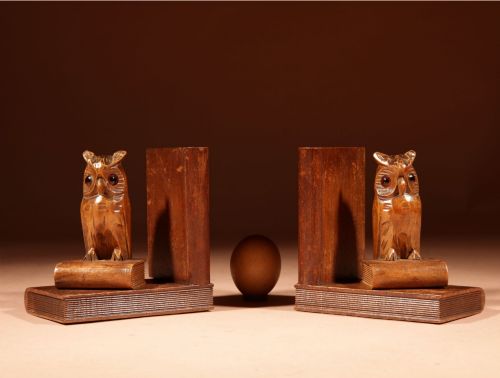
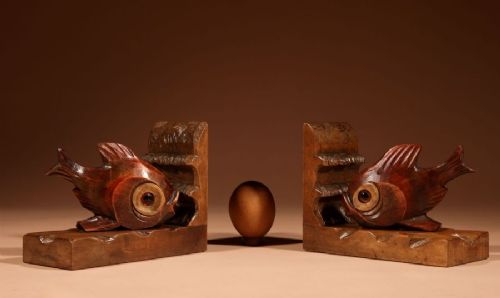
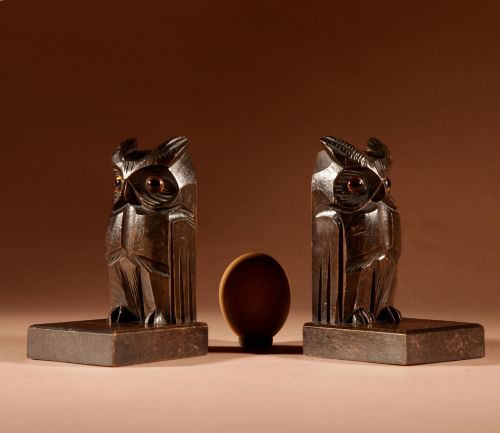
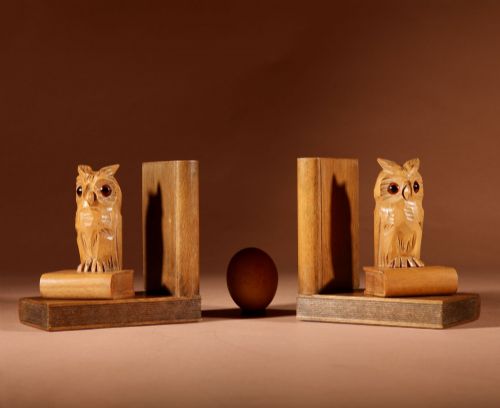
Goldfish and elephants join the usual company of owls on the bookshelf.
What varies in quality
The distinction in quality rests upon the depth and expression of the carving itself. Lively animal portrayals demonstrate superior handwork compared to simpler geometric blocks.
The choice of timber and the preservation of the original surface finish influence the desirability of each pair. Solid construction that securely supports heavy books also separates standard items from finer examples.
The Edwardian Carved Bookends Glossary
- Black Forest
- A style of wood carving originating from the mountain region of Central Europe, known for realistic animal figures. These carvings often depict owls, elephants, and goldfish.
- Book slide
- An extending shelf accessory with adjustable ends designed to hold varying quantities of books. They keep volumes orderly on a desk or table.
- Ebonised wood
- Timber treated with a dark stain or finish to imitate the appearance of ebony. This technique creates a uniform dark surface on Victorian and Edwardian items.
- Linden wood
- A pale, fine-grained timber frequently chosen by carvers for its cooperative texture. It allows for intricate detail in figural work.
- Anglo-Indian
- A style reflecting British influence combined with traditional Indian craftsmanship, often featuring exotic hardwoods. Beech and other timbers appear within this tradition.
Edwardian Carved Bookends: Frequently Asked Questions
What holds heavy books in place?
Solid wooden bases and substantial carved figures provide the necessary weight and resistance to keep volumes upright on a shelf. The density of materials like oak and ebonised wood contributes to this stability.
Heavier pairs manage large collections effectively, while smaller stands suit lighter novels or desk arrangements.
How do I care for carved wood?
Dust the carvings regularly with a soft, dry brush to prevent dirt from settling in the recesses. Avoid harsh chemical polishes that can damage the original wooden finish.
Keep the items away from direct sunlight and radiators to prevent the timber from drying out or splitting.
Are book slides adjustable?
Extending book slides feature a mechanism that allows the ends to slide outward or inward to accommodate different numbers of volumes. This design provides flexibility for changing shelf spaces.
They function similarly to fixed bookends but offer a continuous base for the entire row of books.
What is Black Forest carving?
Black Forest carving refers to detailed wooden figures and decorative items produced in Central Europe during the nineteenth and early twentieth centuries. These pieces typically depict animals with lifelike expressions.
Owls, bears, and other creatures are the most common subjects found in this distinctive style.