





Victorian Wooden Bookends
Victorian wooden bookends are practical library accessories that hold volumes upright while bringing period character to a desk.
Victorian Wooden Bookends
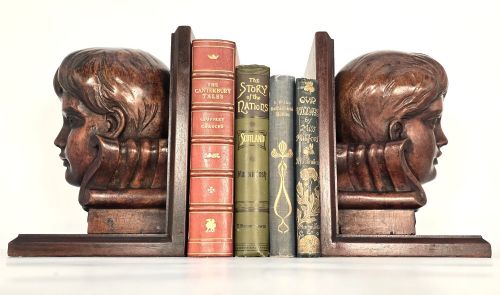
Victorian wooden bookends and extending book slides serve the library by keeping upright volumes secure on shelves and desks. The examples seen here range from simple matched pairs to extending book slides that accommodate growing rows of books.
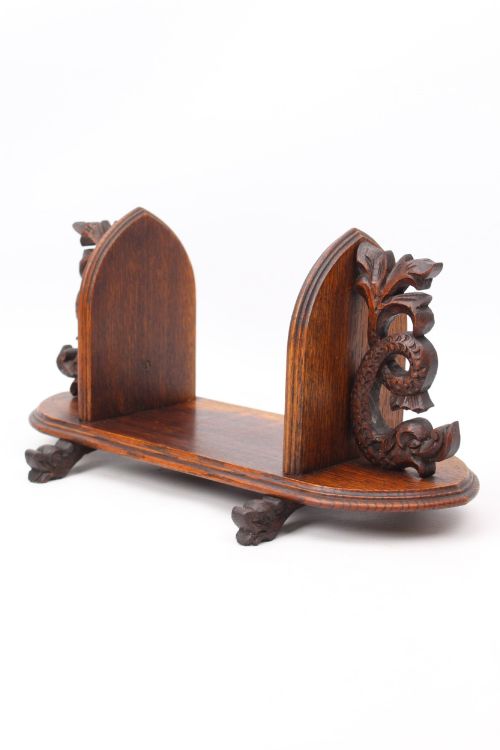
The forms span straightforward pairs of heavy timber blocks alongside elaborate expanding mechanisms made for the home library. Many items present architectural motifs or carved animal figures such as griffins and elephants.
How they were made
Carpenters utilised dense domestic and exotic hardwoods such as oak, walnut, rosewood, mahogany, beech, coromandel and olive wood. These timbers provided the weight and structural stability necessary to support heavy rows of bound volumes.
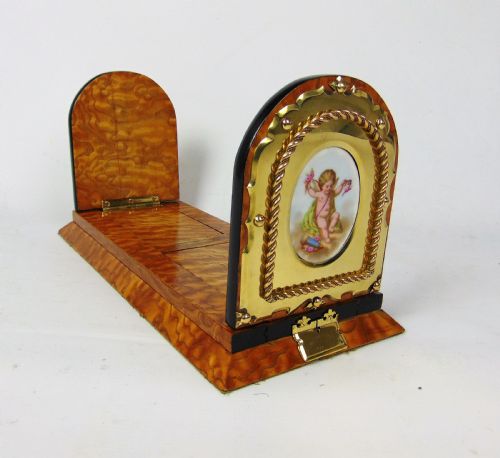
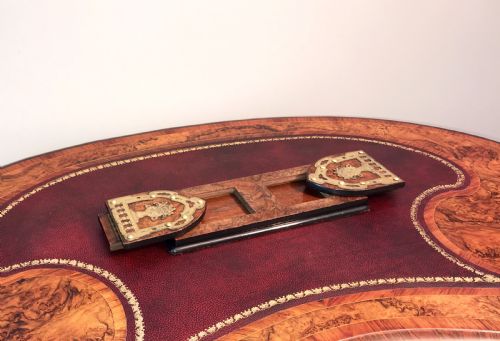
Decoration relied heavily on manual skill, employing deep relief carving for animal terminals and intricate inlaid marquetry such as Tunbridge Ware. Brass mounts frequently reinforced joints and added functional detailing to extending slides.
Victorian Wooden Bookends Retail Price Guide 2026
Typical asking prices for victorian wooden bookends among the pieces listed under this phrase on Sellingantiques today, from the lower quarter to the upper quarter. They describe what is for sale here now, not the wider market.
Elephants, griffins and Medici lions stand guard over the books.
What varies in quality
The standard of carving determines much of the distinction in these objects, separating crisp, deeply articulated animal forms and architectural details from softer, more generalized shaping. Precision in the joinery of extending slides also dictates how smoothly the mechanism operates.
Selection of timber and the complexity of decorative techniques, such as elaborate brass mounts or multi-wood Tunbridge Ware inlay, signal finer workshop production. Pieces retaining their original patination and robust structural integrity represent the higher end of the range.
Tiffany and Co
The Victorian Wooden Bookends Glossary
- Book slide
- An adjustable desktop rack featuring expanding wooden sections designed to hold a varying number of volumes between two terminal ends.
- Tunbridge Ware
- A form of British woodwork characterised by mosaic veneer pictures assembled from tiny tinted wood blocks to create geometric patterns.
- Gothic Revival
- An architectural and decorative style drawing on medieval forms, frequently seen in ecclesiastical carving and pointed arch motifs.
- Anglo-Indian
- Furniture and decorative objects produced in the Indian subcontinent using local timbers and traditional carving adapted to British tastes.
- Ebonised wood
- Timber treated with a dark finish to imitate the appearance of solid ebony.
- Terminals
- The decorative end pieces of a book slide or pair of bookends that provide the physical barrier to stop books from falling.
Victorian Wooden Bookends: Frequently Asked Questions
How do extending book slides work?
Extending book slides feature interlocking wooden channels that pull apart or slide together to accommodate different lengths of book rows. The weighted or decorated ends remain stationary while the base expands.
This mechanism allowed Victorian readers to adjust the rack as their library grew on the desk or shelf without needing separate bookends.
What is Tunbridge Ware?
Tunbridge Ware is a specialised form of mosaic woodworking originating from Kent, featuring detailed geometric or pictorial designs made from thousands of tiny tinted wood squares.
These pieces showcase immense patience and skill by craftsmen who cut and glued woods of various natural colours to form pictures on the surface.
Where were exotic wooden bookends made?
Many items originate from regional workshops in India, Kashmir and Jerusalem, utilising local timbers like olive wood, coromandel and beech.
British travellers and colonial officers often brought these carved novelties home, incorporating foreign materials into domestic libraries.
How do I care for wooden bookends?
Keep wooden bookends away from direct sunlight and extreme temperature fluctuations to prevent the timber from drying out or splitting. Gentle dusting preserves the original surface finish without stripping the patina.
Occasional light application of appropriate wax helps maintain the lustre of hardwoods like walnut and mahogany.