




Dark Wood Book Rests
Dark wood book rests span centuries of clever joinery, offering sturdy support for heavy volumes in mahogany, rosewood and teak.
Dark Wood Book Rests
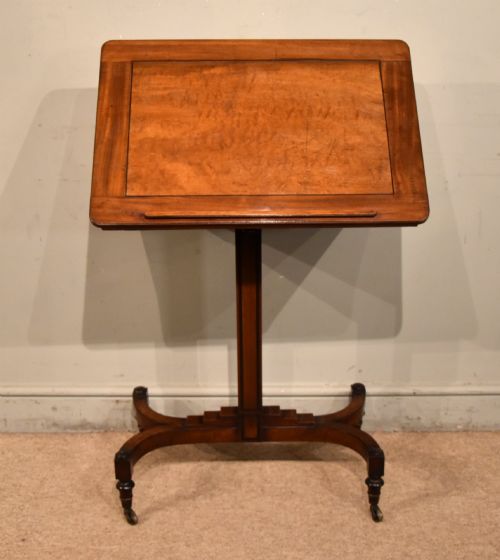
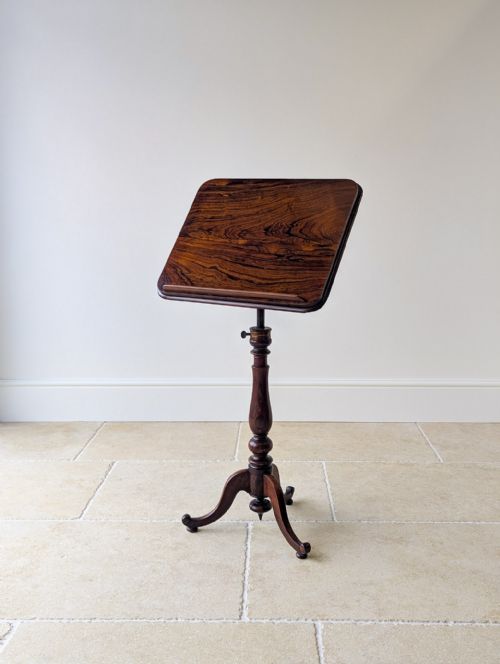
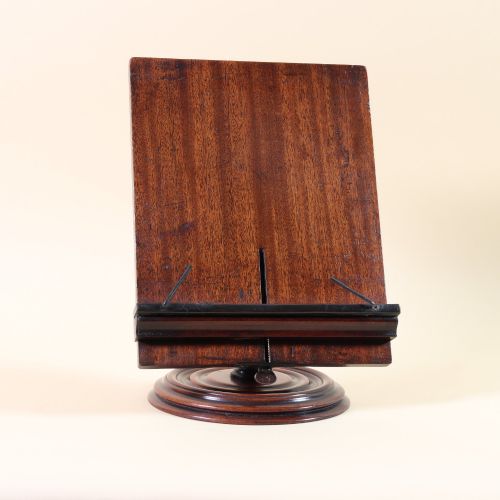
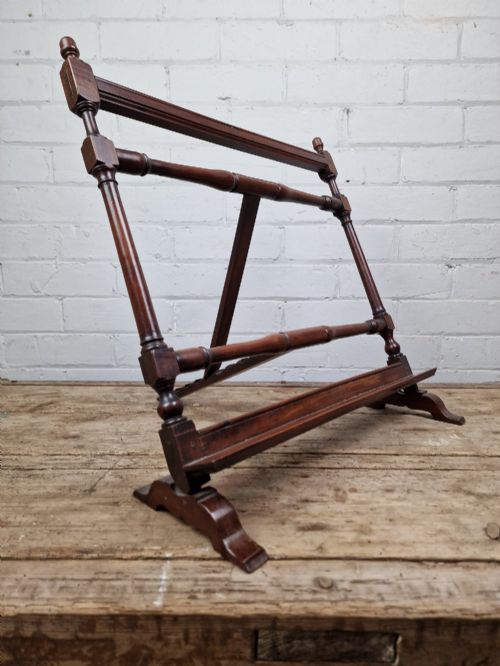
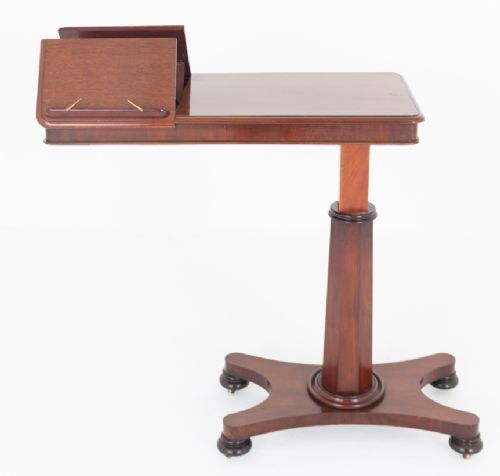
Dark wood book rests include portable desk-top book stands, expanding book slides, and folding reading pedestals designed to hold heavy volumes at a comfortable angle. These pieces serve scholars and readers by keeping texts upright and accessible on tables or desks.
The selections on this page draw from the Victorian and Regency periods, alongside earlier 18th-century forms. Mahogany and rosewood dominate the items seen here, frequently paired with brass hardware or mother of pearl inlay.
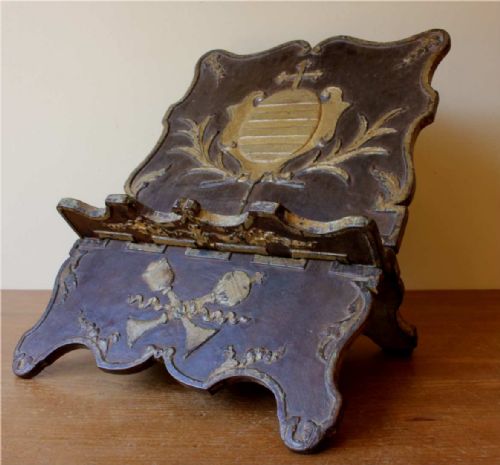
Buyers will encounter various formats ranging from simple extending book slides to elaborate Anglo-Indian carved teak bookends and French religious folding Bible rests. Each piece reflects the functional needs of private libraries and studies across different eras.
How they were made
Cabinet makers utilised dense hardwoods such as mahogany, rosewood, walnut, and teak to construct these stands, ensuring the framework could bear the weight of large folios. Timber selection prioritised rich grain patterns and durability.
Metal components in brass were integrated into extending slides and adjustable ratchets, allowing users to alter the viewing angle or span. Inlaid materials like mother of pearl added decorative contrast to the dark polished timber surfaces.
Several Victorian book rests feature carved elephants guarding the literature, proving that even heavy reading needs a wild escort.
What varies in quality
The refinement of the carving and the precision of the extending mechanisms dictate the distinction between standard items and superior examples. Elaborate regional styles, such as Anglo-Indian pierced carving or Gothic revival brass mounts, demand greater skill from the maker.
Condition of the timber polish and the integrity of moving joints influence the overall execution. Pieces retaining original brass fittings and undamaged inlay demonstrate higher craftsmanship.
The Dark Wood Book Rests Glossary
- Book slide
- An expanding device with adjustable ends designed to hold a row of books upright on a desk. The mechanism typically slides smoothly along a wooden base.
- Lectern
- A tall stand with a sloping top used to hold a book for reading aloud. These often feature adjustable heights or folding frames.
- Gothic Revival
- An architectural and decorative style popular during the 19th century that mimics medieval forms. Pieces in this style often incorporate pointed arches and heavy brass tracery.
- Anglo-Indian
- A term describing items made in India during the British period, often featuring intricate local carving traditions applied to tropical hardwoods like teak. These objects combine European furniture forms with Asian decorative motifs.
- Ratchet
- A mechanical adjustment mechanism using a notched bar and catch to hold a reading stand at various inclined angles. This allows the user to customise the viewing position.
Dark Wood Book Rests: Frequently Asked Questions
How do I use a book slide?
Place the slide on a flat desk surface and pull the two ends outward to fit the desired number of volumes. The movable ends support the books securely between them.
Ensure you do not overextend the sliding mechanism beyond its natural stop to preserve the wooden tracks.
What is a reading stand used for?
Reading stands support large books, missals, or folios at an angle to reduce neck strain during study. They were common fixtures in libraries, studies, and ecclesiastical settings.
Many versions fold flat when not in use for easy storage on shelves or inside cabinets.
How do I clean dark wood?
Dust the timber regularly with a soft, dry cloth to prevent grit accumulation on the polished surface. Avoid using harsh chemical sprays that can strip the historic finish.
Apply a quality beeswax occasionally to nourish hardwoods like mahogany and rosewood, buffing gently to maintain a soft lustre.
How do I identify a Victorian book rest?
Victorian pieces often incorporate stylistic influences such as Gothic revival brass mounts or Arts and Crafts details. The use of exotic timbers like coromandel and walnut is also typical of this era.
Construction methods from this period frequently include mechanical extending slides and adjustable brass ratchets.