




Bronze Animal Bookends
Bronze animal bookends anchor your shelf with sculptural weight and character, pairing practical utility with fine metal casting.
Bronze Animal Bookends
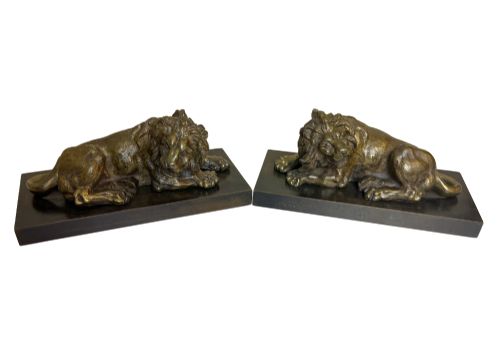
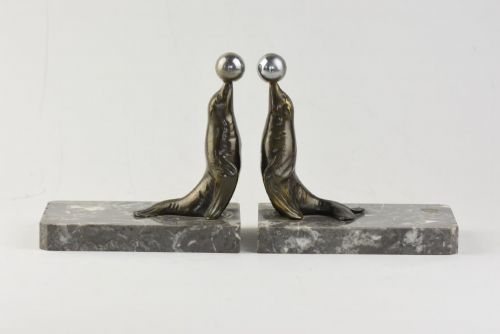
Bronze animal bookends combine heavy metal figures with solid bases to hold heavy volumes in place on a shelf or desk. These functional sculptures appear in forms ranging from resting lions to playful sea lions and squirrels.
The pieces on this page span the nineteenth century into the art deco period, reflecting shifts from traditional neoclassical styling to modern geometric design. You will encounter pairs featuring dogs, birds, and wild beasts mounted on heavy stone or wood plinths.
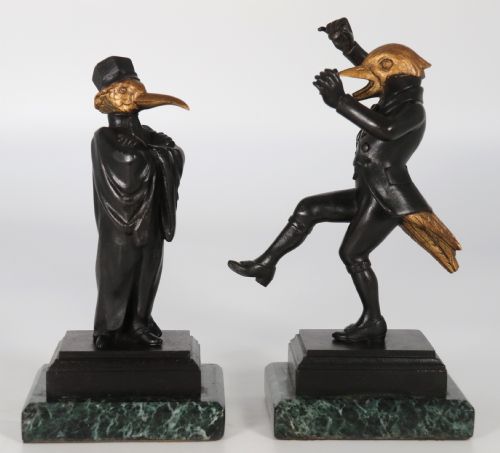
Origins stretch across European workshops, including French, Italian, and Austrian makers who specialised in small-scale animalier casting. The materials shift between solid bronze, parcel-gilt bronze, silvered bronze, and spelter.
How they were made
Foundries cast these animal figures using traditional methods, capturing fine details in the fur, feathers, and musculature. Many pieces combine metal casting with natural materials, mounting the heavy bronze or spelter figures onto bases of marble or olive wood.
Finishes applied to the metal include rich patination, silvering, parcel-gilt, and gold gilding to highlight the textures of the animals. These durable materials ensure the bookends carry sufficient weight to support upright rows of books.
Bronze Animal Bookends Retail Price Guide 2026
Typical asking prices for bronze animal bookends among the pieces listed under this phrase on Sellingantiques today, from the lower quarter to the upper quarter. They describe what is for sale here now, not the wider market.
Listings feature periods spanning from the Georgian era and nineteenth century through to art deco designs of the 1920s and 1930s.
What varies in quality
The fidelity of the animal casting and the crispness of the chasing separate standard production from superior work. Master founders achieved lively expressions and anatomical precision that lesser pieces miss entirely.
The choice of base material influences the overall substance and balance of the object. Solid marble and figured olive wood provide weight and stability that elevate the piece beyond a simple cast.
Franz Gruber·C Omin·Karl Hagenaur
The Bronze Animal Bookends Glossary
- Spelter
- A zinc-based alloy used as a cost-effective alternative to bronze in decorative metalwork. It frequently takes paint or bronze-tone finishes to simulate heavier metal.
- Parcel-Gilt
- A decorative treatment where selected portions of the metal surface receive a gold coating. This technique highlights specific details against a darker patinated background.
- Art Deco
- A design style emerging in the early twentieth century characterised by streamlined geometric forms and modern elegance. It heavily influences the silhouettes of many bookends from the interwar period.
- Grand Tour
- A traditional journey through Europe undertaken by upper-class scholars in the eighteenth and nineteenth centuries. Souvenirs from these travels often included small bronzes and classical sculptures.
- Patina
- The surface sheen or colour that develops on metal over time through age and handling. A well-preserved patina adds depth to the cast details of an animal figure.
Bronze Animal Bookends: Frequently Asked Questions
How heavy are they?
These bookends possess substantial weight due to dense metal figures and heavy stone or wood bases. This mass allows them to support rows of heavy books without sliding.
The inclusion of marble or solid wood plinths adds the necessary heft to anchor the pieces securely on a shelf.
Are they sold as pairs?
Many examples are offered as matching pairs designed to bookend a row of volumes from both ends. Symmetrical casting ensures the animals face inward toward the books.
Single figures also appear occasionally, functioning both as standalone sculptures and as shelf supports.
How do I spot art deco?
Art deco pieces display clean geometric lines and stylised animal forms that reflect the aesthetic of the interwar period. The bases often feature stepped marble or streamlined contours.
Earlier nineteenth-century examples tend toward naturalistic detail and classical styling rather than modern abstraction.
What metals are used?
Foundries utilised bronze as the primary material, alongside silvered bronze, parcel-gilt bronze, and gilt bronze. Spelter also appears as an accessible alternative metal in twentieth-century production.
Bases frequently incorporate contrasting natural materials like polished marble or grained olive wood.