


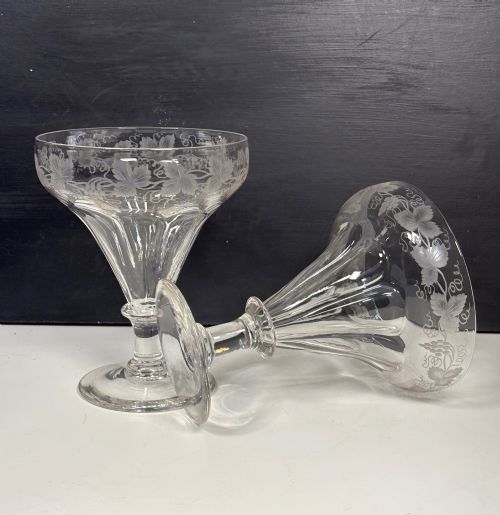
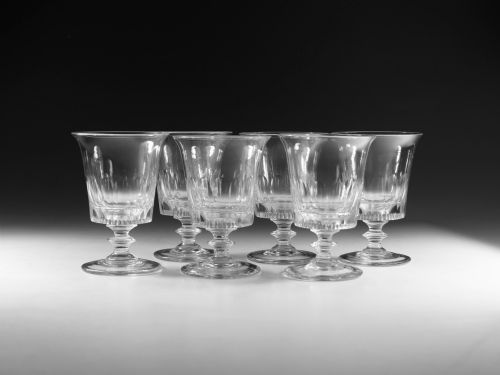


Vintage Cut Glass Goblets
These vintage cut glass goblets bring weight, brilliance, and historical craft straight to the table.
Vintage Cut Glass Goblets
When searching for vintage cut glass goblets, buyers encounter a rich mix of formal stemware, rummers, and drinking vessels spanning from the eighteenth century through the Edwardian and Art Deco eras. The selection on this page ranges from hefty Georgian rummers and Victorian table services to delicate Edwardian cordial glasses and colourful continental hock glasses.
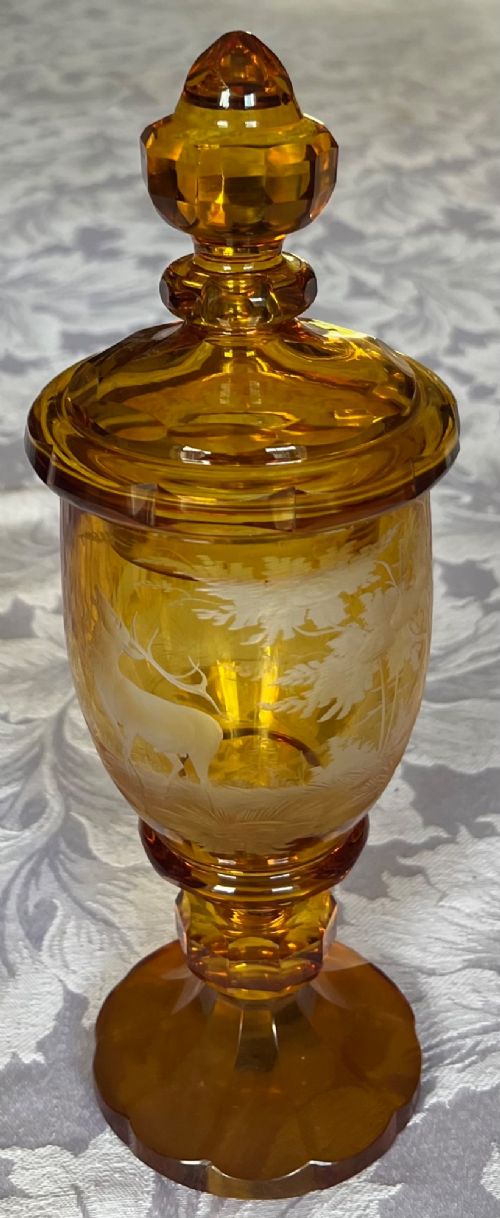
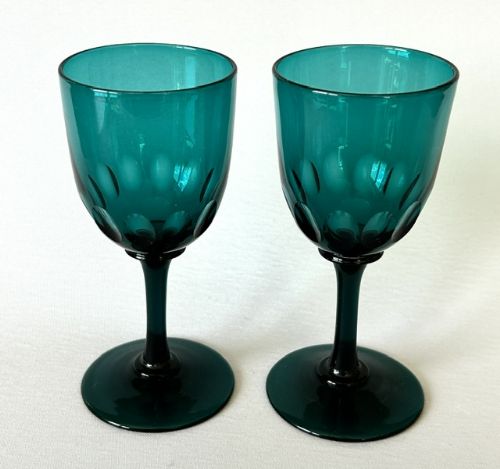
Victorian pieces dominate the landscape, often arriving in saturated hues like cranberry and vaseline green alongside clear lead crystal. Alongside these English examples sit Bohemian and French productions, introducing cased glass and intricate engraved motifs to the dining table.
Materials and Techniques
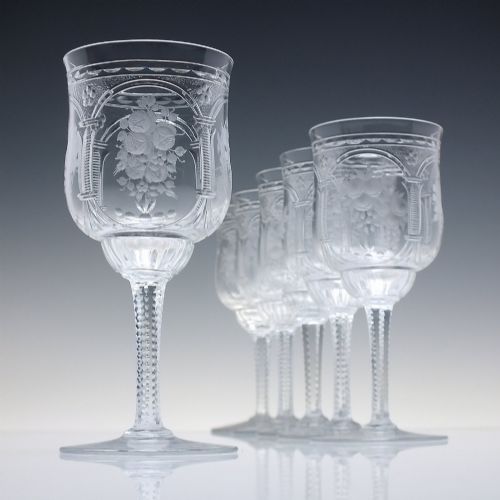
The makers of these vessels relied heavily on lead crystal and clear glass, often casing them in layers of coloured glass to create striking contrast when cut. Wheel-cutting, acid-cutting, and intaglio engraving removed surface layers to reveal precise geometric facets, floral patterns, or heraldic designs.
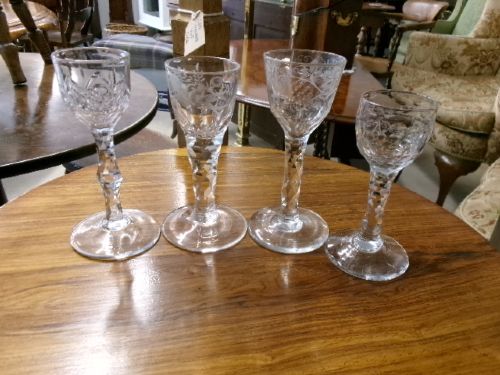
Stems were formed with baluster profiles or sharp facets, joined to wide foot bases that provided stability to heavy bowls. Techniques such as gilding and enamelling were frequently applied to the finished surface to add further ornamentation.
Listings span multiple eras from the eighteenth century through the Art Deco period, featuring both clear lead crystal and cased coloured glass.
Distinctions in Quality
Quality rests upon the crispness of the wheel-cut facets and the optical clarity of the lead glass itself. Superior examples display sharp, well-defined edges that catch the light cleanly, whereas lesser pieces feature softer, blurred incisions.
The weight and balance of the stemware dictate the grade of the piece, with substantial lead crystal rummers and heavily cased goblets representing the upper tier of period production.
Baccarat·Webb Corbett·St Louis·Stevens & Williams·Meyr’s Neffe
The Vintage Cut Glass Goblets Glossary
- Rummer
- A large, sturdy drinking glass popular in the eighteenth and nineteenth centuries, typically used for ale or wine. These vessels often feature generous bowls supported by short, thick stems.
- Cased Glass
- Glassware formed from two or more distinct layers of different coloured glass fused together before being cut. The cutting process exposes the underlayer to create dramatic two-tone visual effects.
- Lead Crystal
- Glass containing a high proportion of lead oxide, which increases the weight, refractive index, and clarity of the material. This composition allows for deeper and sharper cutting.
- Baluster Stem
- A thick, swelling stem profile reminiscent of architectural columns, common on eighteenth and early nineteenth-century drinking glasses. It provides both structural strength and a comfortable grip.
Vintage Cut Glass Goblets: Frequently Asked Questions
How do I use vintage goblets today?
These vessels serve wonderfully for formal dinner parties, special toasts, or everyday dining when you want to elevate a simple meal. Their generous capacities suit water, wine, and dessert drinks alike.
Hand washing in warm soapy water keeps the lead crystal clear and protects any delicate engraved surfaces from thermal shock or dishwasher clouding.
Are these goblets safe for drinking?
Historic glassware made from lead crystal is generally safe for serving beverages during meals. Acidic drinks should not be stored in them for extended periods.
Modern testing confirms that moderate use for dining presents no risk, allowing you to enjoy period stemware just as original owners did.
How do I tell Georgian from Victorian glass?
Georgian pieces often display simpler, heavier forms with facet-cut stems and pontil marks on the wide foot base. The glass itself can have a darker, more utilitarian look suited to hearty rummers.
Victorian production introduced brighter colours like cranberry and vaseline green, alongside more elaborate etched floral patterns and mechanically perfected lead crystal finishes.
What is cased glass?
Cased glass involves blowing one layer of coloured glass inside or over a second layer of contrasting colour. Artisans then cut through the outer layer to expose the base metal beneath.
This technique creates high-contrast visual depth, frequently seen on nineteenth-century Bohemian and French decorative goblets.