





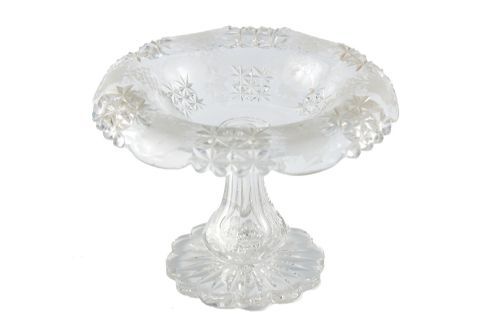


Vintage Crystal Footed Bowl
These vintage crystal footed bowl pieces are heavy, luminous centrepieces that anchor a room and bring genuine weight to a table.
Vintage Crystal Footed Bowl
A vintage crystal footed bowl is a raised vessel designed to display fruit, hold sweet dishes, or act as a striking table centrepiece. You will frequently encounter heavy pedestal bowls, comports, and fruit bowls dating from the Georgian period through to the 1930s.
The selection here encompasses Victorian etched designs, Edwardian fruit bowls, and robust nineteenth-century hobnail patterns. Many examples feature raised feet, stems, or double handles, while others take the form of shallow champagne coupes or large Bohemian glass bowls.
Origins span traditional Irish crystal, English works, and continental European output, offering a broad spectrum of decorative styles. Whether you prefer the sharp facets of Georgian stemware or the organic motifs of Art Nouveau gold enamel, these vessels combine utility with decorative presence.
How they were made
The primary material is lead crystal or heavy lead glass, shaped by hand blowing before undergoing extensive wheel-cutting and polishing. This hot-metal forming creates thick walls capable of holding deep facets and geometric patterns without compromising the clarity of the clear glass.
Makers applied surface decoration through wheel-engraving, acid-etching, or by casing coloured glass over a clear core, as seen in red over crystal pieces. Artisans also integrated precious metals, applying detailed gold enamel motifs directly onto the crystal surface and firing it for permanence.
Vintage Crystal Footed Bowl Retail Price Guide 2026
Typical asking prices for vintage crystal footed bowl among the pieces listed under this phrase on Sellingantiques today, from the lower quarter to the upper quarter. They describe what is for sale here now, not the wider market.
The available listings span from the 18th century through the 1930s, featuring lead crystal, ruby glass, and gold enamel highlights.
What varies in quality
Quality rests in the crispness of the cutting and the weight of the metal itself. Superior vessels display sharp, precise facets that catch the light cleanly, whereas lesser pieces show rounded edges and softer refraction.
The complexity of the form and the skill of the surface embellishment dictate the upper tier of the range. Hand-blown pedestals with balanced proportions, intricate wheel-engraving, or applied gold enamel demand significantly greater artistry than straightforward moulded glass.
St Louis glassworks·Waterford
The Vintage Crystal Footed Bowl Glossary
- Comport
- A raised bowl on a foot or pedestal, traditionally used for serving fruit or sweetmeats at the table. These vessels sit higher than standard bowls to create varying levels in a table display.
- Hobnail pattern
- A tactile surface design featuring closely spaced, pointed studs resembling the hobnails on traditional boots. This texture maximises light refraction across the body of the glass.
- Lead crystal
- Glass containing a high percentage of lead oxide, which increases the weight, refractive index, and resonance of the material. It allows for deeper, sharper cutting than standard soda-lime glass.
- Champagne coupe
- A shallow, broad-bowled glass on a stem and foot, originally designed for sparkling wine. In antique forms, the engraved bowl and foot are often executed with considerable decorative detail.
- Pedestal bowl
- A vessel elevated upon a distinct foot or column, raising the main body of the bowl above the surface of the table. This form includes centrepieces and large fruit bowls.
Vintage Crystal Footed Bowl: Frequently Asked Questions
What were vintage crystal footed bowls used for?
These vessels served primarily as functional table centerpieces for displaying fruit, holding sweet dishes, or serving jelly and desserts. Wealthy households utilised them to add height and sparkle to formal dining arrangements.
Over time, their role shifted toward pure display, though robust examples remain entirely suitable for holding fruit or floral arrangements today.
How do I care for antique crystal?
Wash these pieces gently by hand in warm water using a mild detergent, placing a cloth at the bottom of the sink to protect the heavy foot and rim. Avoid sudden temperature changes, which can stress antique lead glass.
Dry them immediately with a lint-free cloth to maintain the clarity of the cut facets and prevent water spots from forming on the surface.
How can I tell Georgian crystal from Victorian?
Georgian pieces often display wider foot bases, hand-hammered pontil marks, and simpler, heavier faceted stems or double handles. The glass metal itself can occasionally show minor bubbles or irregularities from early manufacturing methods.
Victorian and later Edwardian pieces frequently exhibit more complex machine-assisted cutting, varied colour overlays, and more intricate acid-etching or surface ornamentation.
Can I use these bowls for serving food?
Lead crystal vessels from the nineteenth and early twentieth centuries are generally safe for serving dry foods, fruit, and confectionery. Avoid storing acidic foods or liquids in them for extended periods.
Hand washing is essential to preserve the historical surface finish, and dishwasher use should be strictly avoided to prevent clouding the glass.