
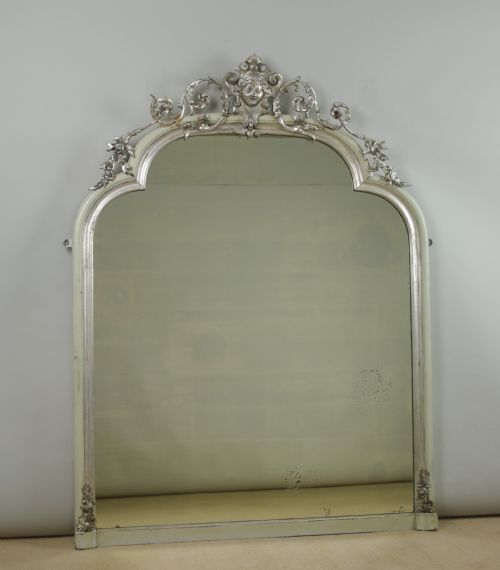
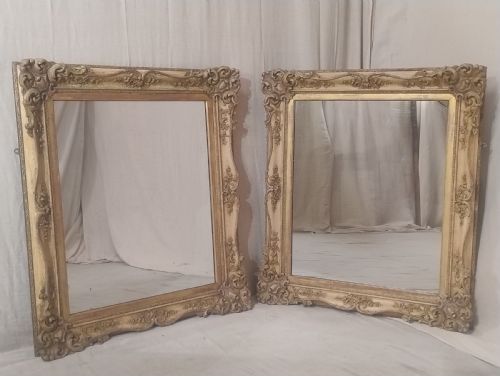
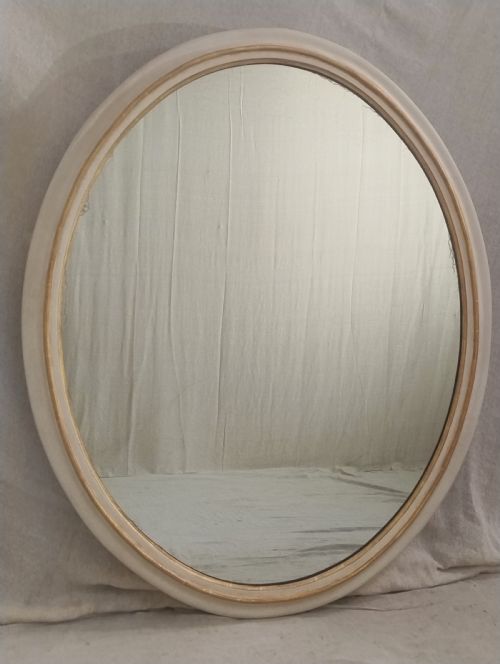
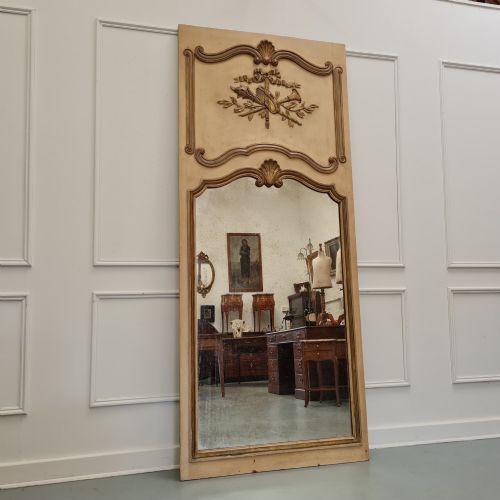

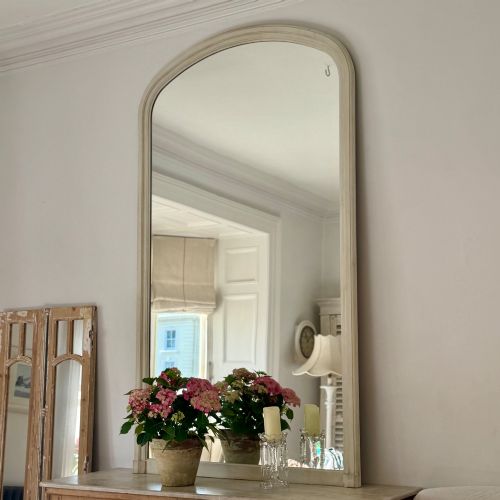


Vintage Cream Overmantel Mirror
A vintage cream overmantel mirror anchors a chimney breast with scale and painted charm, offering light and period presence to a room.
Materials and Construction
The core structure typically consists of carved wood and applied gesso, which allows for crisp moulding of scrolls, foliage, and architectural motifs. Artisans built these frames to endure the weight of large mirror glass plates.
Surfaces receive multiple coats of paint, often distressed over time, alongside parcel gilding where gold leaf highlights raised portions of the carved ornamentation.
Defining Quality
Depth and clarity of the original hand-carved woodwork separate standard examples from finer commissions, particularly where gesso enrichment remains crisp beneath the paint. The integration of original mirror glass plates, showing natural foxing and age, adds substantial character.
Proportion and architectural balance dictate the visual weight of the frame on a wall, with superior pieces maintaining harmony between the arched or rectangular top and the lower sight lines.
Some frames wear their history proudly, hiding centuries of London coal soot beneath layers of aged cream paint.
The Vintage Cream Overmantel Mirror Glossary
- Overmantel
- A large mirror or painting designed to hang directly above a fireplace mantel. It visually extends the hearth upwards into the room.
- Trumeau
- A decorative wall panel, often incorporating a mirror or painting within an architectural wooden frame. It originated in eighteenth-century interior design.
- Gesso
- A plaster-like mixture applied to wood frames to create a smooth surface for gilding and carving. It allows for intricate relief details.
- Parcel Gilt
- A decorative treatment where only specific parts of an object are covered in gold leaf. This technique highlights carved details against a painted ground.
- Louis Philippe
- A mid-nineteenth-century French style characterised by restrained curves and simple, elegant architectural lines. It bridges ornate revival styles and functional design.
Vintage Cream Overmantel Mirror: Frequently Asked Questions
How do I hang a heavy overmantel mirror safely?
Secure the frame directly into wall studs using heavy-duty brackets suited to the considerable weight of nineteenth-century wood and glass. Professional installation is strongly recommended for large pieces.
Ensure the weight is distributed evenly across multiple fixing points to prevent strain on the antique structure.
Can I place these mirrors on a wall without a fireplace?
These pieces function effectively as standalone wall mirrors in hallways, dining rooms, and living spaces. Their generous proportions create a focal point similar to a piece of architectural furniture.
Positioning them opposite a window helps maximise natural light within the room.
How do I clean antique mirror glass?
Use a soft, dry microfibre cloth to dust the glass and painted frame gently. Avoid harsh chemical cleaners that might damage aged silvering or distressed paint.
If moisture is necessary, apply a mild soap solution sparingly to the cloth rather than spraying the glass directly.
What is the difference between Victorian and French styles here?
Victorian frames often lean towards heavier ebonised or carved wooden mouldings with robust architectural presence. French designs, including Rococo and Louis Philippe forms, tend to emphasise flowing curves, softer crests, and layered cream paint finishes.
Both traditions utilise carved wood and gesso foundations to achieve their distinct decorative profiles.