
Vintage Country Artwork
Vintage country artwork brings traditional rural scenes, agricultural life, and animal portraits into a room through oil, watercolour, and pastel.
Vintage Country Artwork
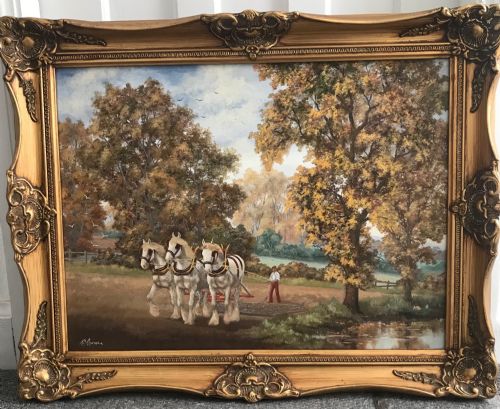
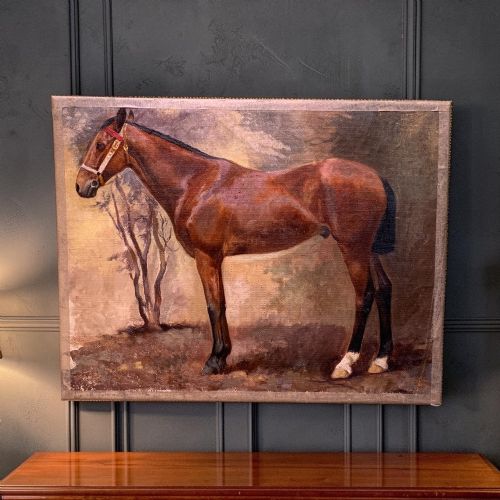
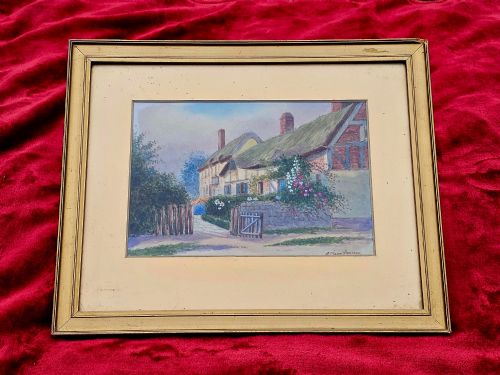
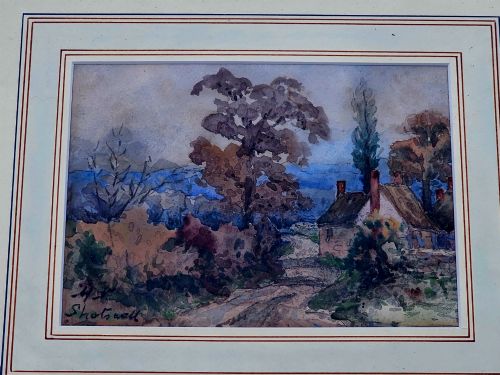
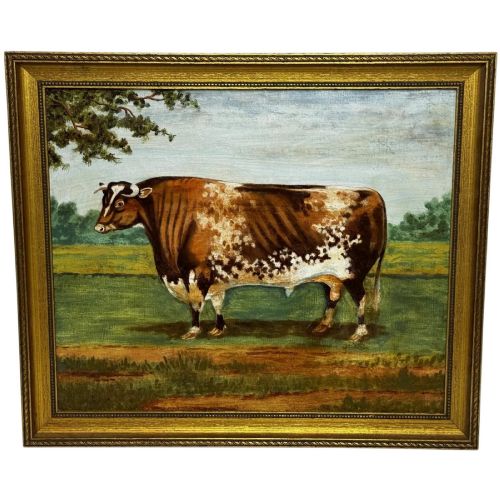
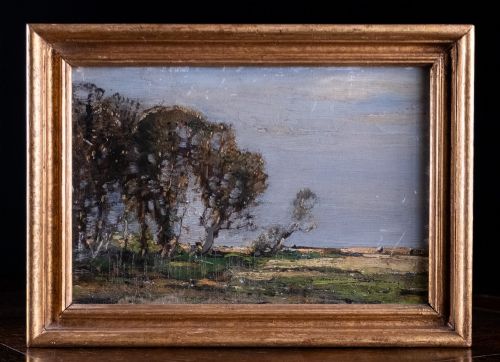
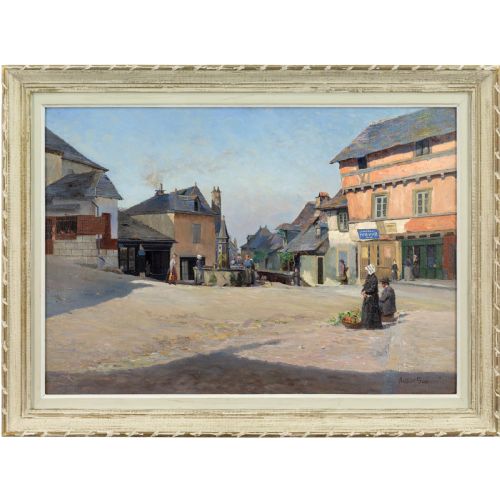
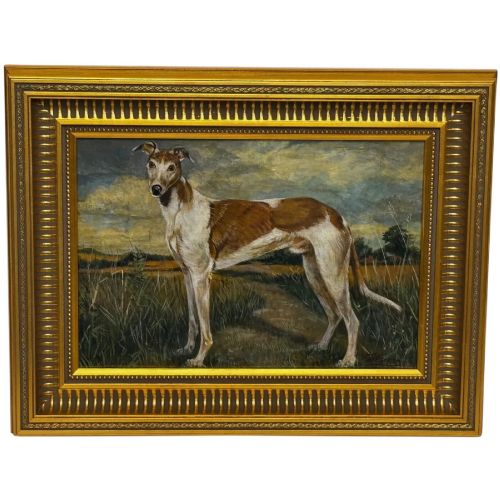
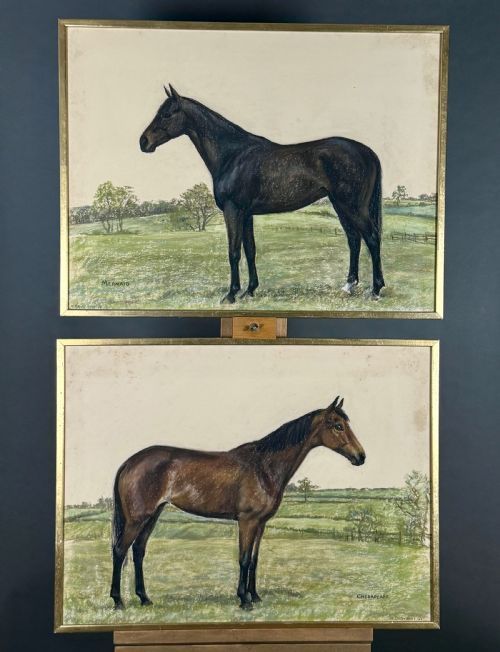
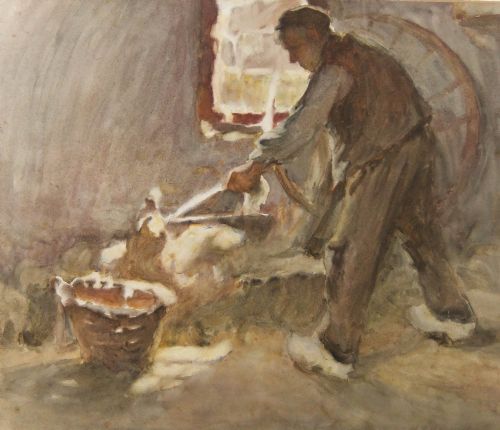
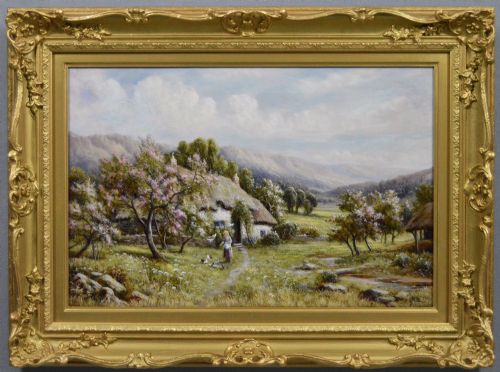
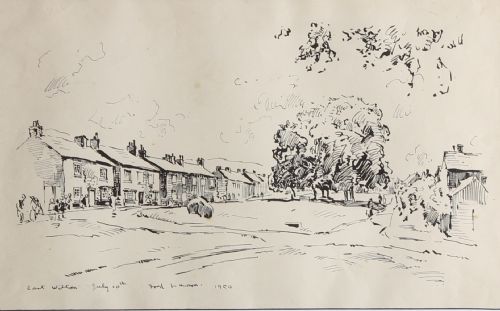
Vintage country artwork encompasses paintings, watercolours, and framed prints depicting rural subjects such as farm animals, cottages, blacksmith shops, and open landscapes. These pieces record agricultural life and countryside vistas from the nineteenth century through the mid-twentieth century.
Buyers frequently encounter works attributed to the British School, alongside French and English rural scenes executed in oil on canvas, wooden board, or paper. Subjects range from prize-winning bulls and working horses to quiet village lanes and river valleys.
The selection includes both signed works by known regional painters and atmospheric pieces by unrecorded hands working within traditional idioms. These items suit domestic spaces seeking a connection to historical agrarian traditions.
Materials and techniques
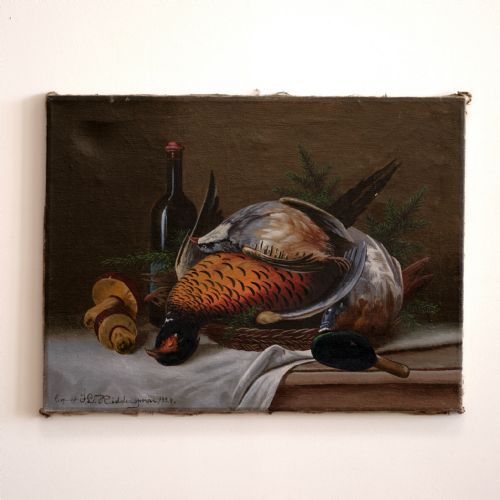
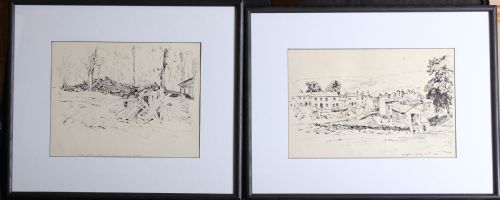
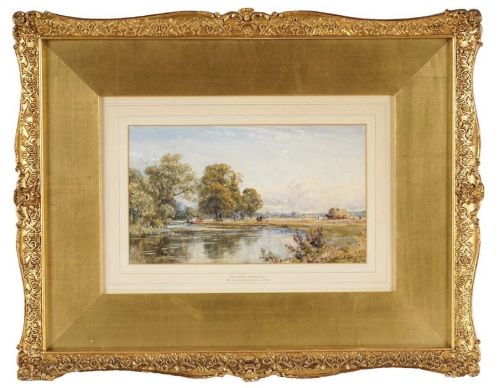
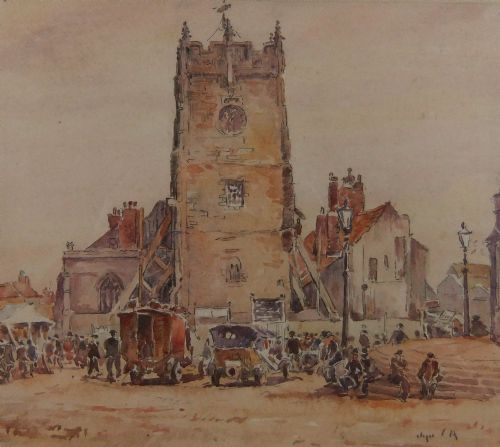
Artists working on these rural subjects utilised oil paint on canvas, panel, or card, building rich textures for farmyard scenes and livestock portraits. Watercolours and inks on paper captured lighter atmospheric effects in landscape studies.
Support materials range from traditional stretched canvas and heavy watercolour paper to wooden boards and pastel grounds. Many surviving examples retain their period gilt wood frames, which complement the tones of the compositions.
Listings feature works spanning the nineteenth century through the 1960s, executed in oil, watercolour, pastel, and lithography.
Judging quality in rural art
Quality rests upon the artist's ability to render anatomical accuracy in animals and perspective in landscape settings, distinguishing skilled observation from formulaic studio production. Handling of light, shadow, and atmospheric depth separates superior compositions from basic illustrations.
The integrity of the medium, whether the preservation of pigment in an oil painting or the crispness of ink and watercolour lines, determines the visual strength of the piece. Original framing appropriate to the period also contributes to the standing of the work.
Kershaw Schofield·Arthur Gue·Henry Silkstone Hopwood·Robert John Hammond·Fred Lawson·Robert Thorne Waite·John Smith Atherton·George Augustus Holmes·Frederick James Kerr·Edgar Hunt·Herbert Royle·Rene Levrel·Henry Yeen King·Percy Lancaster
The Vintage Country Artwork Glossary
- British School
- A designation for artists trained or working within Britain whose specific identities are undocumented or secondary to their regional style.
- Oil on Canvas
- Pigment mixed with drying oil applied to a woven fabric support, allowing for layered colour and texture.
- Watercolour
- Paint consisting of transparent pigment suspended in a water-based solution, typically applied to paper.
- Pastel
- A dry medium composed of powdered pigment and a binder, pressed into sticks for drawing on paper.
- Lithograph
- A print produced from a flat stone or metal plate treated to retain ink in designated image areas.
Vintage Country Artwork: Frequently Asked Questions
How do I care for vintage watercolours?
Watercolours on paper require protection from direct sunlight to prevent fading of delicate pigments over time. Glazing with conservation-grade glass helps shield the paper surface from environmental moisture.
Keep the works away from damp walls and extreme temperature fluctuations. Proper framing with acid-free mounts preserves the integrity of the paper support.
Are these paintings on canvas or board?
The listings include works executed on traditional stretched canvas, wooden panel, card, and heavy paper supports. Oil painters frequently selected canvas or board depending on the desired scale and texture.
Watercolours and pastels were invariably worked on paper surfaces. Each material interacts differently with age and environmental conditions.
How do I identify the period of a painting?
Period identification relies upon stylistic clues, costume details in figures, and framing materials characteristic of nineteenth or early twentieth-century production. Signatures and dates inscribed by the artist provide direct evidence when present.
Backboards, stretcher frames, and paper labels from framers also offer chronological markers. Comparing handling techniques with documented works from specific decades aids further attribution.