


Framed Winter Landscape
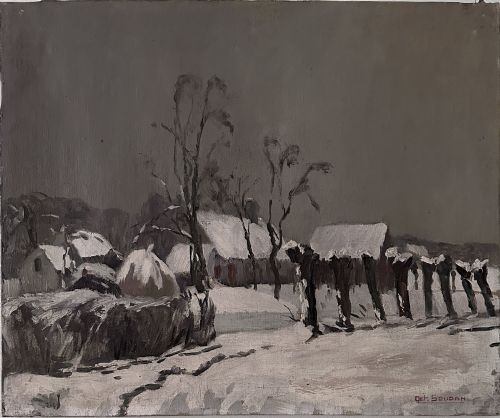
A framed winter landscape captures the stillness of snow and frost, holding artists from the nineteenth century onward.
Framed Winter Landscape
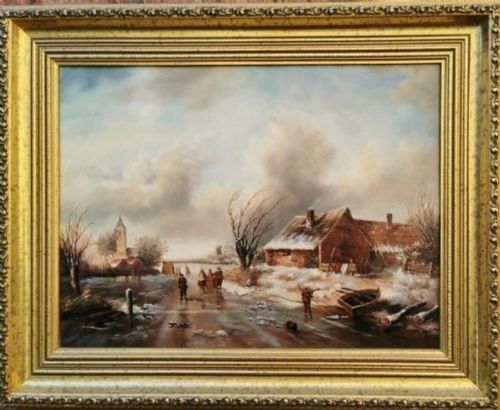
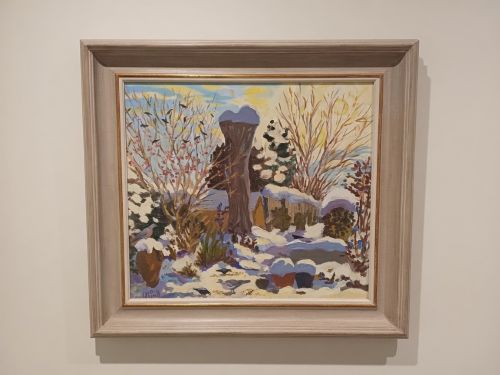
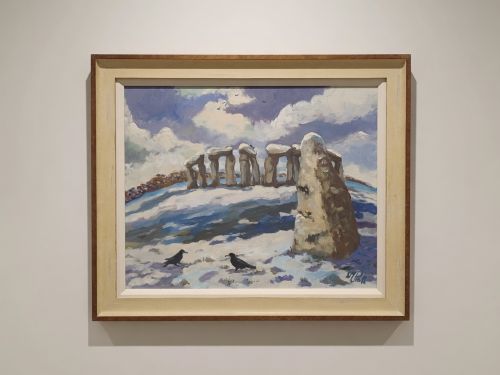
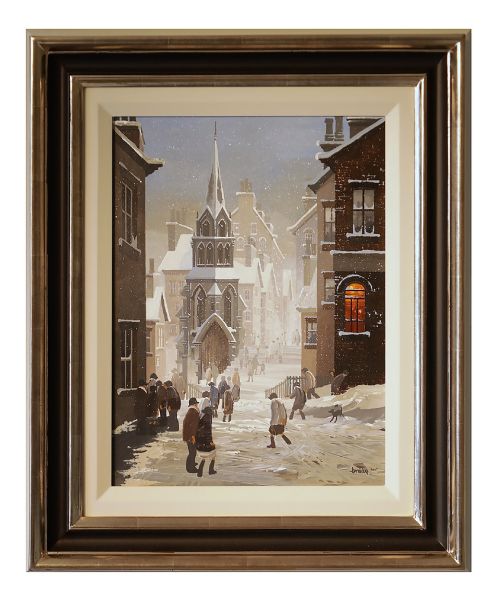
A framed winter landscape brings together scenes of snow, frost, and cold weather from various periods, dominated by oils and watercolours. You encounter nineteenth-century coaching scenes and village views alongside twentieth-century works spanning the nineteen-tens to the nineteen-sixties.
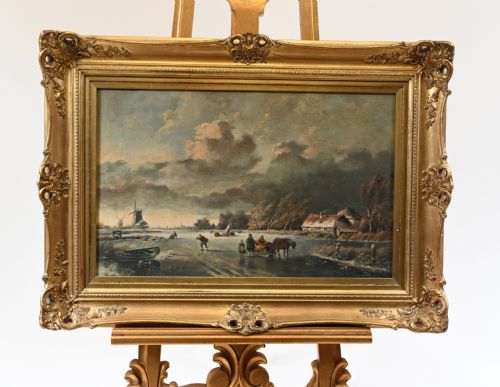
The compositions range from Dutch-influenced frozen river views and pastoral sheep droving scenes to quiet northern English valleys and European settings. Works span traditional academic styles, British Impressionism, and continental modernist interpretations of cold weather.
Canvas and paper form the primary supports, each housed in period frames of wood and gilt that complete the presentation of the artwork. These pieces record rural toil, quiet towns, and remote country scenes under snow.
Materials and technique
Painters build these works using oil paint on canvas or board, applying thick impasto to render snow and cold light. Other examples utilise watercolour and gouache on paper, capturing delicate washes of grey and blue skies.
Makers set these paintings within wooden frames, often finished with gilt or moulded detail that suits the period of the artwork. Glass frequently protects the works executed on paper, preserving the fragile medium from moisture and damage.
Several winter scenes feature determined hunting hounds and stagecoaches gamely ploughing through unexpected snowdrifts.
Execution and condition
Quality rests in the handling of light and atmosphere, where skilled brushwork distinguishes a convincing frost from a flat white wash. Stronger pieces convey the chill of the air and the weight of snow through deliberate colour harmony and confident mark-making.
The integration of the frame matters greatly, as original or period-matching wood and gilt enclosures complement the painting rather than overpower it. Good preservation of the pigment and the support ensures the winter scene retains its intended depth and tone.
Lucy Pratt·Brian Shields Braaq·Gaston Cornil·Fred Lawson·John Hobson Nicholson·Ernest Uden·Fannie Moody·John Smith Atherton·Herbert Royle·Charles Jones·John Charles Maggs·W Tatton Winter·A Winter Shaw·Sydney Kendrick·Pieter Cornelis Steenhouwer·Alexis De Leeuw·George Graham·Ernest Higgins Rigg·William Greaves·John Ritchie
The Framed Winter Landscape Glossary
- Impasto
- Paint applied thickly to a canvas or board, standing out in relief. This technique often helps render the texture of drifted snow.
- Gouache
- An opaque watercolour medium containing a white pigment binder. It provides solid areas of colour in works on paper.
- Gilt
- A thin layer of gold leaf or gold paint applied to wooden mouldings. It adds warmth and reflection to the enclosing frame.
- British Impressionism
- A painting style focusing on light and everyday subjects, practiced by artists working in the late nineteenth and early twentieth centuries. It favours loose brushwork over rigid academic finish.
- Watercolour
- A paint consisting of pigment suspended in a water-based solution, typically applied to paper. It allows for translucent washes and delicate atmospheric effects.
Framed Winter Landscape: Frequently Asked Questions
What periods do these paintings cover?
The selections span from the nineteenth century through the 1960s, encompassing Edwardian watercolours and mid-century modern oils.
Victorian coaching scenes sit alongside later twentieth-century interpretations of snow and frost.
Are these works painted on canvas or paper?
Artists used multiple supports, creating works in oil paint on canvas or board, alongside watercolours and gouache on paper.
Each medium requires its own method of framing and glass protection.
Where do the landscape settings come from?
The views depict British locations like Yorkshire dales and the Isle of Man, alongside continental European scenes including Dutch frozen lakes and French villages.
Rural subjects feature prominently, from stagecoaches in snowstorms to shepherds with flocks.
How should I care for a framed watercolour?
Keep works on paper away from direct sunlight to prevent the watercolour pigments and paper support from fading over time.
Ensure the glass and backing board remain sealed to protect the delicate media from atmospheric moisture.